One hardware market, two opposite directions
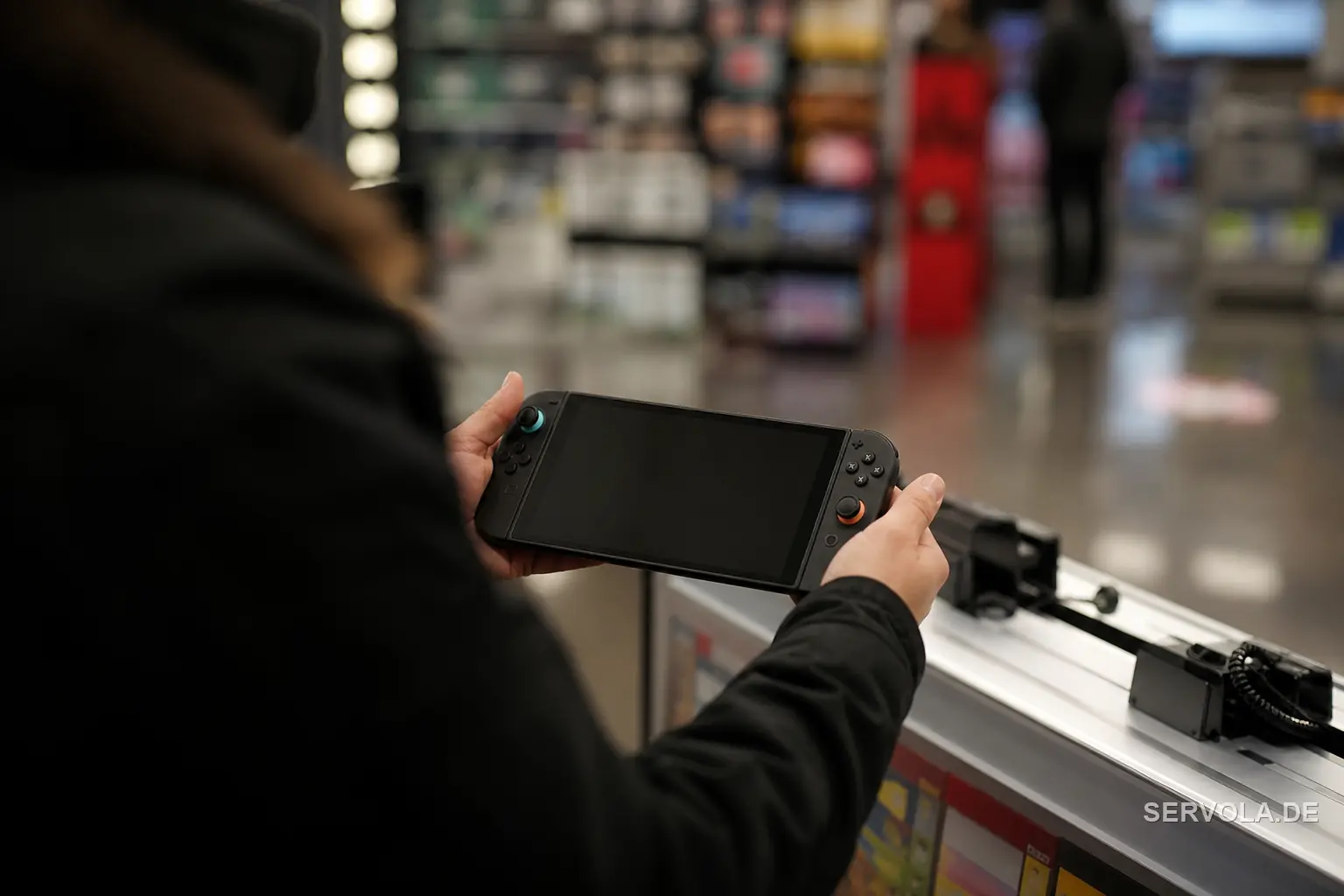
When Circana analyst Mat Piscatella published the May 2026 US market figures at the end of June, one number did most of the talking: hardware spending jumped 38 percent year on year to 249 million dollars, in a month when two of the three console platforms recorded historic lows. All of that growth came from one machine. The Nintendo Switch 2 closed its first year at 5.9 million US units, the second fastest-selling gaming device in the history of US tracking, which reaches back to 1995. Only the Game Boy Advance, at 6.5 million in its first twelve months, remains ahead.
The other side of the ledger is just as stark. PlayStation had its weakest May in unit sales since May 2000. Xbox had its weakest May on record. And both got more expensive while shrinking: the average PS5 sold for 672 dollars, up 33 percent in a year, while the average Xbox Series console reached 524 dollars, up 22 percent. Nintendo's own investor figures put global Switch 2 shipments at 19.86 million by 31 March 2026, within sight of the GameCube's 21.74 million lifetime total after roughly ten months.
The install-base map studios plan against has flipped
Why it matters: total US spending still grew, to 4.2 billion dollars in May, but the console market has quietly split into two different businesses. Sony and Microsoft are repricing their machines as premium durable goods, passing memory-cost and component inflation straight through to buyers and accepting smaller unit numbers to protect margin. Nintendo is running the opposite play, holding its launch price to convert the mass market while it is available. The marginal console buyer of 2026, the person walking into a store to buy their first current-generation machine, is overwhelmingly walking out with a Switch 2.
Yes, but: installed bases move slowly. The PS5's total base remains several times larger than 20 million, console content spending actually rose 25 percent in May, and high-spending enthusiast revenue still lives disproportionately on PlayStation. The split is about where new buyers land over the next two years, not about where the money sits today.
The bottom line for European studios
The bottom line: a studio in Europe setting 2027 platform priority should read this as a demographic shift, not a scoreboard. Family, mass-market and mid-price titles follow the new buyers to Switch 2, and port budgets deserve re-sequencing accordingly. Premium projects still monetize best on PlayStation's large existing base, but that base is aging and now costs over 670 dollars, roughly 400 pounds more than a Switch 2, to expand. Fittingly, the best-selling game in Circana's May chart was 007 First Light, built in Copenhagen, a European production reading the market correctly by shipping wide.
Pricing strategy follows the same fork. A machine sold at around 470 euros in Europe against consoles drifting toward 700 dollars in the US creates two different customers: one buying a family platform with a 20 to 60 euro software budget per purchase, one buying an enthusiast device expecting premium production values. The mistake to avoid is shipping a premium-priced title into the platform whose new audience just arrived for value.
Read next: The EU's Battery Law Gets Its First Price Tag | Nintendo's Profit More Than Doubled While Sales Fell