A finished data centre with nowhere to plug in
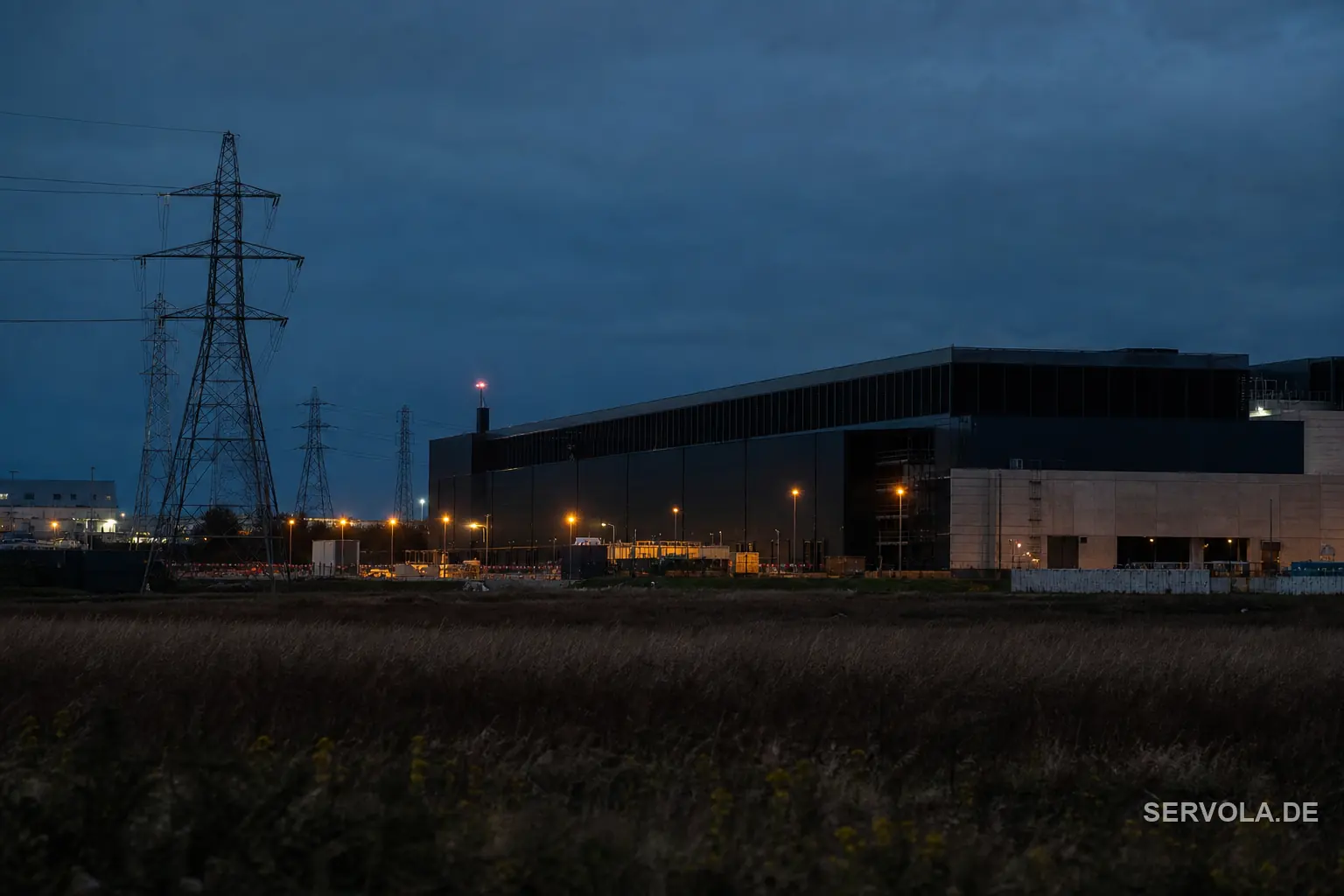
Nscale expected its Loughton site in Essex to switch on this year. Instead the company has been told the electricity supply it needs will not arrive until 2027, and the building will stand largely idle in the meantime. For a data centre, that is the most expensive kind of delay: the capital is spent, the racks can be installed, and the one input that makes any of it useful is missing.
The detail that should catch an operator's attention is not the slippage itself but the reason. This was not a permitting fight or a construction overrun. It was the grid simply not having a connection to give, on the timeline the business was built around.
A 2 billion pound bet on power it cannot get
Nscale is one of Britain's larger AI infrastructure companies, valued at roughly 11 billion pounds, and Loughton is a project on the order of 2 billion pounds. That scale is the point: even a well-capitalized operator with a flagship site cannot buy its way past a grid connection queue. Money solves land, chips, and cooling; it does not conjure a substation.
To keep the site from sitting dark, Nscale is in talks with Bloom Energy, a US company whose fuel cells burn natural gas on site to generate electricity. The plan is to power the data centre behind the meter, independent of the grid connection that has not materialized, until the public supply eventually arrives.
The queue is the bottleneck, not the technology
Britain's grid is congested, and the cause is partly its own climate success. A wave of renewable projects racing to connect under net-zero targets has filled the connection queue, and large new loads like data centres now wait behind them. Industry reporting has put UK data centre demand seeking grid access at around 50 gigawatts, with some connection dates pushed eight years out.
That inverts the usual mental model. Owners have spent two years worrying about GPU allocation and chip export rules; the harder ceiling turns out to be a line on a utility's schedule. A connection date, not a compute contract, is what now decides whether a site can open.
Gas is becoming the default escape hatch
Nscale is not alone in its answer. More than 100 UK projects have said they will turn to gas or other on-site generation rather than wait for a grid hookup, according to industry reporting. Behind-the-meter gas is fast to deploy and under the operator's control, which is exactly why it is spreading.
The trade-off is quiet but real. Sites planned as part of a net-zero grid are now being powered by on-site fossil generation, shifting both the carbon math and the operating cost onto the operator. What was sold as clean, grid-connected compute becomes gas-fired compute with a grid connection pending, and that gap can last years.
Power date is now a siting decision
The lesson for anyone planning compute capacity is that power availability has moved to the front of the checklist. Land, tax incentives, and fibre matter, but none of them help if the grid cannot deliver electricity on the date the business plan assumes. The right question at site selection is no longer only where, but when the power actually arrives.
That reshapes the economics. An operator now has to price in either a multi-year wait or the cost and carbon of on-site generation, and treat a firm connection date as a hard dependency rather than a formality. Nscale's Loughton is a preview of a constraint every European market with an AI build-out is heading toward.
Read next: Cisco Just Named Sovereign Clouds As A Customer | The Clause That Just Saved Oracle Is In Your Contract