The Numbers Land on the Call
On August 21, 2026, Catcher Technology Co., Ltd. (TWSE: 2474) put its Q2 FY2026 results on the table for its own earnings call, and the numbers did not get any softer on the way in. Quarterly revenue came to NT$2.68 billion, down 47.3 percent from the same quarter a year earlier and down 29 percent from the prior quarter, a multi-year low for a company best known for building the metal and glass chassis behind laptops and phones, including work historically done for Apple. Catcher disclosed the figures itself in its official Q2/H1 2026 results release, with the details corroborated independently by earnings-call reporting from BigGo Finance and DigiTimes.
Profitability fell even harder than the top line. Operating margin dropped to just 1.8 percent, down 4.7 percentage points from the previous quarter and down a steep 15.3 points from a year earlier. Converted at rough market rates, the quarter's NT$2.68 billion works out to roughly EUR 79 million, or about GBP 67 million, a reminder of how far one bad quarter can travel through a supplier sitting deep inside the electronics supply chain, several steps removed from the branded products that reach a shop shelf.
| Metric | Q2 FY2026 | Change QoQ | Change YoY |
|---|---|---|---|
| Revenue | NT$2.68 billion | -29% | -47.3% |
| Operating margin | 1.8% | -4.7 pts | -15.3 pts |
Why It Matters: A Shortage With Two Faces
Catcher's management named the root cause plainly on the call: persistent shortages of the CPUs and, especially, the memory chips that go into notebook computers. That scarcity is not unique to Catcher. It is the same DRAM and memory shortage rippling through the wider electronics industry this year, driven largely by AI data centers buying up memory capacity for their own servers, and it is the direct reason Catcher's core laptop-chassis orders shrank as sharply as they did this quarter. It is a scarcity that Catcher does not control and cannot simply order its way around, since the same chips are being bid up by data-center buyers with far deeper budgets.
A second, more company-specific factor compounded it. Catcher told investors that a major customer's best-selling laptop models are concentrated in the entry-level segment, a price band that Catcher's own product line does not serve. That left the legacy chassis business, still roughly 60 percent of total company revenue, absorbing the deepest cuts of any division, unable to offset the shortfall by shifting volume within its existing customer relationships.
The Pivot: Building the Racks Nvidia Needs
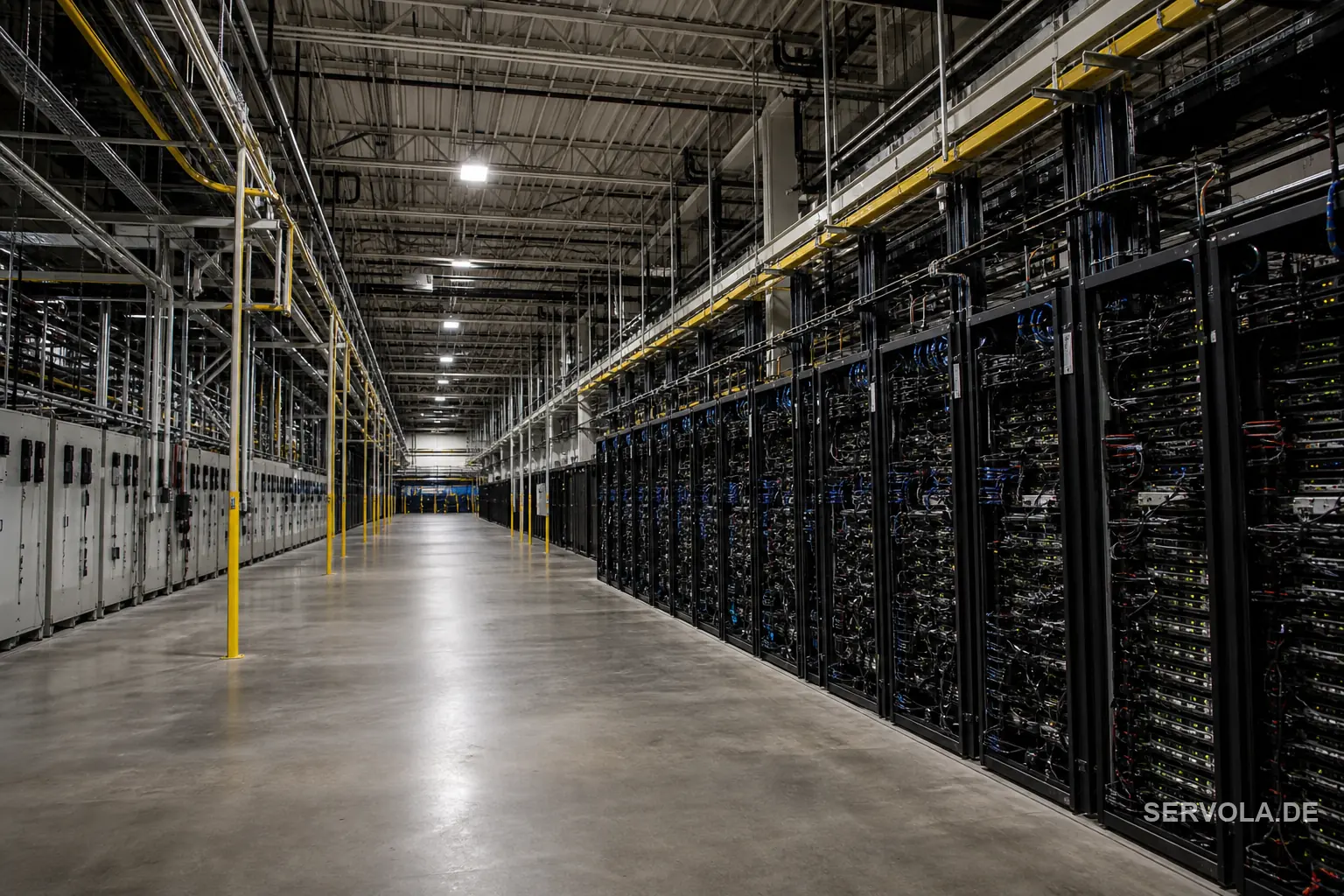
Catcher's answer has been to point idle capacity at a different kind of customer altogether. Mass production of AI-server enclosures and rack-scale system chassis began in June 2026, mainly for Nvidia-related projects building the high-density server and rack hardware that AI data centers run on around the clock. It is the same category of metal and structural engineering Catcher has done for decades, redirected at a market that is, for now, growing rather than shrinking.
The new line moved fast. It already reached a double-digit percentage of total revenue in July 2026 alone, just one month after mass production began. Management has set an explicit target of AI-related revenue exceeding 20 percent of the company total in the second half of 2026, a bet that this new business line will grow quickly enough to offset what the legacy laptop-chassis business keeps losing.
Yes, But: The Scarcity Followed the Money
Here is the catch that a headline about a bold AI pivot can easily skip past. The identical shortage that is gutting Catcher's legacy laptop-chassis business, the AI-driven scramble for CPUs and memory chips, is also exactly what makes AI-server components valuable enough for Catcher to chase in the first place. That is not two separate stories playing out on two sides of the company. It is one scarcity, showing up as a cost on one side of the ledger and as an opportunity on the other. It is worth sitting with that for a moment, because it inverts the usual assumption that entering a hot new market is inherently safer than staying in a cooling one.
A diversification move is not automatically a hedge just because the revenue lands in a different column. It only earns that label when the new line and the old line draw on genuinely different, uncorrelated inputs. When both lines draw on the same constrained resource, as Catcher's do, tightening that resource further does not offset the pain across the business, it squeezes both lines at once, just through different line items of the same income statement.
The Bottom Line: Map the Bottleneck Before You Call It a Hedge
Anyone weighing a similar pivot under scarcity should ask one question before presenting it to a board as risk reduction: do the new line and the old line share a supply-side bottleneck. If the answer is yes, the next step is to model what happens when that single input tightens again, because the two lines will move together, not apart, and a plan that assumes otherwise will be wrong exactly when it matters most.
European buyers watching their own laptop and desktop price lists this year have already felt a version of the memory squeeze that Catcher is describing on its earnings call. Catcher Technology's own numbers, a 47.3 percent revenue drop sitting next to a fast-growing AI-server line built from the same scarce chips, are the reminder worth keeping on file: a pivot that shares its predecessor's constraint has not removed the risk from the business, it has only relocated where the next shortage will land.
Read next: Amazon Hikes Echo, Kindle, Fire TV Prices Up To 60% | Descartes Buys Tai Software in Third Freight AI Deal