A campus that builds its own power station
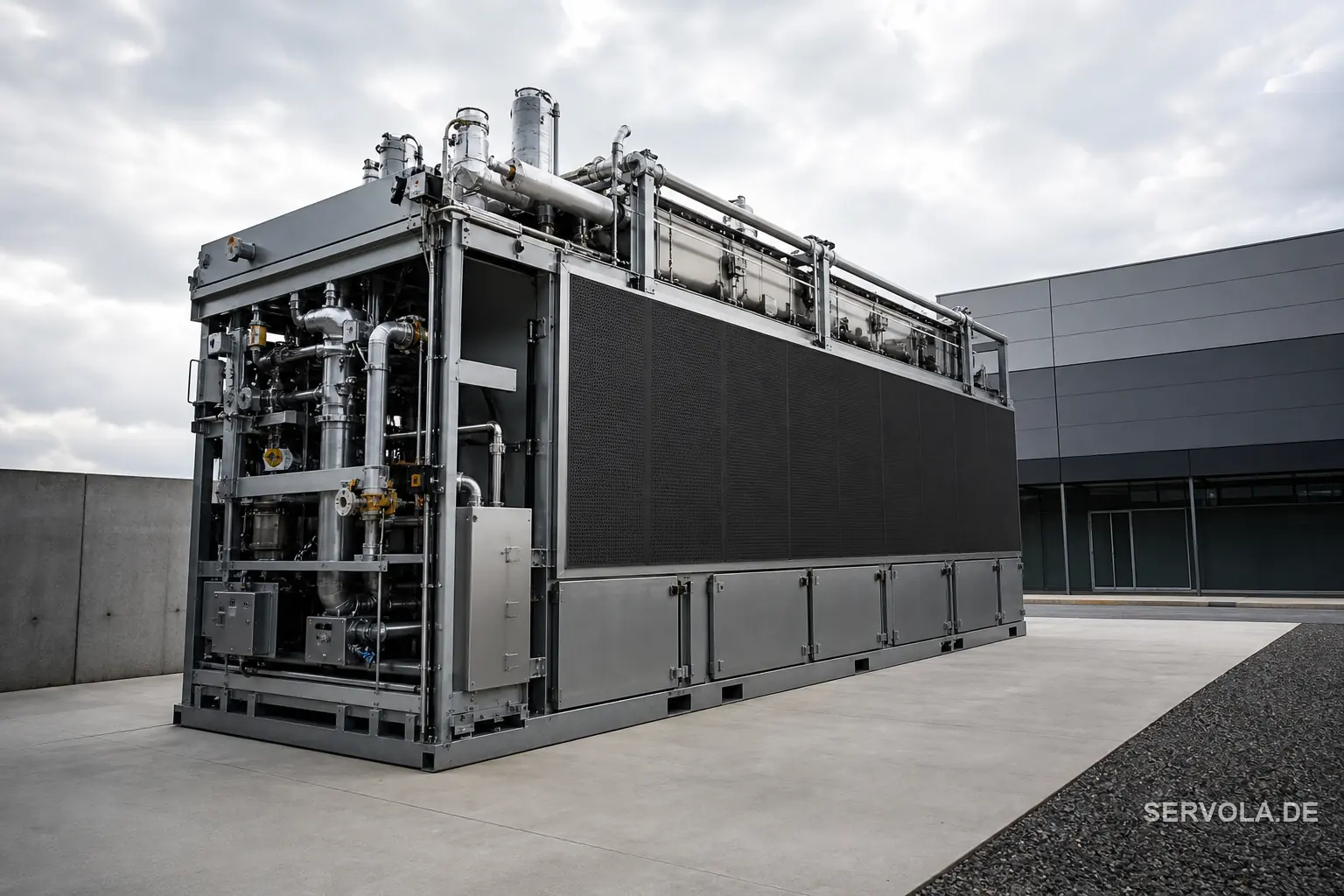
The largest computing project in the world has decided not to lean on the public electricity grid. Oracle's Project Jupiter, a planned 2.45 gigawatt artificial intelligence campus in Dona Ana County, New Mexico, will generate almost all of its own power on site with fuel cells from Bloom Energy, in place of gas turbines, diesel generators, or a grid connection. The roughly 165 billion dollar project spans about 1,400 acres and four hyperscale buildings, and it is tied to Oracle's compute partnership with OpenAI.
The choice is not a green gesture. Large operators increasingly cannot get the grid capacity they need on the timeline they need it, so the biggest of them now build their own power stations next to their servers. When one campus needs more electricity than a mid-sized city, waiting years for a grid connection is not a plan, and Jupiter is what the alternative looks like at full scale.
The real bottleneck moved from chips to electricity
For two years the shortage that shaped artificial intelligence was silicon. It is now power. Chips can be shipped in weeks. A gigawatt of firm electricity, delivered where you want it, is a multi-year project involving substations, transmission lines, and a queue you do not control. Jupiter is the clearest sign yet that the companies with the most compute have concluded the grid will not keep pace, and have decided to generate their own supply instead.
The lesson for an owner is direct. The question that decides whether an AI buildout happens on schedule is no longer how many accelerators you can buy, but whether the power to run them exists at the site and the date you need. Compute you cannot energise is a spreadsheet, not a capability.
Why fuel cells, and what the permit changed
Fuel cells convert fuel to electricity without combustion, and that single fact reshaped the project's footprint. In its revised air permit, disclosed on 15 July 2026, Oracle reported a 92 percent cut in nitrogen oxide emissions and more than 80 percent less carbon monoxide against the original gas-turbine design, bringing the campus below the threshold that would classify it as a major polluter. Annual carbon-equivalent emissions fall from about 14 million to roughly 10 million tonnes, and the cooling system is closed loop, using little water beyond an initial fill.
None of that is charity either. A cleaner, lower-water, off-grid design is also the fastest design to permit and build in a dry region where both grid capacity and water are contested. New Mexico's environment department accepted the revised application, with a public hearing still to come. Bloom Energy holds an agreement to supply up to 2.8 gigawatts of fuel cells, of which roughly 1.2 gigawatts is already contracted.
What off-grid compute means for where and when capacity arrives
When a campus makes its own power, it no longer has to sit where the grid has spare room. It can site next to fuel supply and a workable permit, which moves the map of where large compute gets built and compresses the timeline from years to months. It also raises the entry price: only builders who can finance a power plant alongside a data centre can play at this scale, which concentrates frontier capacity in a small number of very deep balance sheets.
Europe should read Jupiter as a preview, not a foreign curiosity. Interconnection queues in Germany, the United Kingdom, and Ireland already stretch past the decade mark in places, and European fuel-cell makers such as Ceres Power in Britain and Sunfire in Germany are selling into exactly this gap. The operators that secure firm power, on grid or off it, will decide which European data centres open this decade and at what cost per megawatt.
What to check before your next compute commitment
Treat power as the first question in any AI infrastructure decision, not the last. Before signing a long compute contract or approving a buildout, ask the provider where the electricity comes from, whether it is firm or interruptible, when the connection or on-site generation goes live, and how energy cost flows into your price. A confident answer on chips paired with a vague one on power is a schedule risk hiding in plain sight.
Then plan for the pass-through. Whether a supplier draws from a strained grid or runs fuel cells at 165 billion dollars of capital, that energy bill reaches your invoice eventually. The owners who ask about electricity now will not be the ones surprised by a compute shortage, or a price rise, that was really an energy shortage all along.
Read next: The Clause That Just Saved Oracle Is In Your Contract | 1.65 Trillion In AI Debt Never Reached A Balance Sheet