A campus underwritten for bitcoin finished as an AI factory
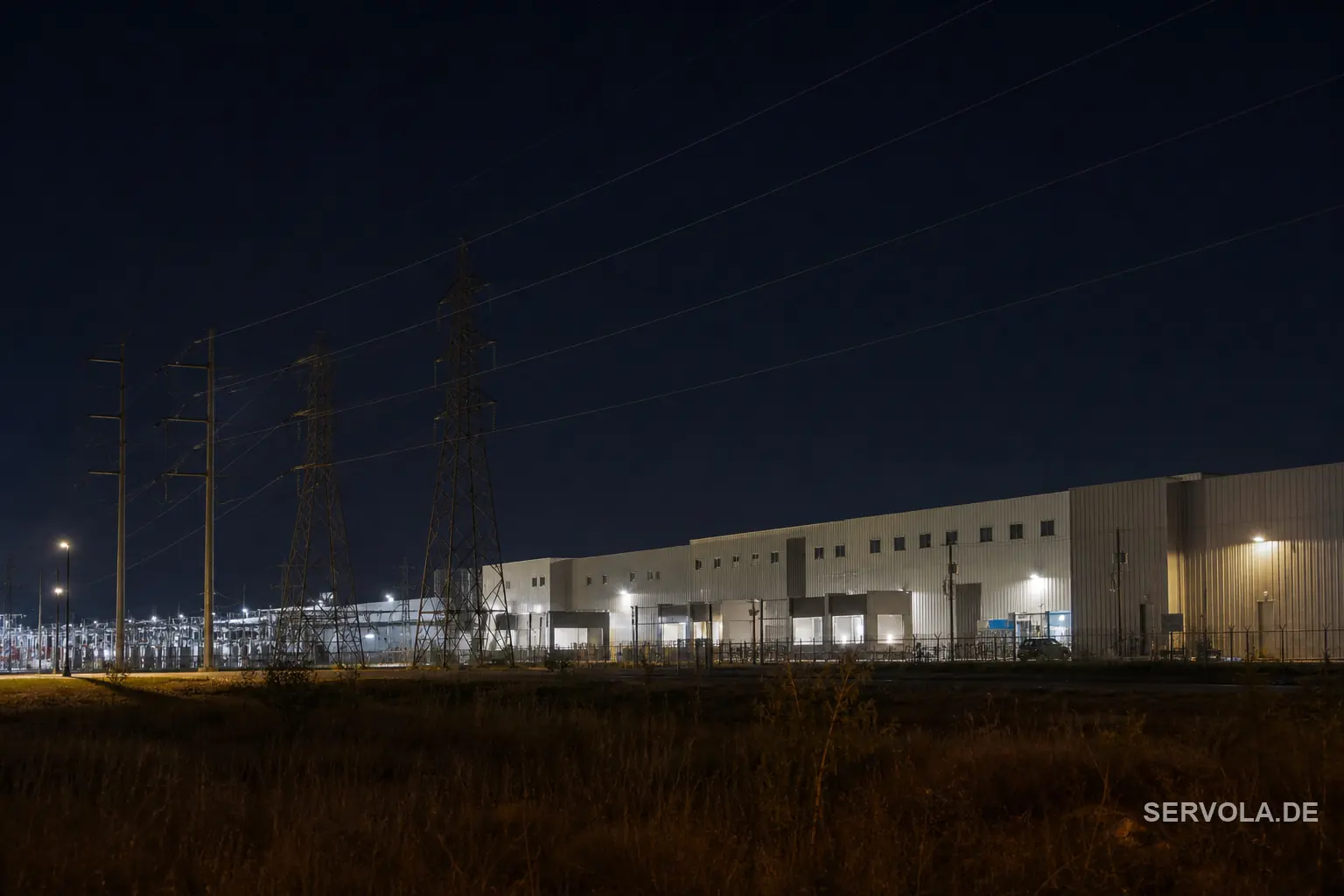
Beacon Point sits in Nueces County on the Texas gulf coast, and Hut 8 originally underwrote the site on a speed-to-power thesis to serve its affiliated bitcoin miner, American Bitcoin Corp. On 20 July 2026 the company filed an 8-K telling the market something else entirely. The campus is now fully contracted under two fifteen-year AI leases, 352 megawatts of IT capacity each, 704 megawatts in total, carrying a base-term contract value of 9.8 billion dollars per lease and 19.6 billion dollars for the campus.
Asher Genoot, chief executive of Hut 8, said the tenant choosing to double its footprint at the site was the strongest validation an asset can receive. The second lease is triple net and runs on substantially the same terms as the first, with three five-year renewal options that would lift campus-level contract value to 50.2 billion dollars if every one were exercised. The full 1,000 megawatts of utility capacity is already secured under an interconnection agreement with AEP Texas, and Hut 8 states that no incremental capacity is required to serve the second lease.
Two hundred and twenty-four megawatts became three hundred and fifty-two
The first data hall at Beacon Point was originally scoped at 224 megawatts of IT capacity, sized to the chip architectures commercially deployed when the design was drawn. Hut 8 redesigned that hall to Nvidia's DSX reference architecture, which carries materially higher rack-level power densities, and pulled 352 megawatts of IT capacity out of the same land and the same utility footprint. That is 57 percent more compute standing behind an unchanged grid connection.
This is the part worth carrying out of the filing. A megawatt of interconnection is a claim on the grid rather than a quantity of compute, and the conversion rate between the two moved by more than half inside a single construction cycle. Any capacity plan denominated in megawatts is therefore denominated in a unit that drifts. The queue position an operator signs for today will deliver an amount of compute that nobody at the table can state on the day of signing.
What the escalator says that the headline does not
The number worth copying out of this filing is not 9.8 billion dollars. It is 3.0 percent, the annual base rent escalator fixed for the fifteen-year base term and disclosed in the transaction highlights. Rent rises on a schedule set in July 2026 and stays on that schedule until 2041, whatever happens to the amount of work the leased megawatts can perform.
Read against the 57 percent redesign, that fixed escalator has a clear owner. If compute per megawatt keeps improving across the next fifteen years, and the last cycle suggests it will, the tenant captures the improvement and the landlord collects 3.0 percent a year regardless. Whoever holds the fixed escalator in a long capacity contract is the party that keeps the efficiency gains. That is the clause to negotiate, and it is rarely the clause that gets discussed.
The tenant nobody has to name
Seven hundred and four megawatts, 19.6 billion dollars of base-term value, and no name. Hut 8 describes the counterparty only as a high-investment-grade company, the same one that signed the first lease. Across the wider portfolio of 949 megawatts, 704 at Beacon Point and 245 at River Bend, the company states that 100 percent of contracted capacity is leased to or backstopped by investment-grade counterparties. The word carrying the load in that sentence is backstopped, because a backstop is a different instrument from a lease and the filing does not say which capacity sits behind which.
The expected net operating income figures, more than 1.75 billion dollars a year across the portfolio, are a non-GAAP measure. Hut 8 declined to reconcile them to operating income, stating that it cannot quantify the necessary amounts without unreasonable effort. None of this is irregular and none of it is concealed. It does mean the credit standing behind a fifteen-year, multi-billion commitment reaches the market as an adjective rather than as a name, and anyone modelling the counterparty risk in the AI build-out is modelling a description.
How to write a capacity commitment that survives a density change
The practical response is to stop treating the megawatt as the unit of the deal. Write the committed capacity in racks and kilowatts per rack alongside the megawatt headline, so a density change is visible in the contract rather than absorbed silently by one side. Ask the provider what rack architecture the hall was designed around and what happens to your allocation if that architecture is superseded mid-term. If the answer is that nothing happens, you now know who keeps the upside.
Timing matters for anyone planning against this specific capacity. Initial energization at Beacon Point remains on schedule for the first quarter of 2027, and the first Phase 2 data hall is expected in the second quarter of 2028. European operators facing rationed interconnection queues should note the direction of travel, because density is currently the only route to more compute that does not require a new grid connection, and it is moving faster than the queues are.
Read next: The Cities That Built Europe's Cloud Are Now Stuck | Ofgem's GBP 712,500-Per-MW Grid Bond Lands This Month