A chip that floundered for years just cleared test in six weeks
An internal Meta memo reviewed by Reuters says the company's own AI accelerator, code-named Iris, starts production in September, and one striking line explains why this matters: at least one chip passed its testing phase in about six weeks with no major issues. Meta has been trying to build its own silicon since 2023, and the effort mostly stalled. A clean six-week bring-up is the kind of result that turns a research project into a supply line.
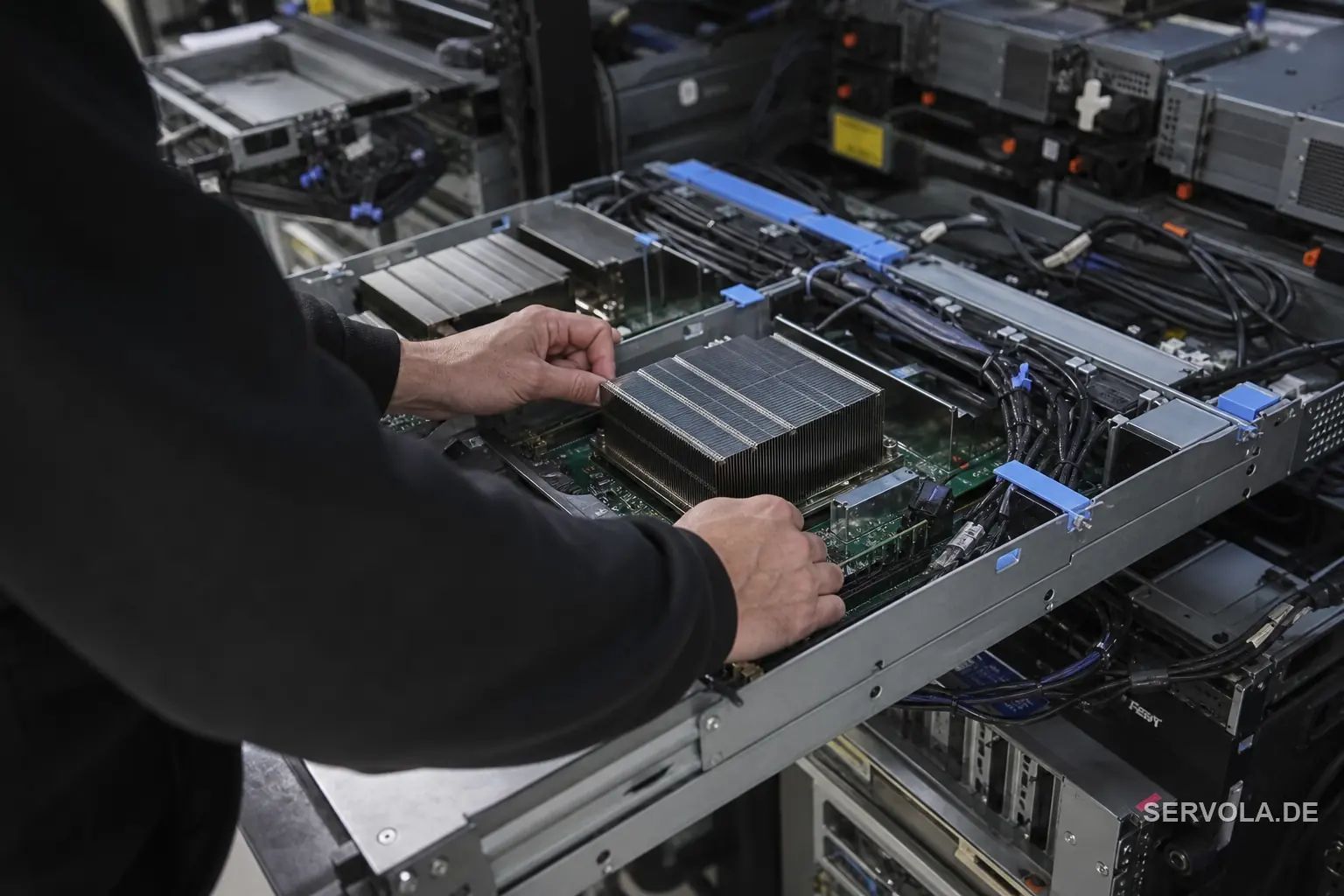
The part is a Meta Training and Inference Accelerator, the in-house family Meta designs to run the AI behind Facebook and Instagram. Broadcom helped design it, TSMC will manufacture it, Samsung supplies the memory, and the plan is to push Meta's compute from about seven gigawatts this year toward roughly double that next year. The chip itself is not the story. The speed of the test is.
The tell is that Meta keeps buying Nvidia anyway
Meta is not walking away from Nvidia. The same company putting its own chip into production still expects 125 to 145 billion dollars of capital spending this year, much of it on Nvidia and AMD hardware, and it has said plainly it will keep buying from both. That is the signal worth reading. A buyer this size does not build a second source to quit its supplier. It builds one to negotiate.
Every large component buyer knows the move. The moment a credible in-house alternative exists, the incumbent's pricing power changes, even for the units you still buy from them. Meta is not announcing independence from Nvidia. It is announcing that it now has a floor under its own costs and a card to play at the next price review, which is a very different and more durable thing.
What a second source does to the price you pay
You do not run a hyperscale fab, so the direct effect on your business is not the chip, it is the price of renting compute. Today that price carries a large premium because a single vendor sets it. When the biggest buyers start self-supplying part of their demand, that premium stops being a one-way bet, because the merchant market has to compete with the buyers' own silicon on cost.
The catch is timing. Meta's chip runs Meta's own workloads first, and custom accelerators are notoriously hard to rent as general-purpose capacity, so nothing on your invoice changes this quarter. What changes is the direction of travel: the assumption that GPU rental prices only rise, which underwrites a lot of 2027 planning, is now the assumption most exposed to being wrong.
What an operator should do before 2027 budgets close
Treat this as a budgeting input, not a hardware story. If your model for next year bakes in today's compute prices climbing at last year's rate, add a second scenario where the largest buyers self-supply and that curve flattens, and see which decisions flip. The point is not to predict the price. It is to stop betting the plan on one direction.
Then ask your cloud or GPU vendor a direct question at renewal: what happens to my rate if a major customer moves a chunk of its demand in-house. A vendor that shrugs is telling you the premium is still theirs to keep. A vendor that engages is telling you the second source is already priced in. Either answer is worth more than the headline about Meta.
Read next: OpenAI's Efficiency Claim Has No Independent Check Yet | Even a Trillion-Dollar Lab Must Rent Its Compute