What actually happened
Between early June and July 1, three privately funded advanced reactors reached initial criticality under the US Department of Energy Reactor Pilot Program. Antares Nuclear brought its Mark-0 unit critical at Idaho National Laboratory, Valar Atomics followed with its Ward 250 reactor at the San Rafael Energy Lab in Utah, and Deployable Energy achieved criticality with its Unity unit at Idaho late on June 30. The DOE announced the third milestone on July 1 and stated that the United States had become the first country to reach criticality in three distinct advanced microreactor designs within a single month.
The program traces to a May 2025 executive order that set a July 4, 2026 deadline for at least three test reactors to go critical using DOE authorization rather than the standard Nuclear Regulatory Commission licensing path. All three units met it. Valar Atomics is also the first DOE-authorized reactor built and operated outside the national laboratory system, which is the part that matters commercially: the authorization route it proved is the one a private operator would use to site a unit on an industrial or compute campus.
The Nvidia demonstration, and what it does not prove
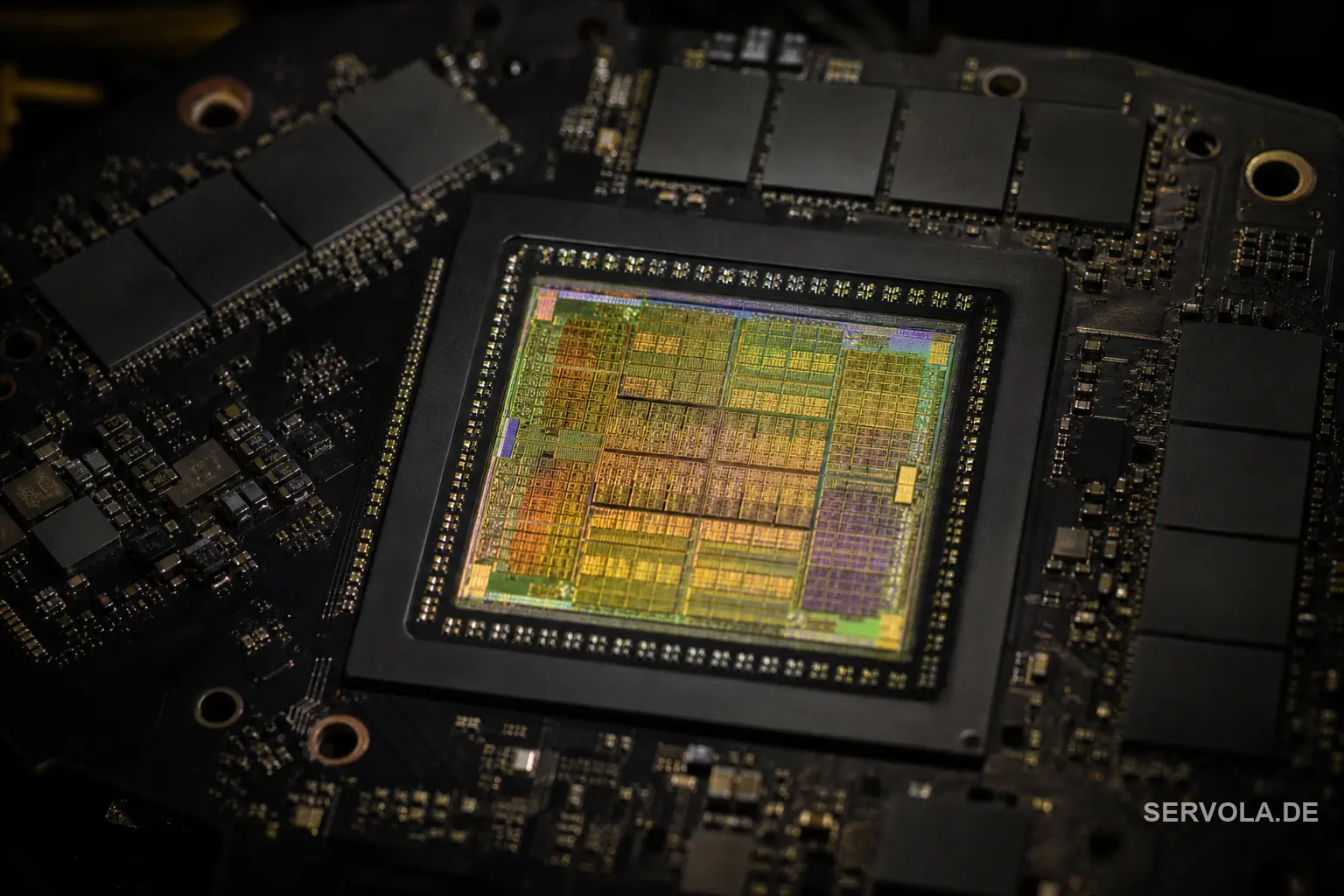
On July 1 Valar connected its Ward 250 reactor to an Nvidia DGX Spark, a desktop-class AI machine built on the Grace Blackwell superchip, plus a web server running a demonstration page. This is the first US case of an advanced reactor supplying a live AI compute load, and it is a genuine engineering marker. It is also very small. The reactor ran at roughly 37 percent of its intended output, near 100 kilowatts of thermal power, and the DGX Spark it fed draws about 240 watts. The advertised 30 MW nuclear-powered data center in Utah remains a plan: no construction schedule, no investment figure, and no binding hardware order have been published.
The honest read is that physics has been demonstrated and economics have not. A reactor that splits atoms in a shielded test bay is a long way from a plant that delivers firm megawatts through a grid interconnection, a fuel supply chain, and a decade of operating cost. Treat the criticality milestone as evidence that the timeline is compressing, not as evidence that dispatchable nuclear power is available to buy today.
Why the timeline compression is the real signal
The number worth carrying into a planning meeting is Deployable Energy's. It took its Unity reactor from project kickoff at Idaho National Laboratory to criticality in about 150 days on a single-digit-million-dollar budget. Conventional advanced-reactor programs measure the same distance in years and hundreds of millions. The compression comes from the DOE authorization path, factory-style fabrication, and reactor cores small enough to move on a truck. Valar's Ward 250 is a 5 MW helium-cooled, TRISO-fueled gas reactor roughly the size of a minivan; Deployable's Unity is a one-megawatt unit that fits in a shipping container.
For an operator, that changes the shape of the bet. The constraint on new compute and new industrial load is increasingly firm power on a schedule, not capital. A reactor class that can be authorized and built in months, sited without water, and co-located with the load is the first credible answer to that constraint that is not another multi-year grid interconnection queue. None of these units is selling commercial power yet. But the group that would sell it just proved the build cycle is measured in months.
What an owner should do now
Do not repower a facility around a reactor that has run for a day. Do treat firm-power procurement as a live strategic question rather than a settled one. If your growth plan depends on new compute or new industrial load in a grid-constrained or water-constrained region, the set of credible options widened this month, and the vendors in it now have a demonstrated authorization route and a build cycle measured in months rather than years.
The practical move is to open the conversation early and cheaply: ask the microreactor developers what a co-located unit would require in permitting, fuel supply, and cost per firm megawatt, and get those answers on paper before you commit a multi-year grid application. The companies that win the next round of compute and industrial buildout will be the ones that treated firm power as a design input, not an afterthought.
Read next: Nvidia Gets Efficient. The Grid Still Doubles. | Nvidia's $250bn OpenAI Guarantee Fell To $120bn