A Launch With No Keynote
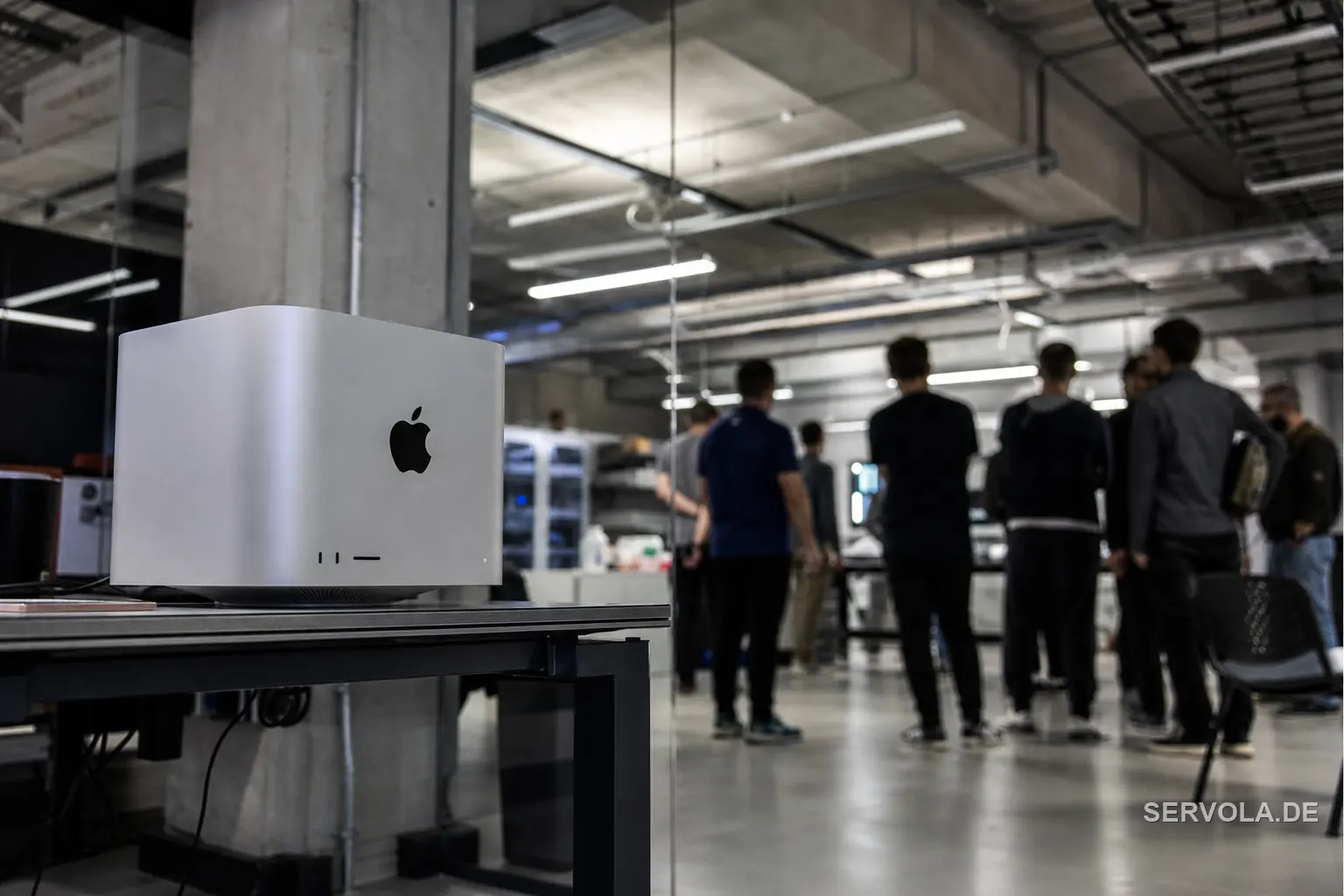
Apple's newest Macs arrived without a stage event: three newsroom posts within the same hour on August 25, 2026, introducing the Mac mini with the M6 and M5 Pro chips, and the Mac Studio with the M5 Max and the new M5 Ultra. Pre-orders opened the same day in 30 countries and regions, with shipping starting September 22.
The M6 is Apple's first chip built on a 2 nanometer manufacturing process, and Apple says it delivers up to 4 times faster AI performance and up to 13.5 times faster large-language-model prompt processing than the original M1. The Mac Studio's M5 Ultra is Apple's first quad-die chip, fusing four silicon dies into a single package to reach up to 512GB of unified memory and up to 4.3 times the AI compute of the M3 Ultra it replaces. Apple's chief hardware officer, Johny Srouji, called the new Mac mini a "whole new level of AI performance."
The Price Apple Already Explained
The headline configuration, the Mac mini with M6, starts at $899 in the United States, GBP 899 in the United Kingdom and EUR 1,049 in Germany - and Apple's own chief executive had already told the public why prices were heading this way.
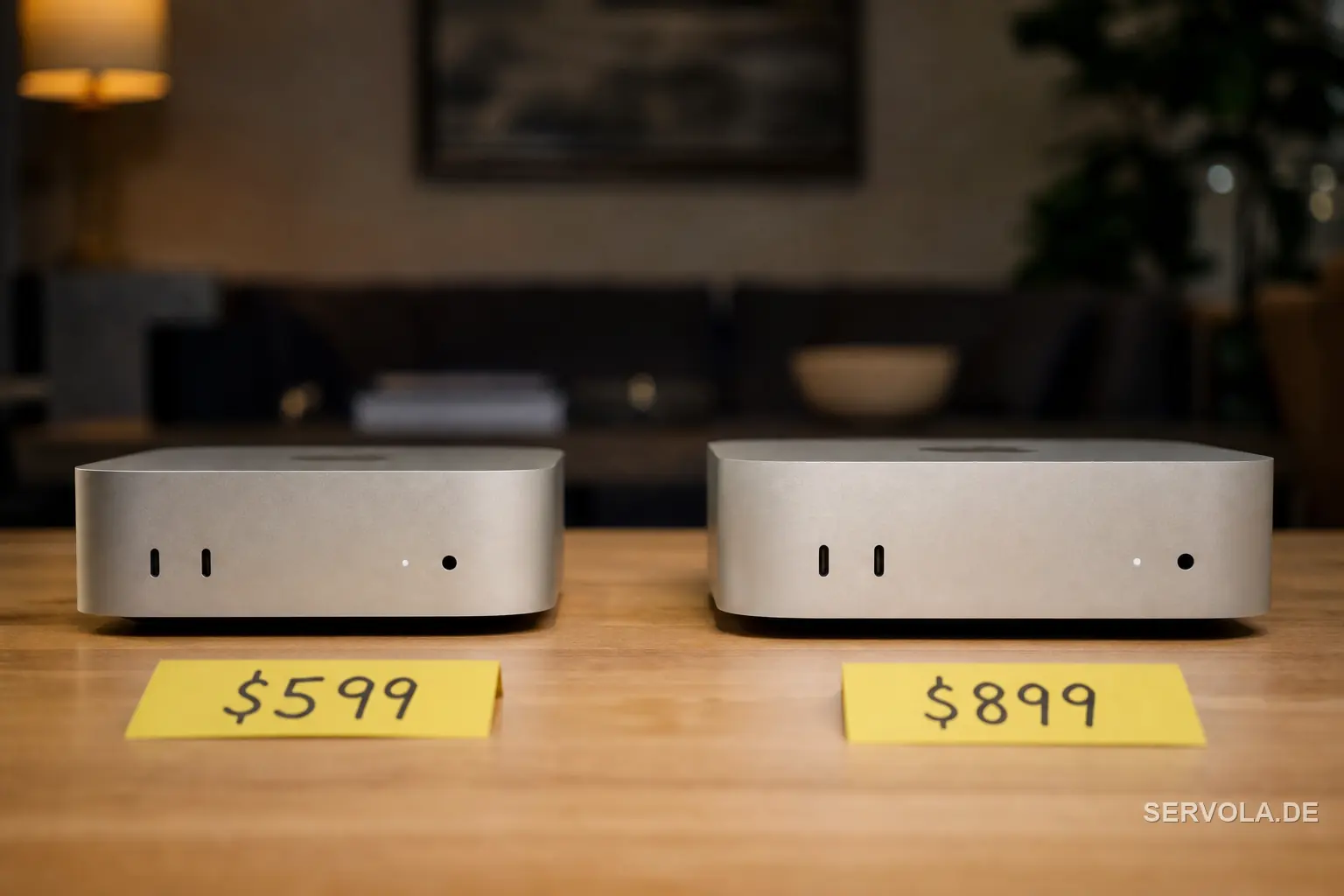
Back in May 2026, Apple discontinued the Mac mini's cheapest 256GB storage tier and raised the entry price from $599 to $799. CEO Tim Cook attributed the move directly to "a global memory chip shortage, driven by companies building out AI server facilities," warning of "significantly higher memory costs" ahead.
| Date | Mac mini base configuration | Price |
|---|---|---|
| November 2024 | M4, 16GB RAM, 256GB storage | $599 |
| May 2026 | M4, 16GB RAM, 512GB storage (256GB tier discontinued) | $799 |
| August 2026 | M6, 16GB RAM, 256GB storage | $899 |
The 256GB configuration that cost $599 in November 2024 is back on sale in August 2026 for $899 - a 50 percent increase over 21 months for the same spec sheet, spread across two moves Apple itself tied to the same root cause.
A Different Kind Of Increase
May's price rise was a stopgap: Apple removed the cheapest storage tier rather than absorb rising component costs into every configuration, and framed it as a temporary supply-chain response.
August's increase is different in kind, not degree. It is built into the launch price of the exact machine Apple is marketing as its most AI-capable Mac mini yet, on a chip that took years and a new manufacturing process to deliver. Apple is not discounting its way around a memory-cost problem this time; it is charging a premium for a chip designed to run more AI locally, using memory that costs more precisely because AI datacenters are buying it faster than suppliers can produce it. Amazon named the same root cause seven days earlier, raising Echo, Kindle and Fire TV prices by as much as 60 percent - without a chip upgrade attached to the increase at all.
The Foundry Europe Still Does Not Have
Every M6 chip inside these new Mac minis comes from a 2 nanometer process that exists at volume in exactly one place: TSMC's fabs in Taiwan.
The EU's own answer to that dependency broke ground the same month: ESMC, the TSMC-backed joint venture with Bosch, Infineon and NXP, held its Dresden groundbreaking on August 20, 2026, after the European Commission approved roughly EUR 5 billion in Chips Act state aid for the project. But the Dresden fab is built for 28 and 16 nanometer chips, not 2 nanometers - a full process generation and a half behind the silicon inside the machine Apple is selling as its most AI-capable Mac mini. The EU Chips Act targets a 20 percent global market share by 2030; for the leading-edge silicon inside the computers EU businesses buy to run AI workloads locally, that ambition still runs entirely through Taiwan.
What It Means For Refresh Budgets
Owners planning a Mac refresh cycle should treat this month's prices as the new floor, not a peak to wait out.
The memory-cost pressure behind both 2026 price rises is structural, not seasonal: AI datacenter buyers are absorbing memory and advanced-node capacity faster than suppliers can add it, and new fab capacity, including Dresden's, will not shift that balance before 2027 at the earliest. Budgeting a hardware refresh around the assumption that prices will normalize is likely to cost more than accepting the current price as the baseline.
Read next: Apple Just Priced the Budget Mac Out of Existence | Apple's Price Hike Has A Memory Chip Fingerprint On It