An IT Manager Sees 'World's First' at a Trade Show
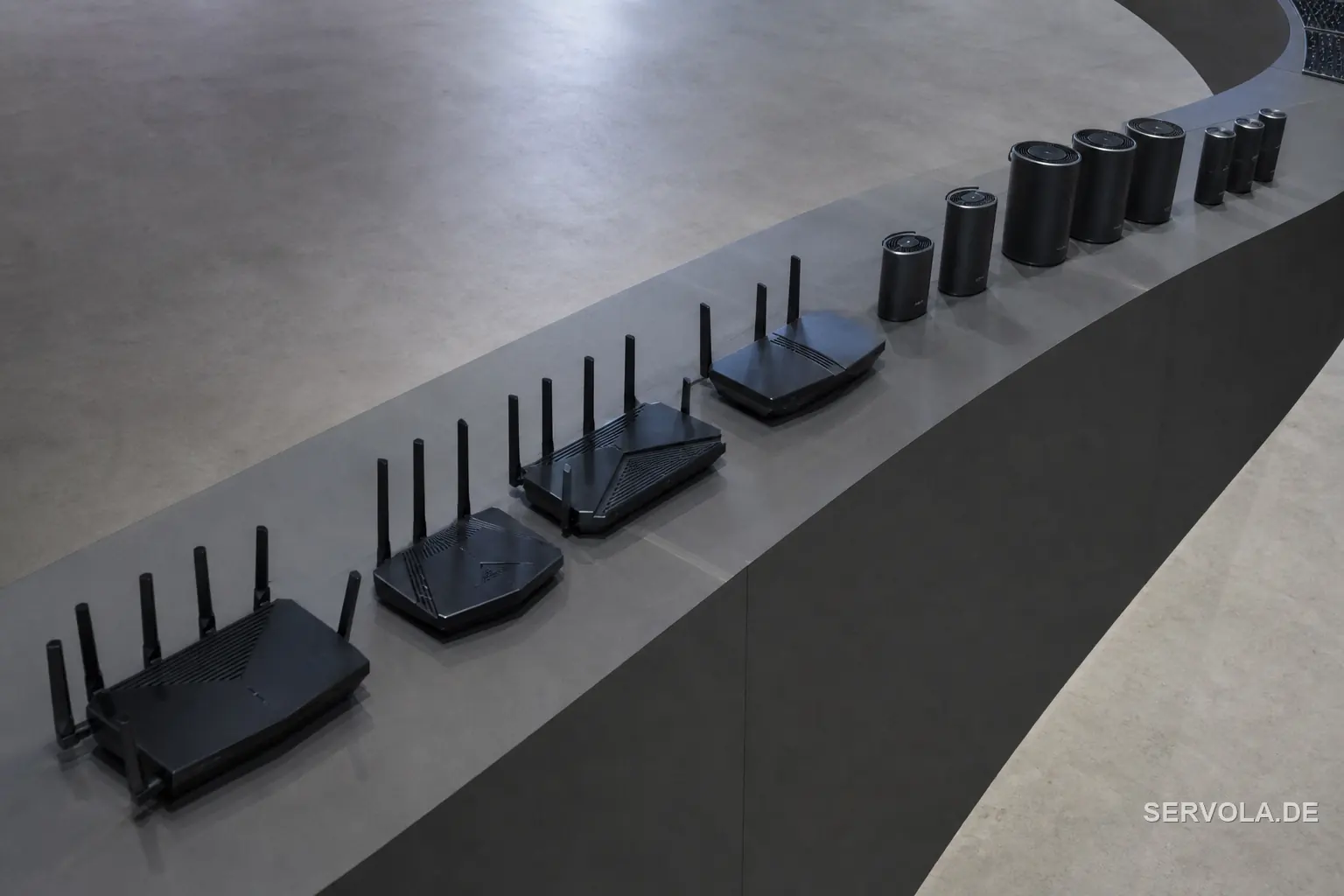
TP-Link used its IFA 2026 press conference in Berlin to claim the world's first complete Wi-Fi 8 product lineup, built around a router and a mesh system that will not actually reach most buyers until next year. The Archer 8 Ultra (model BN19000/BN800) packs 18 internal antennas for up to 19 Gbps of aggregate wireless throughput and 10 Gbps wired, while the Deco 8 Ultra mesh system (BN22000/BN85) claims up to 22 Gbps wireless, with a three-pack covering up to 9,800 square feet and supporting more than 200 connected devices.
TP-Link's industrial design lead, Gary Chang, framed the hardware as a display object as much as a network appliance: "When a router's design becomes something people want to display, it ends up exactly where it performs best." That framing matters for what comes next: a router that sells partly on looks is easier to market before its underlying standard is even finished.
The Standard Behind the Marketing Is Still a Draft
Wi-Fi 8 is not yet a finished standard. IEEE 802.11bn, the specification the entire product category is named after, remains in draft form, with industry estimates putting full ratification no earlier than 2028. TP-Link is shipping real hardware against a target that has not stopped moving, using what it calls a Wi-Fi 8 StabilityEngine: Enhanced Long Range and Distributed Resource Units for coverage, Non-Primary Channel Access to manage congestion, and Unequal Modulation with new Modulation and Coding Schemes for throughput.
Each of those is TP-Link's own implementation of a mechanism still being finalized inside the standards body, not a certified, interoperable feature set the way a ratified Wi-Fi 6 or 7 device carries. Early Wi-Fi 6E and Wi-Fi 7 hardware went through exactly this phase, and some devices needed firmware updates once the finished specification landed. Nothing here says TP-Link's engineering is wrong; it says the label on the box is ahead of the paperwork behind it.
What TP-Link Has Not Said Yet
The announcement is conspicuously missing one number: price. TP-Link has set a global online launch event and regional Archer 8 Ultra pre-orders for September 30, 2026, with the Deco 8 Ultra mesh system following in the first quarter of 2027 and a Roam 8 travel router plus range extenders and adapters in the second quarter. A buyer can see the antenna count and the throughput claim today, but not the number that actually decides a purchase.
That sequencing is not unusual for a trade-show reveal, but it does shift the burden onto anyone building an autumn network-refresh budget around this hardware: the marketing arrived in September, the ability to actually order arrived a month later, and the ability to compare cost against a Wi-Fi 7 alternative is still pending.
What an EU or UK Office Should Check Before Buying
An office or hospitality operator planning a network refresh this quarter should treat every Wi-Fi 8 spec announced this week as directional, not final, because the standard it is named after is directional too. The right question for any vendor pitching "Wi-Fi 8 ready" hardware before 802.11bn ratifies is not whether the antennas are real, they are, but what the vendor commits to if the finished standard changes a mechanism its StabilityEngine already shipped.
Concretely: ask for a written firmware-update commitment tied to 802.11bn ratification, not just a marketing promise, and do not let a September announcement without a price tag anchor a Q4 budget line. The number that actually matters for the purchase decision is still unannounced, and TP-Link has given no date for when that changes.
Read next: Two New Rings Can Now Pay Without a PIN, or a Screen | Acer Just Put a Dead Brand Back on the Price List