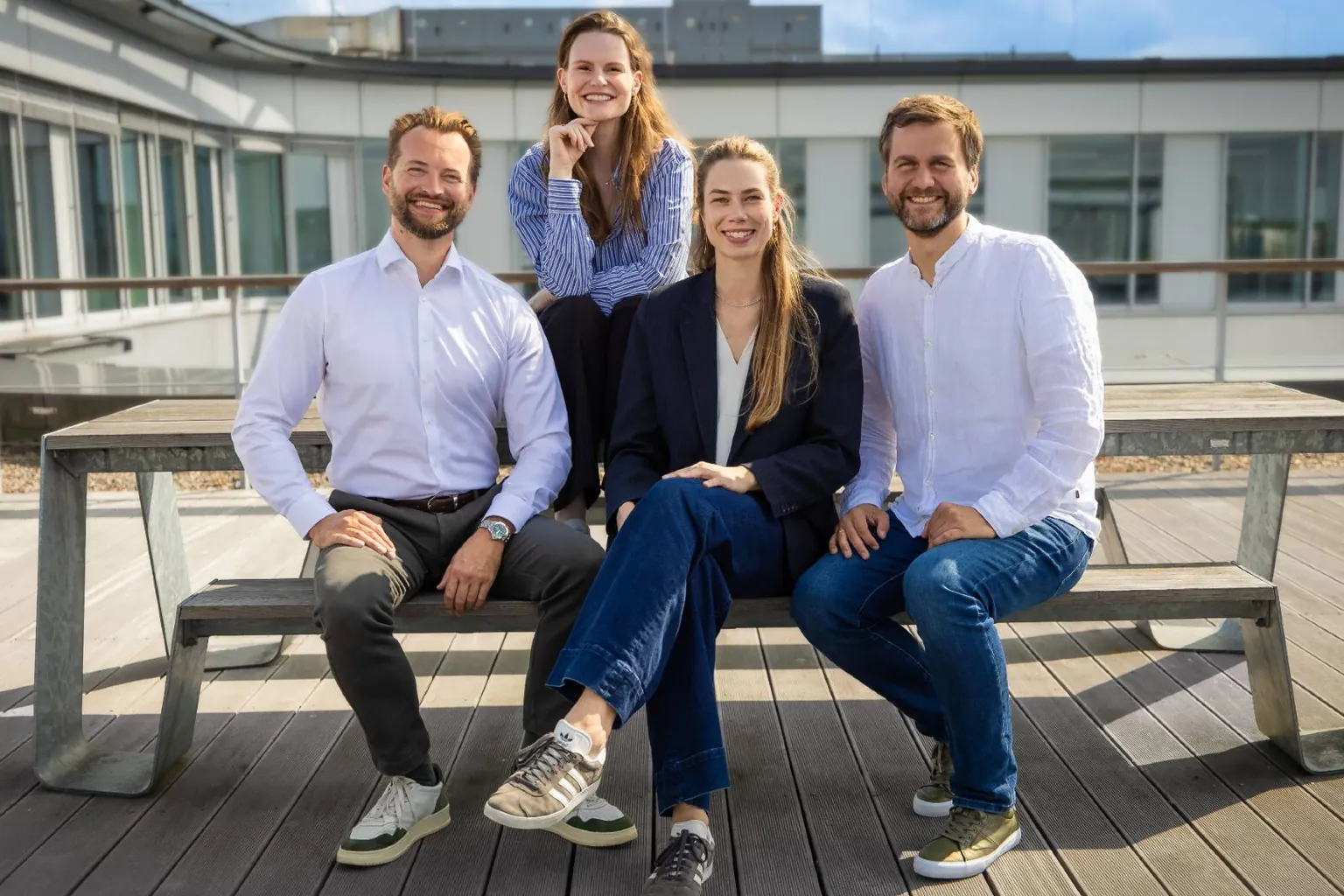
What Jungheinrich just launched
Jungheinrich, the German intralogistics and warehouse-automation group best known for forklifts and automated storage systems, launched Uplift Ventures on September 2, 2026, a corporate venture capital fund holding EUR 100 million to invest directly in early-stage technology companies. EU-Startups reported the launch, and Tech Funding News independently confirmed the fund's size and mandate.
The fund's stated purpose is narrow and specific: bridging Europe's deep-tech financing gap at the Series A stage, the point where founders with working technology and early customers routinely struggle to raise the capital that would let them scale from Europe rather than relocate for US money.
The size of the check, and the size of the gap it targets
Uplift Ventures writes checks of roughly EUR 1 million to EUR 5 million into companies at late-seed through Series A stage, a range small enough to sit alongside other investors in a syndicate rather than dominate a round outright.
That range matters because Europe's deep-tech financing gap has been documented for years: seed funding exists, and growth-stage capital exists once a company has scaled revenue, but the Series A bridge between the two, where a prototype becomes a company with commercial traction, is where European deep-tech founders most often lose momentum or leave for US capital instead.
Physical AI, energy, enterprise AI, logistics: the four fields Uplift Ventures will fund
Uplift Ventures named four investment focus areas at launch: physical AI, energy, enterprise AI, and logistics, each one a field where software has to work inside real machinery, warehouses, or power systems rather than stay confined to a screen.
Those four fields are not a random spread of trend categories; they sit close to the fields Jungheinrich's own business already runs on, a first hint that this fund is built to recognize and use what its parent company already understands, not to chase whatever category happens to be fashionable that quarter.
Why an industrial operator is writing this check, not a bank
Jungheinrich is an industrial operating company that manufactures forklifts and warehouse-automation equipment and runs its own logistics operations, not a financial institution or a pure venture capital firm raising money from outside limited partners to deploy for returns alone.
Europe's deep-tech Series A gap has usually been framed as a problem for VCs and national governments to fix, through bigger fund sizes, public co-investment schemes, or pension-fund mandates. Jungheinrich underwriting the gap directly, with its own balance sheet, signals a different diagnosis: an industrial company that actually operates warehouses and machines has concluded that funding physical AI and logistics-tech startups before they are proven is worth doing itself, rather than waiting to buy the finished product once a startup succeeds.
What changes for a European deep-tech founder raising a Series A
A founder building physical AI, energy tech, enterprise AI, or logistics technology now has a corporate operator, not only financial VCs, actively looking to write an early check, and that changes who gets pitched first and how a deal gets evaluated.
Christian Noske, the founding General Partner, previously invested for BMW i Ventures and NGP Capital, both corporate venture arms built by carmakers rather than by financial institutions, so he brings a due-diligence lens that weighs whether a startup's technology actually works inside an operator's real infrastructure, not only whether the financial return model holds up. For a founder, that likely means technical and operational fit gets scrutinized as heavily as the cap table.
What a corporate-backed fund at this scale means for competing VC funds
Pure financial VC funds investing in the same physical AI and logistics-tech segment now face a new kind of competitor in the syndicate: a corporate investor with deep operational knowledge of the sector, a EUR 100 million check-writing budget, and no pressure to exit on a standard fund-life timeline.
If Uplift Ventures is followed by other European industrial groups doing the same, valuation expectations and syndicate dynamics in deep-tech Series A rounds could shift meaningfully: corporate money brings strategic patience that financial VCs often cannot match, and a founder choosing between a pure-VC lead and a corporate-backed one now has a genuine option to weigh, not just a hypothetical one.
Read next: EUR 488 Million Later, Europe Still Needs a Launcher | A Valencia Startup Raises $125M to Lift GPU Use