The round, and who is behind it
On August 3, 2026, Valar Atomics announced it closed a $1 billion Series B, led by Sequoia Capital, valuing the company at $6 billion. Sequoia partner Shaun Maguire is joining Valar's board as part of the deal.
Alongside the equity round, Valar also secured a separate $200 million line of credit from Erebor and other banks, giving the company debt capacity on top of its equity raise. The round's other investors include Apandion Capital, Atreides Management, Conviction, Dream Ventures, HOF Capital, Point72 Ventures, Riot Ventures, Snowpoint Ventures, and Valor Equity Partners.
A $6 billion valuation for a company building physical nuclear reactors, rather than software, is unusual on its own. It puts Valar's valuation ahead of many established industrial and energy companies, and signals that Sequoia and its co-investors are underwriting more than a research project.
Why this is not just another funding headline
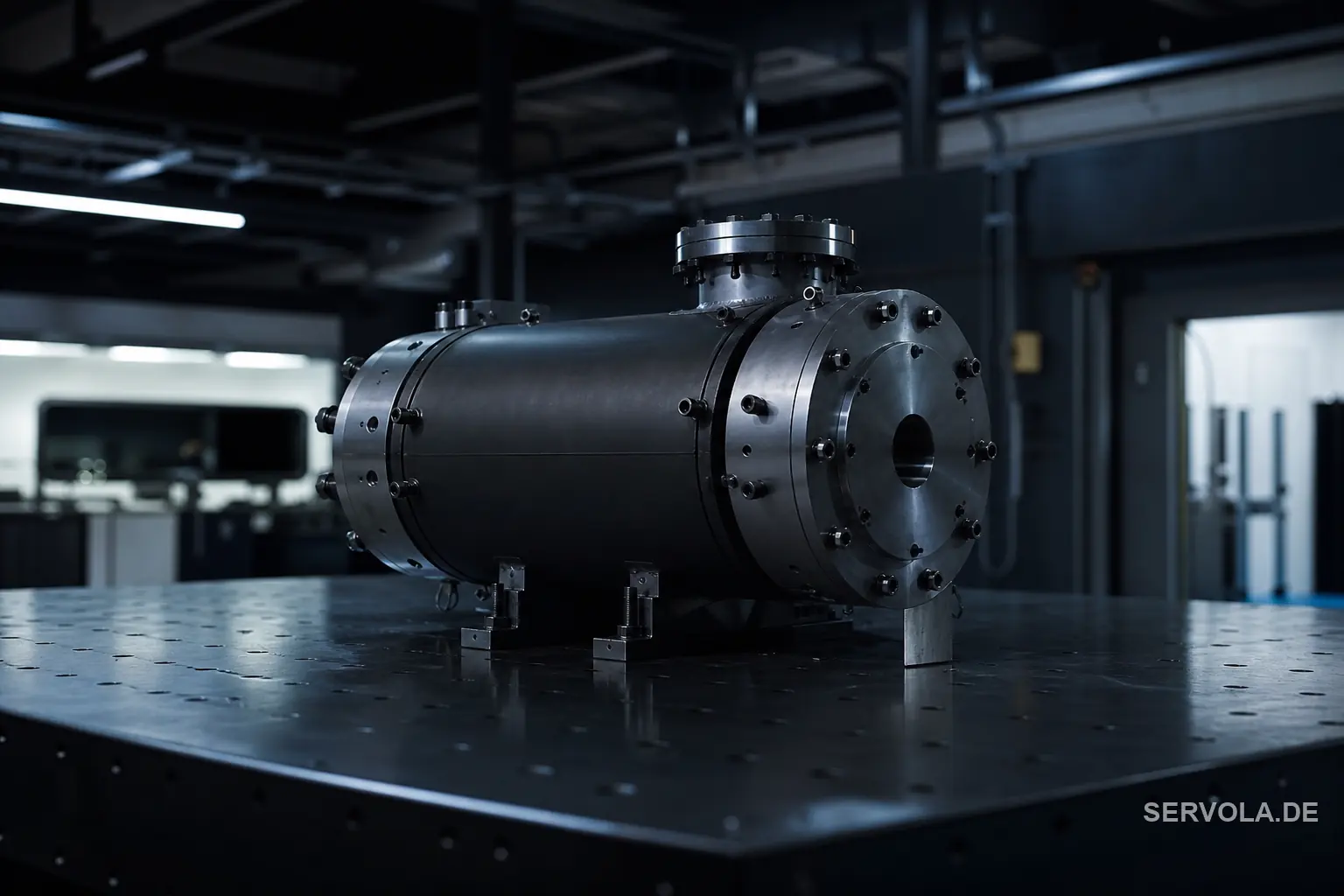
The round did not arrive on the back of a slide deck. On June 18, 2026, Valar's Ward 250 high-temperature gas reactor achieved self-sustaining nuclear criticality at the Utah San Rafael Energy Research Center in Orangeville - the point at which a reactor's fission reaction sustains itself without external input.
Two weeks later, on July 1, 2026, that same reactor's electricity powered an Nvidia DGX Spark desktop AI computer, marking the first time a US nuclear reactor has supplied power directly to an AI chip. Both milestones were reported and confirmed independently by multiple outlets before the funding round, not announced for the first time alongside it.
That sequencing matters. The $1 billion is backing a reactor that has already run and already produced usable electricity for a real computing load, not a design on paper. TechCrunch and other outlets independently confirmed the Sequoia terms and the board seat, separately from Valar's own announcement.
The structural bet: sell reactors, not grid capacity
Most of the AI industry's response to power scarcity so far has been to compete harder for the grid that already exists. Microsoft's deal tied to the Three Mile Island site and Amazon's agreement with Talen Energy are both, at their core, purchase agreements for power from existing or restarted plants feeding the existing grid.
Valar's pitch is structurally different: instead of buying a larger share of a constrained grid, it wants to sell a built-to-order small reactor that sits on a customer's own site and produces power the customer owns outright, independent of grid interconnection queues. The first customers it is targeting are AI compute operators, the group most exposed to the power bottleneck today.
That distinction is the entire thesis. A power purchase agreement is a claim on someone else's grid capacity. A reactor on your own land is a capital asset you control. Sophisticated investors putting $1 billion behind the second model, at a $6 billion valuation, is a signal that they think the ownership model is now viable on a real timeline, not just in theory.
From one reactor to a fleet: the manufacturing thesis
Valar has said the new capital will fund the move from a single demonstrated reactor to fleets of them, produced with factory-style manufacturing economics rather than built one at a time as bespoke projects. That is the same logic that took solar panels and batteries from expensive custom installations to a commodity manufactured product.
Traditional large nuclear plants are effectively built once, on-site, over many years, with costs that vary wildly project to project. A small, standardized reactor design built repeatedly in a factory is a different economic model entirely, and it is the model on which the entire small modular reactor industry - Valar included - is betting.
That bet remains unproven at the scale the company is describing. One working reactor supplying one desktop AI computer is a real milestone; producing a fleet of them at repeatable cost and on a predictable schedule is a manufacturing and regulatory challenge that has not yet been demonstrated by anyone in this category.
What this means for an EU or UK owner planning AI capex
For an owner planning AI infrastructure or data-center-adjacent capital spending over a three- to five-year horizon, the near-term reality has not changed: grid interconnection queues in most major markets, including the EU and UK, remain backed up for years, and the practical answer today is still to join that queue early and wait.
What has changed is that a funded, already-working alternative supply model is now on a real timeline rather than a theoretical one. That is worth a line item in multi-year power-strategy planning - a model to watch and revisit at the next planning cycle - rather than a reason to change anything about this quarter's plans.
One honest caveat matters here: the regulatory permissiveness that let Valar test a reactor at a research site in Utah does not currently exist in most EU or UK jurisdictions. The relevant conclusion for now is to watch this model closely, not to assume it is available to build on this side of the Atlantic.
Read next: A 10 Kilowatt Reactor Just Raised a Billion Dollars | PJM Overrules Its Own Two-Thirds Vote