Two supply shocks, one Wednesday afternoon
On 12 August, the Moon's shadow crosses Greenland, Iceland and northern Russia before touching the Atlantic, northern Spain and a sliver of Portugal in full totality, with a deep partial eclipse visible across most of the rest of Europe. Red Electrica, Spain's grid operator, forecasts the event will cut Iberian solar generation by about 5 GW, close to 13 percent of a typical August Wednesday's peak demand. ENTSO-E and France's RTE put the Europe-wide figure at roughly 9.7 GW of lost PV output at the moment of peak eclipse, with France alone expected to lose about 1.8 GW.
The eclipse is not arriving on a quiet grid. The same week, a European heatwave has pushed river temperatures high enough to force cooling-related output adjustments at French nuclear plants, taken Romania's Cernavoda reactors offline as Danube levels fell, and put Bulgaria's Kozloduy plant under emergency monitoring for the same reason. Two separate shocks, a fast solar dip and a slower nuclear squeeze, are landing on the same grid inside the same week.
Why storage, not gas, is doing Europe's work this time
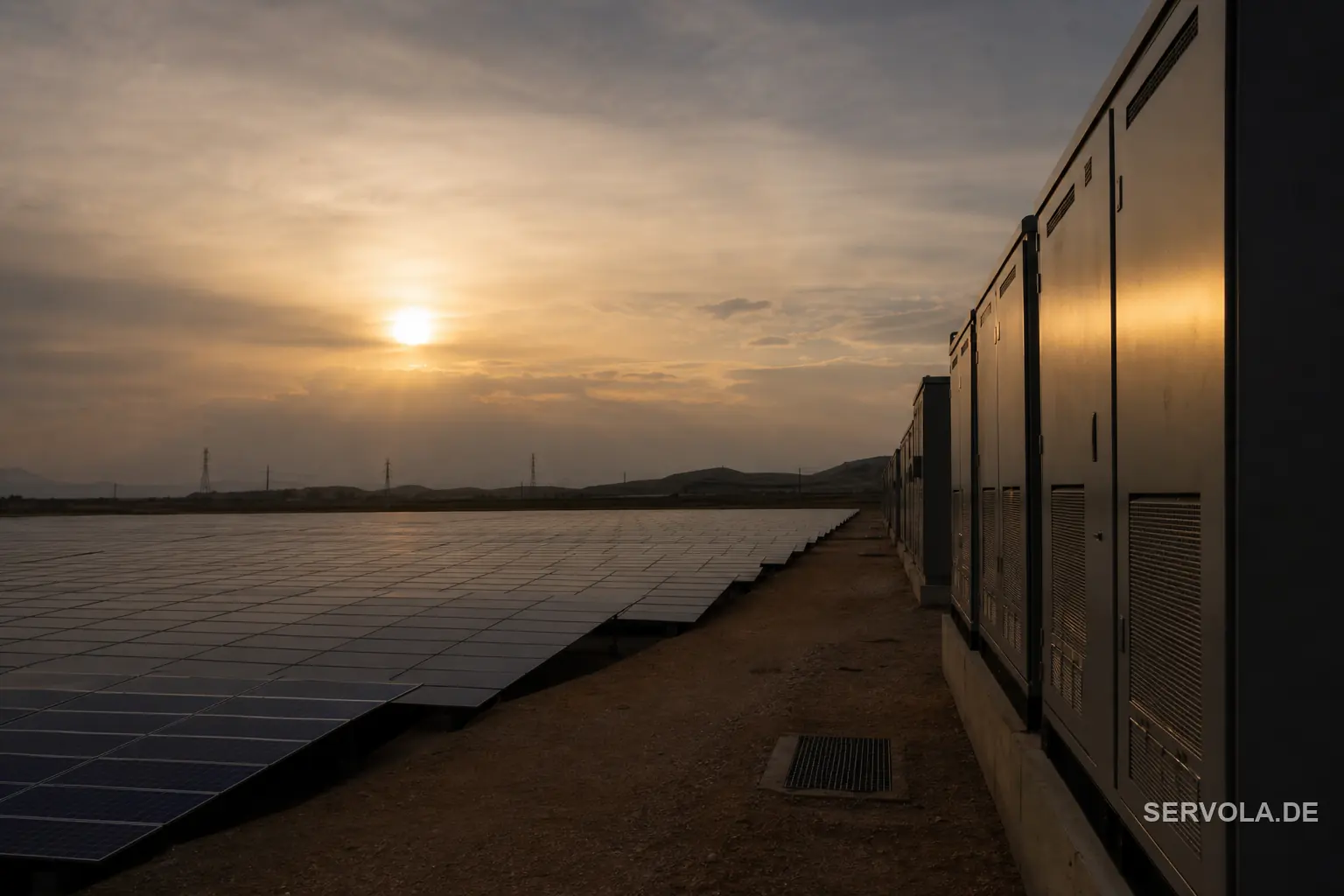
When a total solar eclipse crossed the United States in April 2024, grid operators in Texas and across the eclipse path leaned heavily on gas peaker plants to backfill the sudden solar drop and its equally sudden recovery a few minutes later. Europe has a different tool available this time. ENTSO-E's 2026 Summer Outlook records the continent's battery storage fleet at roughly 29 GW, roughly double what it was a year earlier, alongside a still-growing base of pumped hydro and cross-border interconnection.
That is the quiet story behind Wednesday's coordination. RTE, Red Electrica, Britain's NESO, Austria's APG and Germany's four transmission operators, 50Hertz, Amprion, TenneT and TransnetBW, have spent weeks building shared forecasts, staffing control rooms for the eclipse window, and avoiding planned outages that would have thinned their margins further. None of that changes the physics of a sudden 9.7 GW drop and rebound. It changes what absorbs it: batteries that can charge and discharge in seconds, rather than gas units that need minutes to ramp.
The numbers behind the confidence
Every operator involved is forecasting a manageable event. Red Electrica has said the effect on the electricity system will be minimal, in part because the eclipse falls in the early evening as solar output is already declining for the day, and in part because it will not coincide with the usual August demand peak. The caveat attached to every one of these forecasts is cloud cover: a clear-sky afternoon produces the full 9.7 GW swing, while broken cloud already masks part of the drop before the Moon does.
None of the operators publishing forecasts are predicting blackouts, and that is itself useful information. The question this event answers is not whether the lights stay on, which they almost certainly will, but how much manual intervention, reserve activation and price volatility it takes to keep them on. That is the gap between a grid that can technically survive a shock and one that absorbs it cleanly, and it is the gap the battery buildout was funded to close.
What this previews for winter
The value of Wednesday is that it is scheduled. Grid operators know the exact minute the solar drop begins and ends, which is precisely the advance warning a winter dunkelflaute, a windless, sun-starved cold snap that hits solar and wind output at once, never provides. If Europe's doubled storage fleet absorbs an announced 9.7 GW shock cleanly, that is a real data point. If it needs heavy manual backup or produces a price spike, that is a real data point too, and a more useful one than any capacity figure in a policy document.
For industrial and commercial energy buyers, the read-through is practical. Iberian and continental spot prices through Wednesday afternoon and evening are a live check on whether current storage capacity, the number now cited routinely in EU and UK grid-adequacy planning, holds up against an actual simultaneous demand-and-supply event rather than a modeled one. That is worth watching before committing to winter hedges, because the next version of this test will arrive without a countdown.
Read next: Spain Delays Almaraz Nuclear Shutdown by Three Years | Google Put Four AI Chips in Orbit, Not a Data Center