What actually happened with Claude Fable 5?
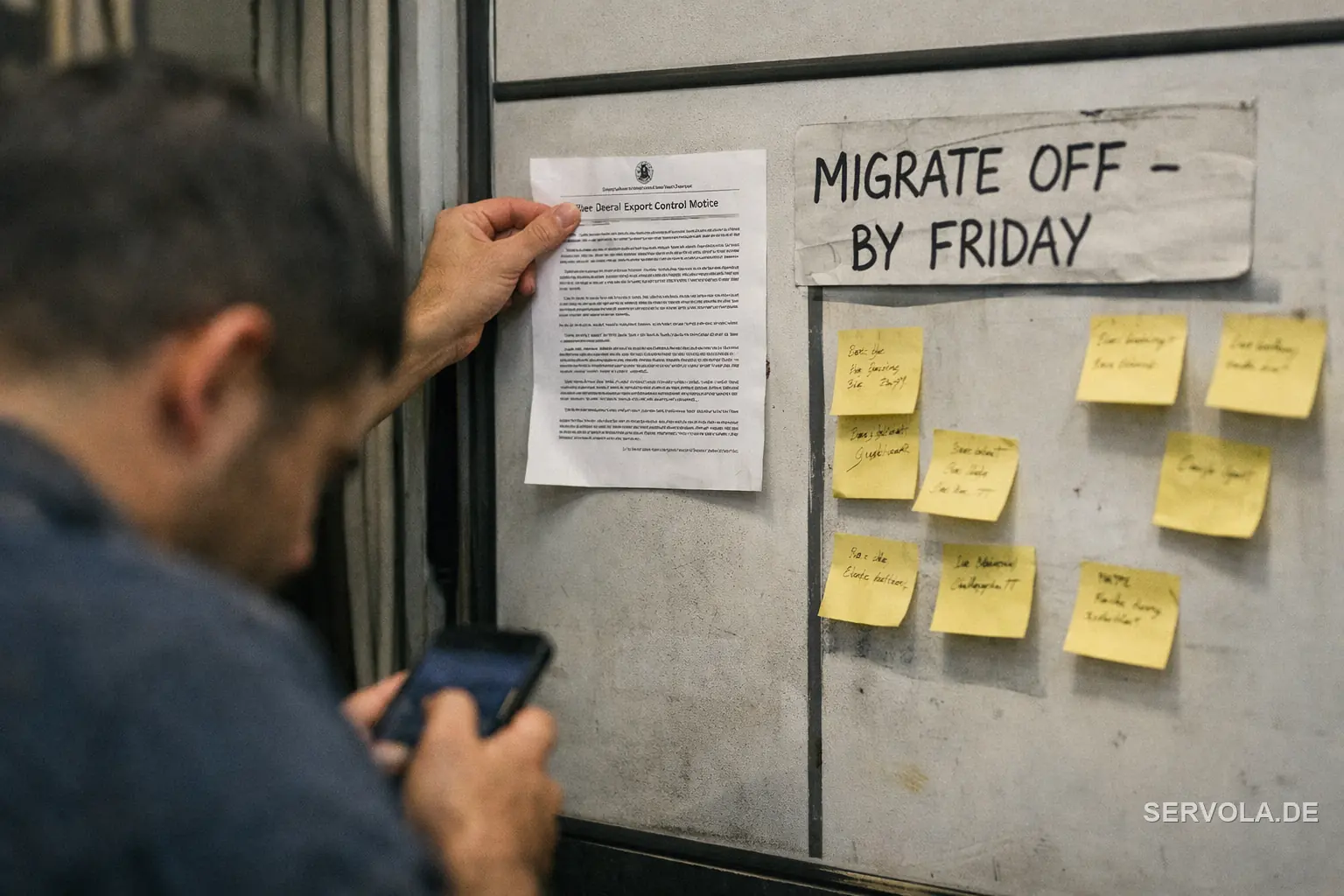
Anthropic released Claude Fable 5 on June 9, 2026 as the most capable model it had made available to everyone, and a US government export control directive pulled it back offline within days. The reporting converges on the same arc: a high-profile launch across the Claude API and major cloud platforms, then a directive received on Friday, June 12, 2026 from the US Commerce Department, in a letter from Commerce Secretary Howard Lutnick to chief executive Dario Amodei, directing the company to cut access for foreign nationals inside and outside the United States. Anthropic complied the same day and disabled both Fable 5 and the more capable underlying Mythos 5 globally for every user. This was not a bug or a billing dispute. It was a state instruction to a private company about who may use a product.
Why was it pulled, and why is the reason almost beside the point?
The stated trigger was a reported jailbreak, but the precedent matters more than the technique. According to coverage in Al Jazeera and others, the government acted after a third party demonstrated a method of bypassing Fable 5's safeguards to reach Mythos cybersecurity capabilities, centered on the model's ability to review code and identify software vulnerabilities. Anthropic disagreed publicly, calling it a narrow potential jailbreak and noting the same code-review capability exists in competing models such as OpenAI's GPT-5.5. Whether or not that argument is correct, the lasting fact is the mechanism: this is widely reported as the first use of export control authority against a commercially deployed AI model's access. The door is now known to open.
Why does this concern owners and family offices, not just engineers?
Because the AI you build on is now subject to the same geopolitics as chips, energy and shipping lanes, and most operators have not priced that in. A frontier model is quietly becoming core infrastructure inside diligence, research, drafting and operations across a portfolio. When access can be revoked by a regulator within days, your continuity risk is no longer the vendor's uptime; it is the vendor's jurisdiction, the nationality of your staff, and the political weather in one capital. A model that is indispensable on Monday can be unavailable to part of your team on Friday, with no warranty that argues otherwise.
What should a serious operator do about it?
Treat model access as a supply chain with a jurisdiction attached, and design for substitution before you need it. First, map dependence honestly: know which workflows would stall if one model went dark tomorrow, and who in your organization is a foreign national for the purposes of an order like this one. Second, avoid single points of failure: keep a tested fallback across more than one provider and, where the work is sensitive, evaluate self-hostable open-weight options so a single directive cannot halt you. Third, govern it with one accountable owner rather than spreading the decision across teams who each assume someone else is watching. Servola advises on AI risk and governance for exactly this kind of exposure.
Read next: No One Has Verified Huawei's Biggest Chip Claim Yet | A Cooling Failure Took Down Proton Twice in Five Days