Unlimited Cloud Gaming Ends in November
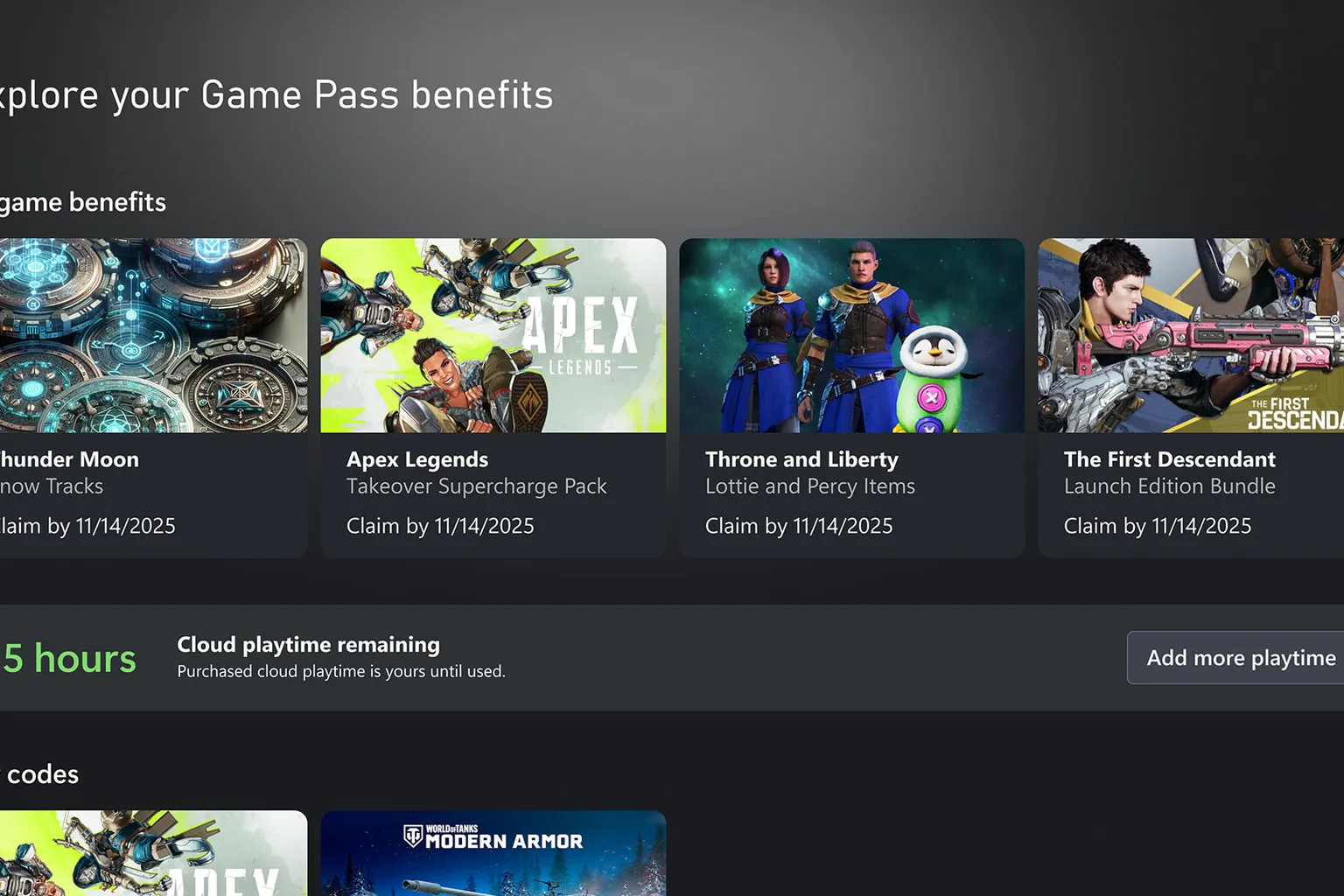
Microsoft announced on September 3, 2026 that Xbox Cloud Gaming will move from unlimited monthly play to fixed hour caps starting in November 2026. Subscribers who run out will be able to buy more cloud playtime through the Xbox Store, though Microsoft has not yet said at what price.
| Tier | Monthly price | Cloud gaming hours from November |
|---|---|---|
| Game Pass Essential | $9.99 | 5 hours |
| Game Pass Premium | $14.99 | 10 hours |
| Game Pass Ultimate | $22.99 | 15 hours |
Microsoft's stated reason is straightforward: the cost of providing cloud gaming grows as more people use it and play for longer, and the company says it needs to keep investing in reliability and performance. It estimates the change will affect roughly 4 percent of Game Pass subscribers, the heaviest users of a feature that, for everyone else, was rarely used enough to notice a cap at all.
The 4 Percent Number Is the Real Announcement
Look past the hour caps and the number that matters most is the one Microsoft chose to lead with: 4 percent. That is not a rounding error, it is a deliberate sizing. Microsoft has almost certainly modeled its own usage distribution closely enough to know exactly how many subscribers will feel this as a downgrade, and set the caps at a level that keeps that group small enough to absorb without a headline backlash from the broader subscriber base.
That is the specific mechanic worth naming, not just noting: measure where the real cost-to-serve concentrates in your heaviest users, cap that tail while framing it as an infrastructure cost rather than a price increase for the product most people already pay for, and let the majority of your subscriber base, which was never near the cap, experience the change as a footnote rather than a downgrade.
The Same Announcement Opened a New Revenue Line
In the same post, Microsoft opened Xbox Cloud Gaming to people without any Game Pass subscription at all, letting them buy cloud playtime hours through the Xbox Store to stream games they already own. Pricing for that option, like pricing for extra hours past the new caps, has not yet been disclosed.
Pairing a cap on subscribers with a new pay-per-hour option for non-subscribers is not a coincidence of timing. It gives Microsoft a second product to point to in the same announcement, one that reads as an expansion rather than a restriction, and it turns the exact hours a heavy subscriber now has to buy separately into a price point Microsoft can set without ever calling it what it is: a rate card for what used to be included.
What This Means for Anyone Selling Unlimited
Unlimited is a marketing word, not an engineering promise, and this is what it looks like when a company that offered it finally has enough usage data to know precisely who used it as advertised. Every subscription business that has ever sold an unlimited tier is running the same experiment, quietly, in its own usage logs, whether or not it has announced anything yet.
The lesson for any owner selling a similar tier is to run that analysis before your own heaviest users force the decision publicly: know your own tail before a cost line does it for you, decide whether to cap it as infrastructure cost or price it honestly as a usage tier, and have the offsetting product ready before you announce the restriction, the way Microsoft had its pay-per-hour option ready in the same breath as its caps.
Read next: Xbox Meters Cloud Hours The Month GTA VI Lands | Every Publisher Gets a Veto on Your Old Games