Munich, 16 July, and a number nobody expected to fall
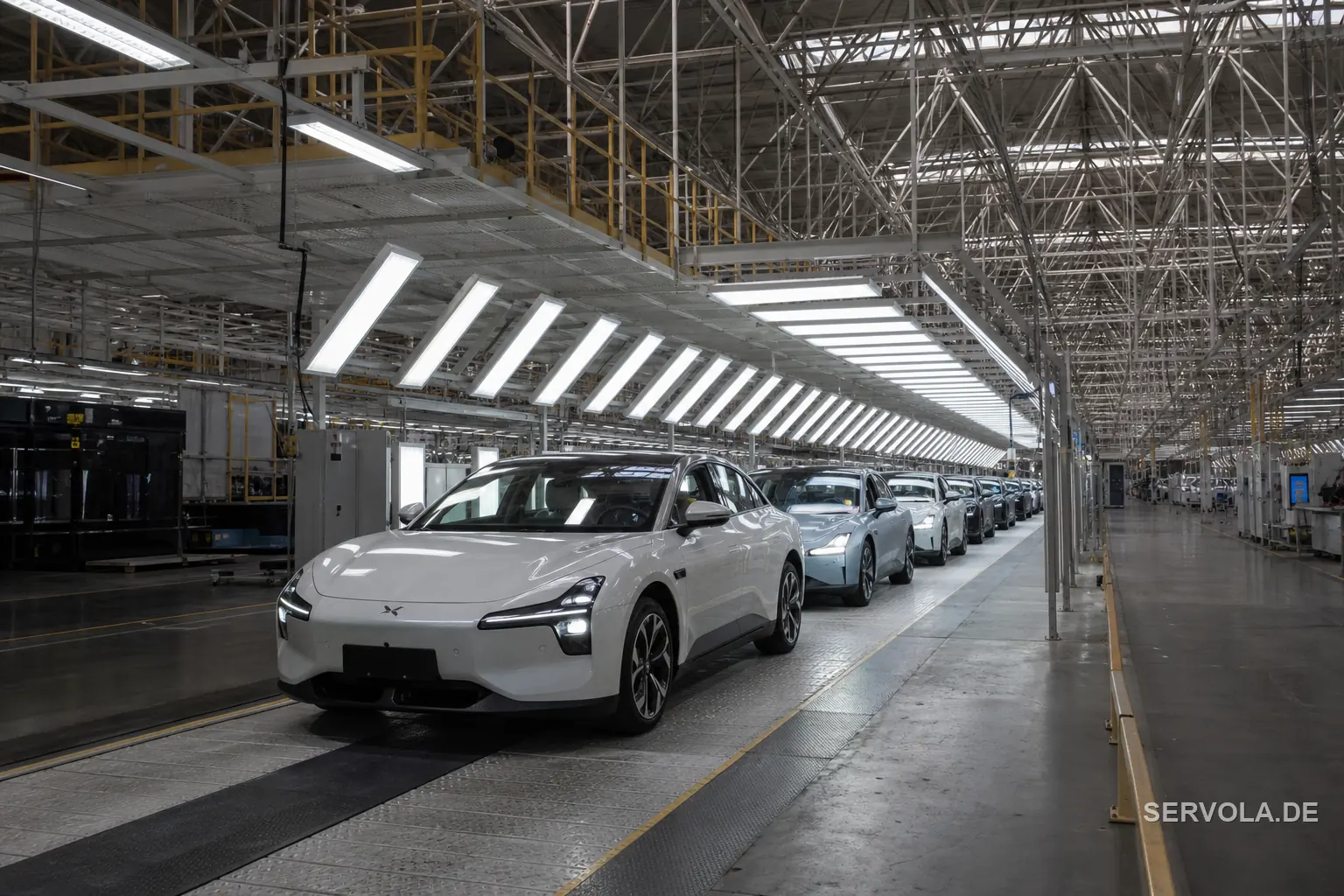
Xpeng held the global launch of the Mona L03 in Munich on 16 July 2026. That choice of city is itself the announcement. The Mona L03 is the company's first model to launch in China and Europe at the same moment, rather than arriving in Europe a year or two after proving itself at home, and Xpeng says it will eventually be sold in 64 overseas markets.
On 2 July, Xpeng had opened pre-sales in China at 143,800 yuan. That was its own published figure, the number early buyers had been asked to anchor on. At launch two weeks later, the range opened at 123,800 yuan across nine variants and ran to 156,800 yuan. The starting price came in 20,000 yuan below the pre-sale price Xpeng itself had set.
Undercutting yourself is a different move from undercutting a rival
The competitive story here is not that a Chinese SUV is cheap. That is old news and Europe has already priced it in. The interesting move is the direction of the cut. Xpeng did not respond to a competitor's price. It went below the number it had published for itself, in public, fourteen days earlier, and it did so at the moment of maximum attention.
The result was more than 20,000 firm orders within seven minutes of launch. The word firm is doing real work in that sentence: in the Chinese market a firm order means a non-refundable deposit, as distinct from a pre-order that can be cancelled at any time. Twenty thousand people committing money that they cannot get back, inside seven minutes, is a demand signal of a different quality from a reservation count.
What that demonstrates is a lever, not a concession. A launch-day undercut of your own pre-sale price converts the pre-sale period into a price-discovery exercise, and then buys a demand shock at the moment the market is watching. It costs margin per unit. It appears to buy order volume and a launch narrative that no advertising budget can purchase. Expect the tactic to be copied before the car is.
What lands in Europe, and at what
The European ladder starts at 35,600 euros for the Standard Range rear-wheel-drive car, with a 58.3 kWh LFP battery and up to 445 km WLTP. The Long Range rear-wheel-drive version is 38,600 euros, with a 71.2 kWh LFP pack and up to 520 km WLTP. The AWD Performance is 41,600 euros and rated up to 440 km, and the Ultra sits at 46,600 euros. A range-extender version is listed at 38,600 euros for the autumn.
Charging is quoted at up to 236 kW on a 400-volt architecture, with 20 to 80 percent in 18 minutes. First European deliveries are scheduled for the fourth quarter of 2026.
Set the middle of that ladder against what a European buyer is currently offered. A 520 km LFP car with 236 kW charging at 38,600 euros is not competing on being the cheapest thing on the forecourt. It is competing in the space where a fleet buyer's spreadsheet actually lives, which is range and charge time per euro, and it is doing so with the charging figure that usually costs considerably more.
The procurement consequence, before the sales consequence
For an owner running vehicles rather than reviewing them, the near-term effect of this launch is not whether you buy one. It is that the number now exists, in euros, on a car that will be delivered in Q4 2026 in a market you operate in.
That has a practical use even if you never place an order. Fleet pricing is negotiated against comparables, and the set of available comparables just moved. A Long Range LFP car at 38,600 euros with 236 kW charging is a legitimate line on a tender sheet, and putting it there changes the conversation with an incumbent supplier regardless of who eventually wins the business. The buyers who benefit most from a new entrant are frequently the ones who never buy from it.
The residual questions are the ones a launch event cannot answer, and they belong in the same document as the price. Service network coverage and parts lead times in your specific markets. Software update commitments and their duration. Residual value assumptions, which for a new entrant are assumptions rather than history, and which drive the lease rate that determines what the car actually costs you per month. The sticker is the opening line of that analysis, not the conclusion.
Read next: Momenta Beat Waymo to Germany's KBA Approval | BYD's Denza Prices an EV Like a Porsche