What the BSI actually said
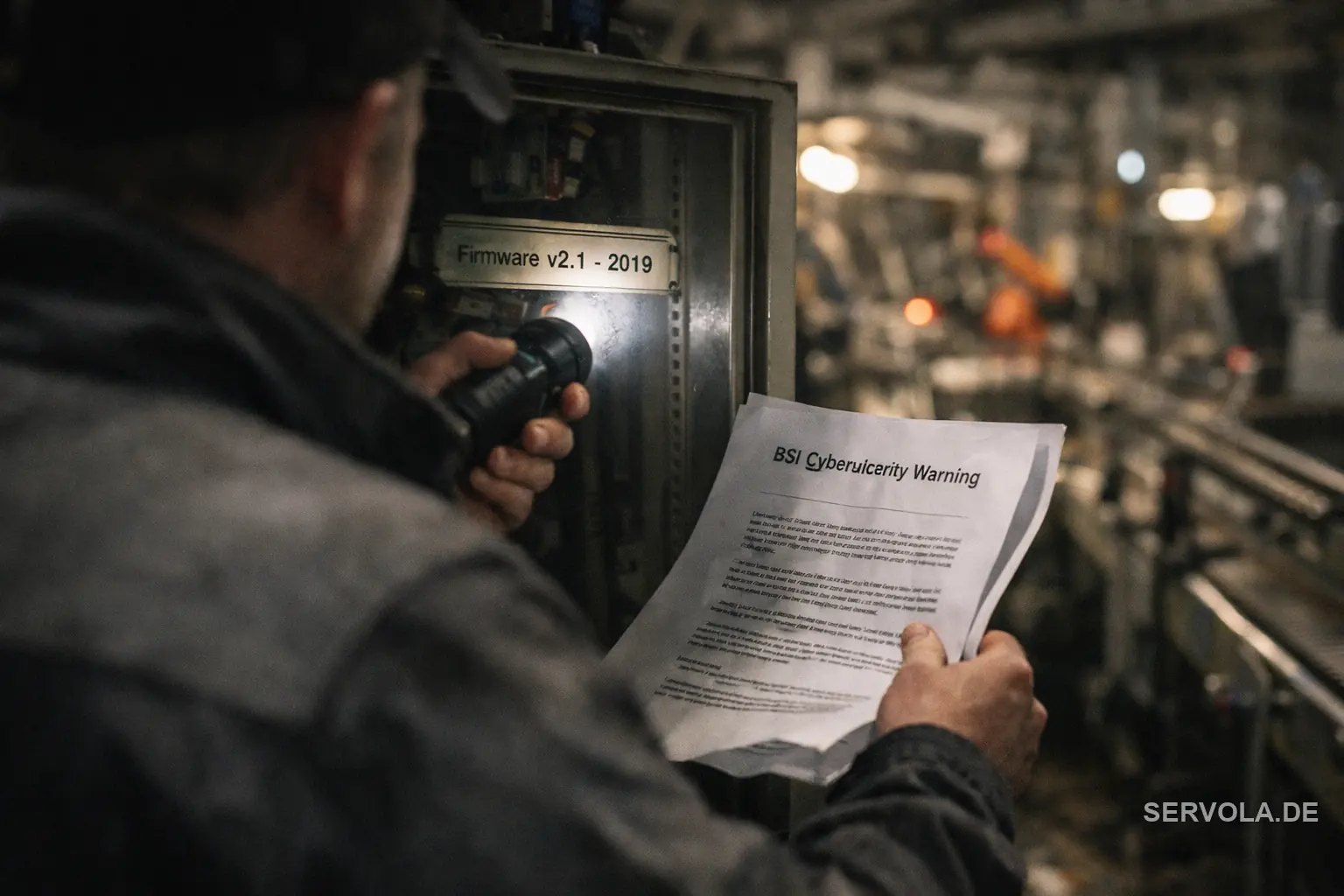
On 22 June 2026 the BSI, Germany's Federal Office for Information Security, published a formal cyber security warning on the impact of AI on the security of organisations (reference 2026-262788-1032). This is not a think-piece or a vendor report. It is the national authority putting organisations on notice.
Its central finding is blunt: current AI systems are capable enough to detect a software vulnerability, analyse it, and turn it into a usable attack path comprehensively and partly autonomously, in a short time. The practical result is a rising volume of newly discovered flaws, exploits, patches and follow-on incidents arriving faster than before.
Why defenders are on the wrong side of the clock
The warning names an asymmetry that owners will recognise from every other part of the business. Attackers benefit disproportionately from speed, scale and automation. Defenders remain bound to real operational limits: testing effort, approval processes, maintenance windows for patches, dependencies on vendors, legal and organisational sign-off, and finite people.
That gap is the whole point. The time between a flaw becoming known and it being weaponised has shrunk, while the time your organisation needs to test and deploy a fix has not. A patch cadence that felt responsible last year can now be documented as too slow, by your own regulator's reasoning.
The lever owners still control
The BSI's first recommendation is the one owners can act on without a new tool: know and minimise your attack surface, then prioritise securing the systems that are exposed. Every extra internet-facing system, unretired legacy box and loosely governed vendor connection is now surface that an automated attacker can find and test at scale.
Growth quietly enlarges that surface. Acquisitions, new sites, connected products and fast integrations each add exposure that no one owns end to end. Reducing and mapping that surface, accelerating how quickly you can patch what remains, and rehearsing incident response are governance decisions, not a task to delegate and forget.
Read next: NIS2 Makes German Management Personally Liable for Cybersecurity | Your AI Agent Trusts a Poisoned Tool