A Fare Replaces A Free Ride
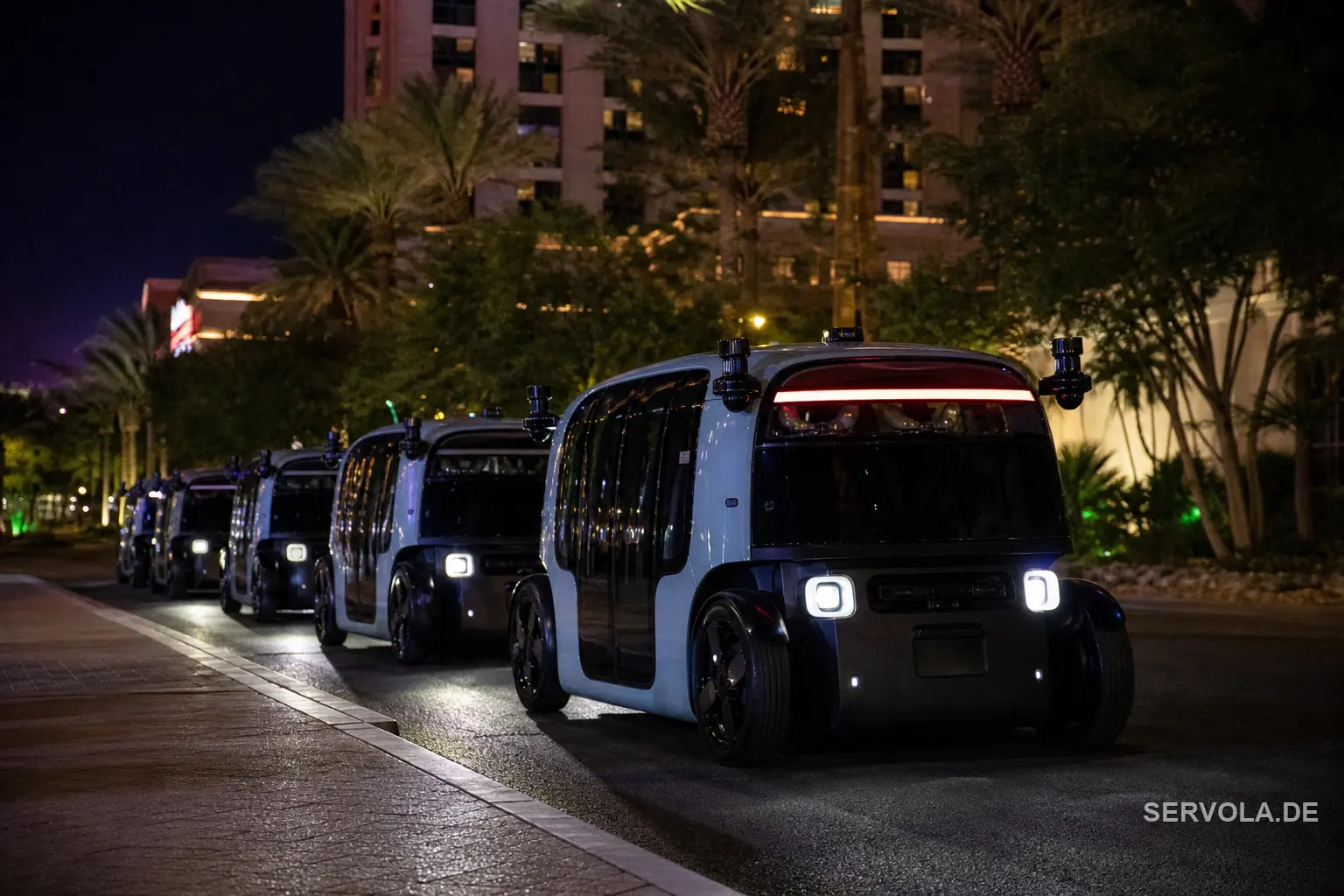
Zoox's free public service in Las Vegas launched on 10 September 2025. For eleven months, anyone who opened the app could summon one of its carriage-style pods, ride across the city, and pay nothing. That ended on 10 August 2026, when Zoox began charging fares for the same rides in the same city, in what the company and independent coverage both describe as the first time a purpose-built robotaxi with no steering wheel or pedals has taken a paying passenger anywhere in the United States.
The federal permission that made this possible is worth naming but not re-litigating here: a temporary NHTSA exemption from eight vehicle-safety standards, granted in late July, that lets Zoox charge for rides in a vehicle built without the controls those standards assume. That approval, and the conditions attached to it, is a story in its own right. What changes on 10 August is not the permission. It is the transaction.
Waymo and other robotaxi operators have run rides, free or investor-subsidized, in various US cities for several years now. A fare-paying product with no safety driver behind a wheel that does not exist is a different and later-stage test, because the price now has to gesture toward covering what the ride actually costs to run, not just toward proving the ride can be completed.
What The Meter Actually Charges For
Zoox has not published a rate card. What it has described is the formula: a base fee, then charges for distance and time traveled, plus destination surcharges for airport trips and high-traffic venues such as the Sphere. The full price is shown before booking, calculated against what the app judges the best route, and Zoox says that price will not change if the vehicle ends up taking a longer one.
The company has said it is aiming to land near the comfort tier that Uber and Lyft already charge for their nicer cars, rather than undercutting standard fares to win volume. That is a pricing choice, not a technical one, and it tells owners something specific: Zoox is not treating this launch as a subsidized land-grab for market share. It is pricing as though the ride has to pay for itself.
That is the detail our earlier coverage of the NHTSA exemption could not supply, because the waiver only cleared the vehicle to charge; it said nothing about what the charge would be. This is the first publicly visible data point on what a robotaxi ride actually costs to price at a true commercial launch, not a promotional pilot rate, and it is worth watching for any owner in transport, logistics, or fleet operations as an early read on where autonomous-vehicle unit economics are actually landing.
No Wheel, But Not No Humans
The vehicle itself is purpose-built: no steering wheel, no pedals, no driver's seat, a layout of two facing rows instead of a front and back. That is the detail every outlet covering the launch leads with, and it is accurate. For the first time in the US, a vehicle built this way is now charging a fare rather than only demonstrating one.
It is not, however, a vehicle with zero human involvement. In June 2026, a remote operator took control of a Zoox vehicle and steered it away from a fire scene, a real-world instance of the remote-assistance layer that sits behind every ride and that federal regulators have already required to be staffed inside the United States. No one is in the car. Someone, some of the time, is still watching it from outside.
For a business model, that distinction matters more than the marketing shorthand suggests. Removing the driver from inside the vehicle removes one job. It does not remove the need to staff remote assistance, respond to edge cases, or maintain the vehicles and their sensors. Autonomy relocates a cost; the August 10 launch does not tell us yet whether it has actually lowered one.
The Number Worth Watching Now
Scale is the other thing worth holding in view. Zoox says it has already carried roughly a million riders and logged more than three million autonomous miles for free across its pilot cities. Its new federal exemption caps the paid fleet at up to 2,500 vehicles a year for two years, a ceiling of 5,000. The paid service, in other words, is launching at a small fraction of the footprint the free pilot already reached, so fare data will stay thin for a while.
That thinness is exactly why the price matters more than the volume in the coming months. Ride counts will climb as Zoox adds vehicles and, eventually, other cities; that is a scaling story, and scaling stories are the easiest kind for a company to control the narrative of. A fare that holds steady near Uber and Lyft's comfort tier, rather than drifting toward a discount to buy adoption, is a harder number to spin, and a more honest one.
That is the original signal this launch offers, separate from the regulatory milestone it followed: the first real, publicly visible read on what a robotaxi ride costs to charge for once the promotional pricing is gone. Any owner in transport, logistics, or fleet operations watching the AV category should track that number over the next two quarters, not the headline about permission.
Read next: Nevada Clears Tesla, Uber, Waymo Robotaxis | Five Markets Got Alexa+ First. The US Graduates First