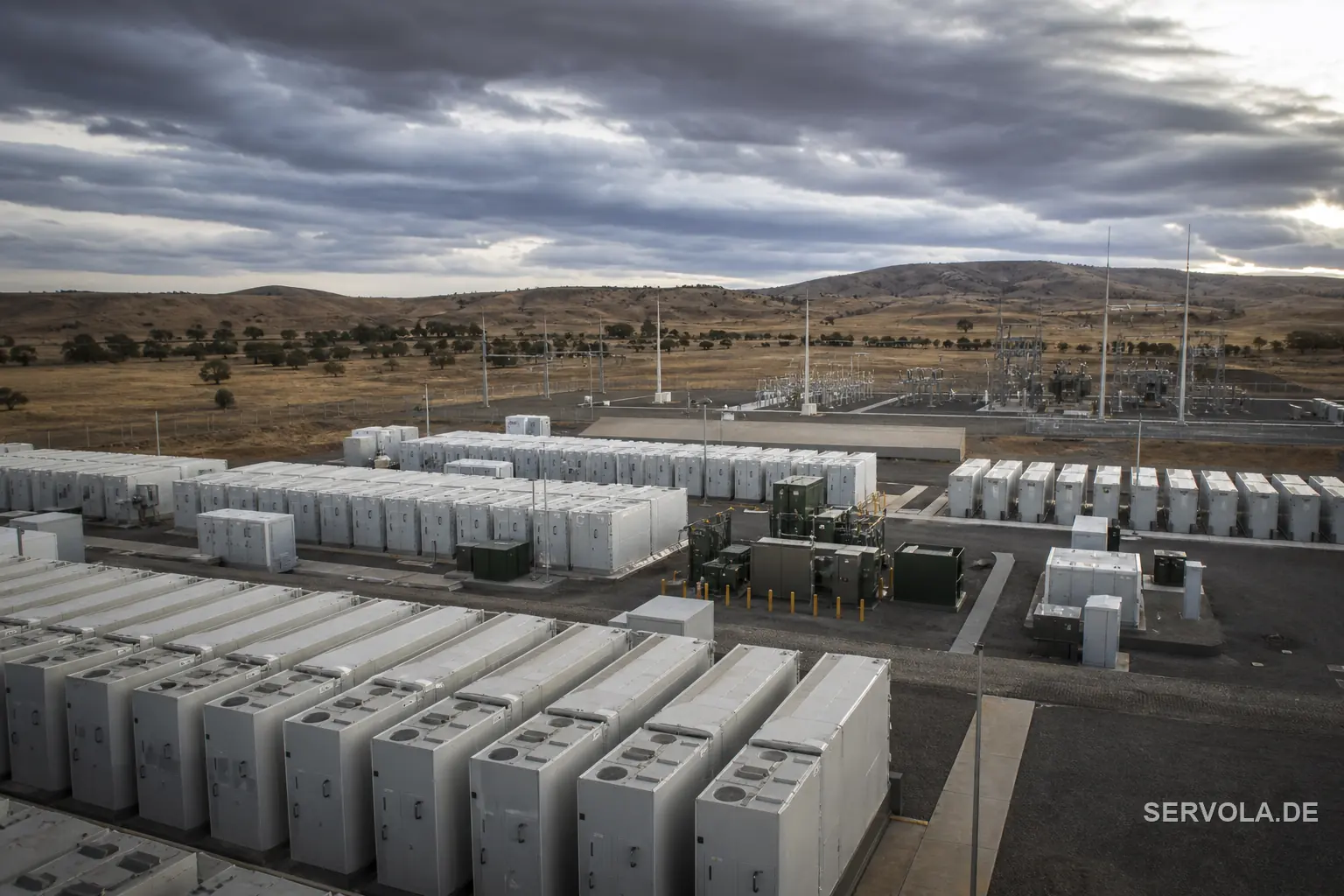
A regulator counted the queue and stopped the clock
Israel's Electricity Authority instructed the system operator Noga in late July to stop processing new server farm connection requests for at least 140 days, and the reason is arithmetic rather than politics. Requests on the desk total roughly 27 gigawatts. Israel's average consumption is about 9 gigawatts, and its all-time record, set during the August 2025 heatwave, is around 17 gigawatts. Some 19 gigawatts of that pile arrived in about two months, on top of an existing 8 gigawatt backlog. The Authority's own language is blunt: 27 gigawatts dramatically exceeds the entire planned generation and transmission capacity for the decades ahead.
Why it matters: without the freeze Noga would have had to issue refusals covering more than 25 gigawatts of requests, and a refusal is a harder thing to unwind than a pause. The grid has already committed about 1.5 gigawatts to server farms, which on its own would take data centres to roughly a tenth of national electricity by the start of the next decade. That is the whole story in one line: the committed pipeline is already material, and the requested pipeline is three times the country.
Most of 27 gigawatts was never a project
A queue that is three times national demand is not a demand forecast, it is an options market. Filing an application is cheap, holding a place is valuable, and so the rational move for any developer in a tightening market is to apply early and often for more capacity than they will build. That is how 19 gigawatts appears in eight weeks. Noga described the task ahead in exactly those terms, as how to correctly allocate a limited public and infrastructure resource among all economic needs, which is the language of rationing rather than of forecasting.
Yes, but: the speculative applications are not the villain, and treating them as fraud misses the mechanism. They are the predictable output of a rule that rewards being early rather than being ready. That is why the freeze on its own solves nothing. During the 140 days the Authority says it will re-examine its assumptions on supply reliability, system redundancy, competition in the electricity market, future prices and gas consumption. Every one of those is a reason to change the allocation rule, and none of them adds a megawatt.
Denmark already ran this experiment and published the answer
Energinet paused all new large-load connection agreements in March after its own queue reached about 60 gigawatts against Danish peak demand of roughly 7 gigawatts, with data centres accounting for around 15 gigawatts of it. The pause was not the remedy. The remedy was that from February 1 Denmark abolished the first-come, first-served principle for large loads and replaced it with collective assessment in pools, ranking projects on maturity, development progress and how friendly they are to the grid. The pause was then lifted on June 3 with a stricter case-processing model in place.
Read those two countries together and the pattern is clear. Neither regulator found more capacity. Both changed who gets it. Ireland, the Netherlands and Spain each arrived at the same junction and each wrote a different rule, and Texas answered with batch screening rather than project-by-project review. So a business planning capacity across several European markets is not facing one grid constraint. It is facing four or five separate rationing regimes, each with its own definition of a serious project.
What actually gets you connected now
Under a maturity test, the scarce input stops being an early application and becomes evidence. Signed offtake or a named tenant, planning consent in hand, ordered long-lead equipment such as transformers and switchgear, a completed and funded grid study, and a construction programme with dates that a regulator can check: that is the file that survives a re-ranking. A placeholder application with none of it attached moves from being a free option to being a liability, because pooled assessment is where thin applications get visibly sorted from real ones.
The bottom line: if you hold a live application in a congested market, build that evidence file before the rule changes rather than after, because the re-ranking happens on the regulator's timetable and you will not be given a window to improve your submission. And if you are choosing between sites, weigh the allocation rule as heavily as the tariff. A cheaper megawatt-hour in a queue you cannot clear is worth less than a dearer one in a market that will actually connect you inside your build window.
The second-order effect lands on everyone else's bill
The Authority is not only asking whether the grid can carry the load. It listed competition in the electricity market and future electricity prices among the things it will reassess, which is the point at which this stops being a data centre story and becomes an industrial cost story. When a single category of new load can request three times national consumption, the allocation rule that follows sets the marginal price of power for every factory, cold store and workshop on the same network.
In Israel that argument is already institutional. Avi Simhon, who chairs the National Economic Council, is pressing legislation to classify server farms as national infrastructure so their planning moves faster. That is a coherent position and it collides directly with the Authority's freeze, because faster planning consent for a load the grid cannot yet carry only moves the bottleneck one step downstream. Which of those two wins is the thing worth watching over the next 140 days, and the answer will be copied.
Read next: 2028 Is an Executive Order, Not a Product Date | The Grid, Not the Chips, Now Caps Britain's AI Buildout