What the reactor has actually produced
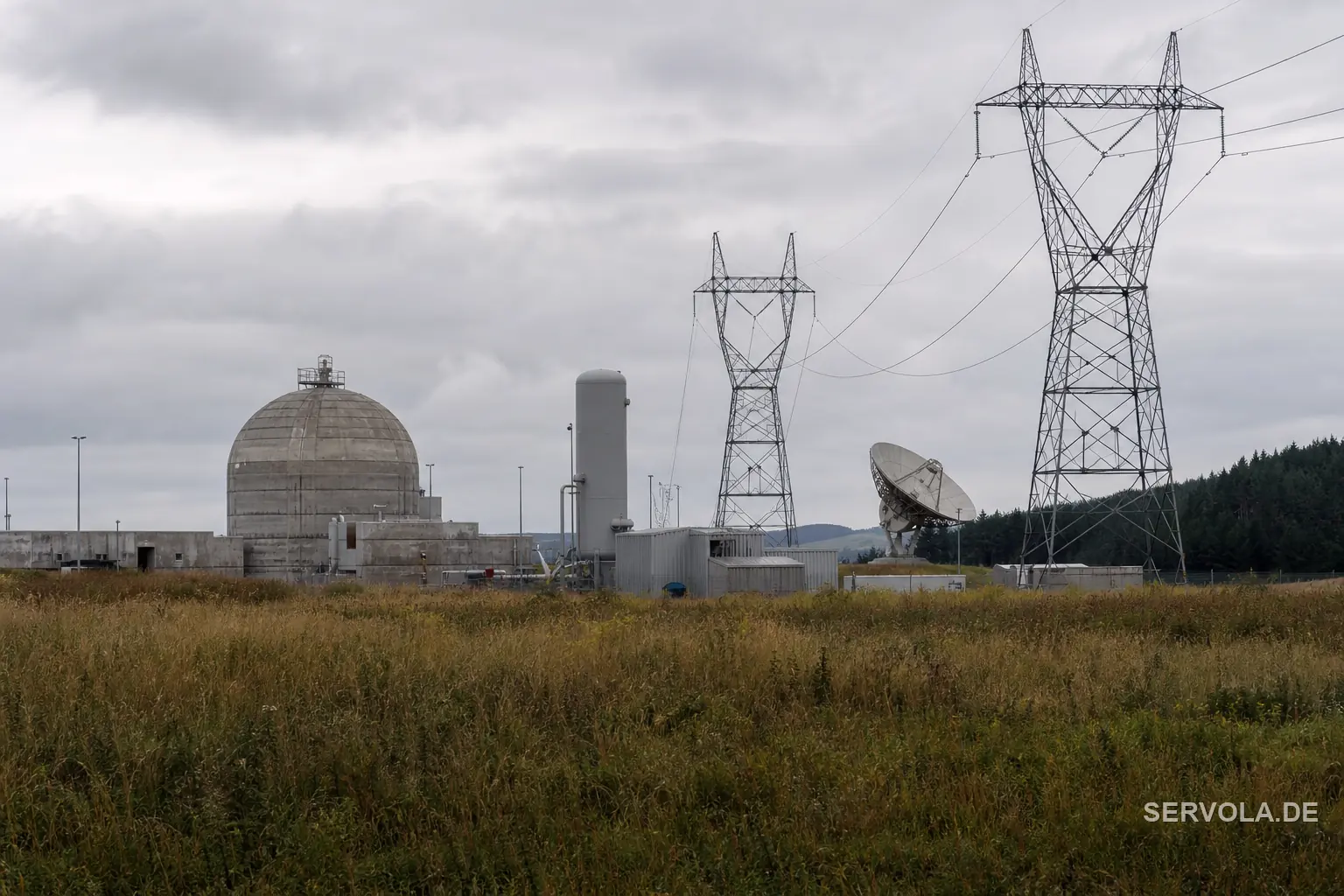
On 18 June the Department of Energy announced that Valar Atomics' Ward 250 had reached zero-power fueled criticality at the Utah San Rafael Energy Lab outside Orangeville, in Emery County. It was the second reactor to go critical under the department's Reactor Pilot Program, after Antares Nuclear's Mark-0 at Idaho National Laboratory, and the first to do it outside a national laboratory. Energy Secretary Chris Wright called it a revolutionary moment for advanced nuclear, and listed the airlift of a small reactor aboard a US military C-17 alongside the criticality test.
Criticality is not power. It means the reactor can hold a controlled chain reaction, which it must do before it generates anything, and Valar then began the ascent. By 22 June the company reported 10 kilowatts thermal. The unit is a TRISO-fuelled, helium-cooled high-temperature gas reactor rated at 100 kilowatts thermal, so 10 kilowatts is a tenth of what this particular machine was built to make. Chief executive Isaiah Taylor was direct about the intent: the reactor was built to make power, and that is where they are headed. Nothing in that sequence is slow by the standards of the industry. It is simply small, and the size is the part that matters for planning.
Three thousand times separates the demonstration from the first site
The commercial application Valar and Nvidia have described is a 30 megawatt nuclear-powered AI facility in Utah. Thirty megawatts is thirty thousand kilowatts. Set against the 10 kilowatts thermal demonstrated in June, the first commercial site is on the order of three thousand times larger, and the true gap is wider still, because the demonstrated figure is thermal while a facility rating is electrical and a gas reactor loses a substantial share of its heat in conversion.
This is an argument about scheduling, not about credibility. Valar has done in months what most nuclear programmes measure in years, and the DOE put its name to it. But the round was raised at 6 billion dollars, three times the 2 billion valuation of the previous round, in a market where no small modular reactor is in commercial service anywhere outside China and Russia. Taylor framed the use of funds precisely, and the framing is the tell: one reactor can be built as a project, a fleet has to be manufactured. The money is buying a factory thesis. A factory thesis is a five to ten year proposition even when it works.
The deliverable that lands first is a water figure
Read the announcement as a data-centre operator and one number is immediately usable, and it is not a number about electricity. Nvidia's stated case for the closed-loop helium design is that it takes facility water consumption from 2.6 million gallons per megawatt per year, roughly 9.8 million litres, to nearly zero. Cooling water, not generation, is what has been blocking permits in the places where compute wants to go.
That distinction has practical value today. A siting team can put a water figure into a planning application, an environmental assessment or a conversation with a regional authority long before a single reactor is licensed to sell power to anybody. The megawatts are a 2030s conversation. The water is a 2026 conversation, and it is the part of this announcement a European operator can act on, because the constraint it addresses is the same one that already governs where a data centre may be built and how much of a local supply it is permitted to draw.
What goes in the 2027 budget, and what does not
Treat the 1.2 billion dollar figure the company published with the same care you would give any headline raise, because it is two instruments. One billion is Sequoia-led equity, with Atreides Management, Point72 and Snowpoint Ventures alongside and Sequoia's Shaun Maguire taking a board seat. The remaining 200 million is a credit facility. Debt against a fleet that does not exist yet is the more informative half: lenders attach schedules and covenants to manufacturing risk in a way equity investors do not, so the terms of that facility will say more about the real production timetable than the valuation does.
For anyone building a capacity plan, the instruction is narrow. Do not put nuclear-backed power into a 2027 or 2028 budget line on the strength of this round, and do ask any supplier offering it which reactor, at what output, and under whose licence, since the Reactor Pilot Program is a Department of Energy authorisation to demonstrate and commercial sale runs through the Nuclear Regulatory Commission on a separate track. Do, however, put the water assumption into your siting work now. It is the only part of this that is available to you in the planning cycle you are actually in.
Read next: Europe Cannot Buy the Reactor America Just Funded | Nvidia Gets Efficient. The Grid Still Doubles.