Signed in Berlin, owned from Melville
On 28 July, capiton, the Berlin private equity firm that has been AEMtec's main shareholder since 2018, agreed to sell the company to Micross Components. AEMtec was founded in 2000, sits in the Berlin-Adlershof science and technology hub, and runs cleanroom facilities in Berlin and Dresden as well as Boston, Massachusetts. Micross is headquartered in Melville, New York, and is a portfolio company of Behrman Capital, a private equity firm founded in 1991 that manages 1.6 billion dollars in active partnerships. This is the eleventh acquisition under Behrman's ownership of Micross and the seventh since a continuation fund transaction in February 2022. Terms were not disclosed. Harris Williams advised on the deal and Goodwin Procter acted as legal counsel.
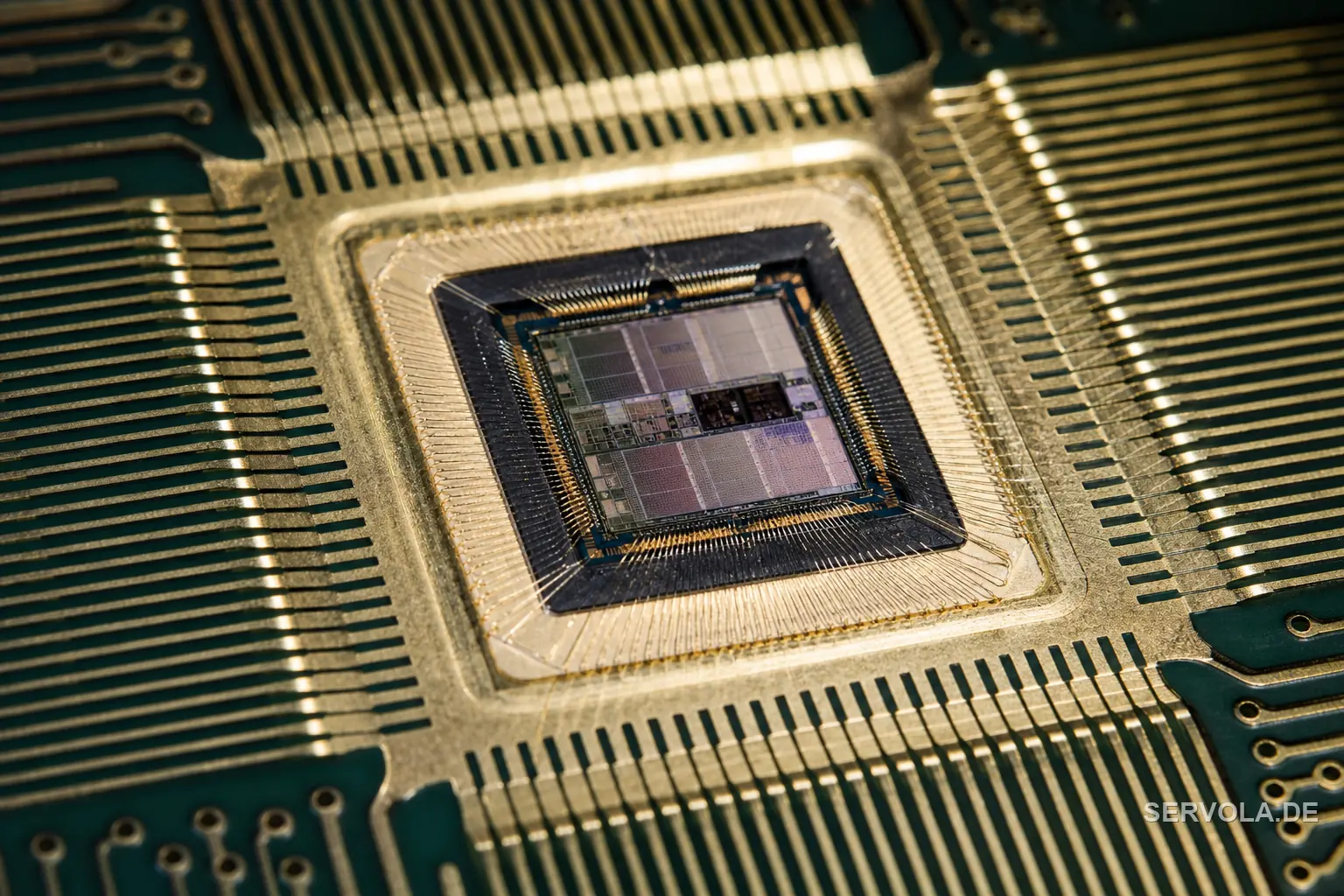
What AEMtec sells is the unglamorous middle of the supply chain: wafer back-end services and wafer testing, chip-on-board, flip chip, 3D integration and opto packaging, for customers in semiconductors, medical and biotechnology, industrial automation, communications, and aerospace and defence. Micross already had European facilities in the United Kingdom and Denmark; its own announcement describes AEMtec as its first scaled foothold in continental Europe. Jim Cannon, Micross chief executive, said AEMtec's "world-class expertise in advanced packaging, photonics and optoelectronics will augment our capabilities." Simon Lonergan, a managing partner at Behrman, was blunter about the point of the deal: it allows the company "to access the high potential European market." Robert Giertz remains AEMtec's chief executive. The transaction is expected to close in the second half of 2026, subject to customary regulatory approvals.
The capability Europe says it lacks
This is the exact layer Europe has spent two years admitting it does not have. SEMI Europe's assessment of the Chips Act is unambiguous: not one of the world's twenty largest assembly, test and packaging companies is headquartered in the EU, and the bloc's projected revenue share in that segment stays close to zero through 2030. Packaging and testing of mature-node parts happens mostly in Asia, and European fabs ship wafers out to get them finished.
Chips Act 2.0, presented by the Commission on 3 June 2026, is built around closing that gap rather than chasing sub-2nm logic. It widens the scope of first-of-a-kind projects eligible for state aid to cover the full value chain from raw materials through advanced packaging and assembly, introduces Strategic Projects and a Semiconductor Regions of Excellence label, and contemplates a strategic advanced-manufacturing project costing up to 50 billion euros that would combine leading-edge nodes with chiplet integration and 3D packaging. Pilot production for that flagship is pencilled in for 2030 to 2033.
Put the two calendars next to each other and the story writes itself. A proposal that reaches pilot production at the start of the next decade is not competing for anything today. A qualified line in Adlershof with customers already on it is available this quarter, and it went to the party that moved first.
What changes for a customer already in the queue
Nothing you have qualified is being switched off. The cleanrooms stay where they are, the staff stay, the chief executive stays, and a packaging process that took months to qualify does not get requalified because the shareholder register changed. Anyone selling you urgency here is selling something. The variable that actually moves is allocation.
Micross describes its core market as high-reliability microelectronics for aerospace, defence, space, medical and industrial applications. Those are the most schedule-driven programmes in electronics and the most tightly export-controlled. Back-end capacity has been tight for two years. When a shared line is oversubscribed, priority tends to follow the parent company's own obligations, and after closing those obligations sit with a supplier whose customer base is concentrated in US defence and space work. That is not a prediction of bad faith. It is how allocation works when demand exceeds a fixed number of cleanroom hours.
So the useful response is contractual and it has a deadline. Ask your European back-end supplier for continuity-of-supply language and a written export-control classification that survive a change of control, and get them into the renewal you sign before the deal closes in the second half of this year. Leverage exists while a transaction is pending regulatory approval and shrinks once it is not. Treat it as a renewal-cycle item, not an audit finding for next spring.
The approval line is where sovereignty gets tested
The phrase carrying the most weight in the announcement is "subject to customary regulatory approvals." Germany screens foreign investment under the Foreign Trade and Payments Act and its implementing ordinance, with the federal economics ministry running the review. For emerging technologies including semiconductors, the review threshold sits at 20 percent of voting rights, below the general threshold and above the 10 percent that applies to critical infrastructure, media and health. Berlin can look at this transaction if it decides to.
Whether it does is the real test, and it is a cheaper test to fail than to pass. Technological sovereignty asserted in a subsidy programme costs a government nothing, because the money is future money and the plant is a 2030 plant. Sovereignty asserted in the review of a signed deal costs it a friendly investor, a quick close and a headline about Germany being hard to buy into. The first kind of sovereignty is a press release. The second is a decision, and one is due on this file before the year ends.
Read next: Washington Weighs Tariffs on Laptops, Not Just Chips | Why OpenAI's New Chip Won't Replace Nvidia