A Camera and a Jet Built Into the Handle
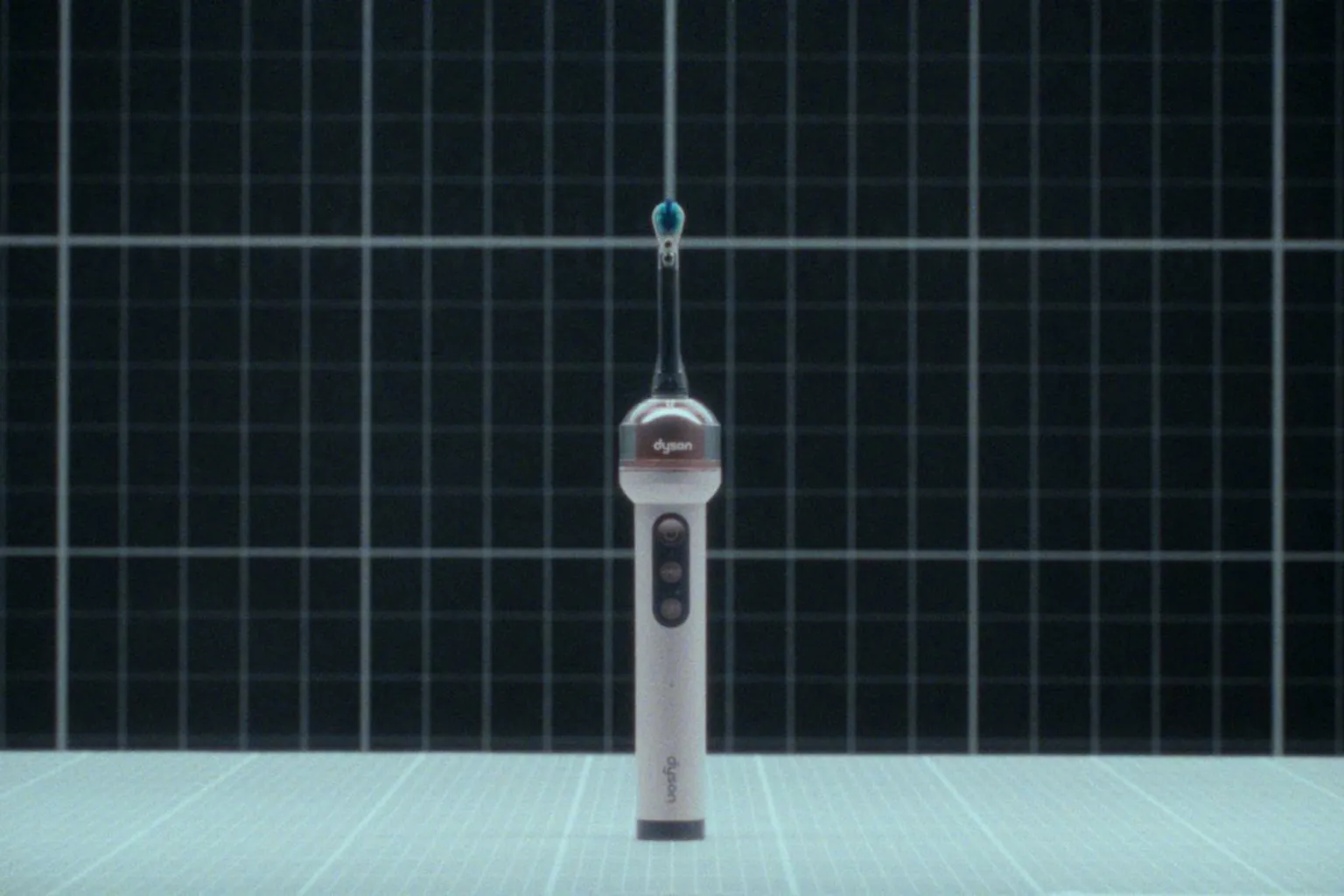
Dyson unveiled the CameraJet toothbrush on September 1, 2026, and showed it on the stand at IFA Berlin, the consumer electronics trade show running in the German capital from September 4 to September 8. The handle carries a 1-millimeter macro camera rated at 100,000 pixels, and Dyson says it captures 28 images a second while a machine-learning system called Gap Optical Targeting looks for the gaps between teeth where plaque tends to form first.
Once the system spots a gap, a conical jet fires low-foaming mouthwash into it within 100 milliseconds, a process Dyson positions as flossing that happens automatically while a person brushes. The toothbrush also runs three brushing intensities, tracks brush-head wear through an RFID chip, and pairs with the MyDyson app over Wi-Fi and Bluetooth so a user can watch live footage of their own teeth and gums; Dyson states that the images are deleted from the app immediately after viewing and are never stored or transferred to the cloud.
GBP 419.99, EUR 480, USD 499.99: The Three-Market Price
Dyson set three separate launch prices for the CameraJet package: 419.99 pounds in the United Kingdom, confirmed on Dyson's own UK site; 480 euros in Germany, reported by the German technology outlet Heise; and 499.99 dollars in the United States, listed on Dyson's own US site. Each of the three national prices covers the same bundle: the CameraJet handle, two brush heads, a combined charging dock and refill station, a travel case, and starter supplies of Dyson's own non-foaming toothpaste and low-foaming mouthwash.
| Market | Price | Currency |
|---|---|---|
| United Kingdom | 419.99 | GBP |
| Germany | 480 | EUR |
| United States | 499.99 | USD |
None of the three prices covers a long-term supply of consumables; Dyson already sells replacement toothpaste, mouthwash and brush heads on subscription in markets including Germany, adding a recurring cost on top of the launch price.
A Durable Premium or an Early-Adopter Tax
The CameraJet's price puts a concrete number on a question that has followed nearly every AI-branded consumer gadget this year: what a sensor and a machine-learning model are actually worth at the till. A camera, a targeting algorithm trained on hundreds of thousands of dental images, and a precision jet pump are a genuinely new mechanism inside the handle, and Dyson's own three-market pricing puts that mechanism at roughly three to four times what a well-reviewed sonic toothbrush without a camera costs in the same stores.
Whether that premium holds is a separate question from whether the engineering works. Earlier waves of AI-labelled hardware launched at similarly steep premiums and then discounted heavily once the novelty wore off and cheaper imitators arrived, and a toothbrush that requires its own branded toothpaste and mouthwash subscription adds a recurring cost on top of the upfront one, which raises the bar the CameraJet has to clear to look like a durable premium rather than an early-adopter tax paid once and regretted at the next replacement cycle.
Read next: PCs Fell 20 Percent, Phones Hit a 14-Year Low in Q3 | Germany Says Tesla's FSD Rename Brings a 10% Speed Cap