What the EIB Actually Signed
On September 16, the European Investment Bank confirmed 40 million euros in financing for Steady Energy, a Finnish nuclear technology company, to fund research, testing and licensing of its LDR-50 reactor between 2026 and 2028. EIB Vice-President Karl Nehammer framed the deal in supply terms: "SMRs can help build a more secure and resilient European energy mix, reducing reliance on fossil fuels." The bank called it its first investment in small modular reactor technology, a category the European Commission wants operating in Europe by the early 2030s. Part of the funded work is a non-nuclear pilot facility in Helsinki, built to test the reactor's safety systems before any real fuel is involved.
The financing is not a grant. The EIB structured it as a senior unsecured convertible loan, InvestEU backed, which gives the bank the option to convert its position into Steady Energy's listed shares later rather than simply being repaid with interest. That detail did not appear in the bank's own headline, but World Nuclear News flagged it as the more revealing part of the deal: a bank taking quasi-equity risk on an unproven reactor design, not a subsidy handed out and forgotten.
A Different Reactor for a Different Customer
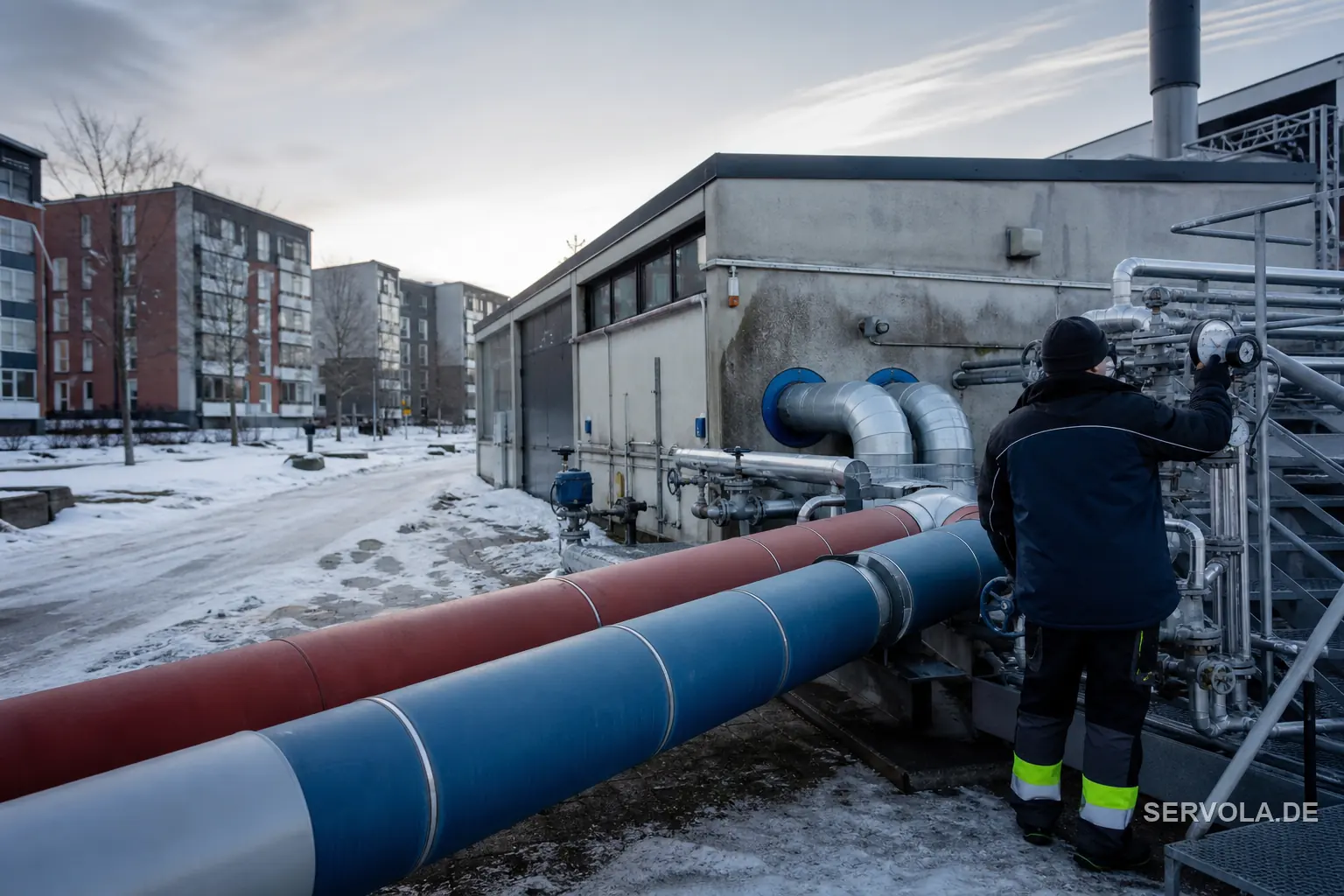
Steady Energy's LDR-50 is not built to put power on the grid. It is a 50 megawatt heat-only design, a simplified light-water reactor aimed at district heating networks, the pipes that carry hot water to buildings across Finnish and other Nordic cities. CEO Tommi Nyman put the market case in one line: "more than 40 percent of final energy demand is heat," a category most SMR developers, chasing data centre and grid customers, are not building for. That makes the LDR-50 a different commercial bet from the SMR deals that dominate coverage elsewhere in Europe this year, aimed at municipal utilities and industrial heat buyers instead of power traders.
| What | Detail |
|---|---|
| Financing | EUR 40 million, senior unsecured convertible loan |
| Reactor | LDR-50, 50 MW heat-only, light-water design |
| Customer base | District heating networks, not the power grid |
| Existing pipeline | Advance agreements for 15 reactors in Finland |
| First construction target | 2029 |
The pipeline behind the reactor is already larger than the financing alone would suggest: Steady Energy holds advance agreements covering 15 reactors inside Finland, with construction of the first targeted for 2029. That commercial demand existed before this EIB financing, which is unusual for a reactor design that has not yet built a non-nuclear pilot facility, let alone secured a licence from Finland's nuclear regulator.
Why the Structure Is the Real News
The EIB's only nuclear-adjacent lending before this went to reactors that already existed: a loan for refurbishing a Romanian plant, and financing to expand uranium enrichment capacity at the Georges Besse II facility in France. Both extended the life or output of proven infrastructure. Steady Energy is the opposite bet, an unlicensed, unbuilt design, and the EIB's choice of a convertible loan rather than a straight one reads as a hedge for exactly that gap: if the LDR-50 clears licensing and the 15-reactor pipeline converts to firm orders, the bank holds the option to take equity upside instead of just collecting interest on a fixed loan.
That structure is worth watching beyond this one deal. The European Commission has said it wants Europe's first SMRs online by the early 2030s, a goal that needs public capital willing to sit ahead of private investors on technology that has not yet proven itself commercially. A convertible instrument, as opposed to a grant or a conventional loan, is one way a public bank can take that risk without simply writing a cheque it may never see returned in full. If the EIB uses this same structure on its next SMR financing, that is the template, not the 40 million euro figure, that other developers should read as the real signal.
What an Operator Should Watch Next
For a municipal utility or industrial site currently paying for combustion-based heat, the LDR-50's relevance depends entirely on licensing, not financing. Finland's nuclear regulator has not yet approved the design, and the Helsinki pilot facility exists specifically to generate the safety data that licensing will require. Nothing about the EIB's 40 million euros changes that timeline; it only funds the work needed to get there. An operator evaluating district heating options before 2029 should treat the LDR-50 as a design still clearing its first regulatory gate, not a purchasable product.
The more immediate signal for EU energy buyers is the financing structure itself. A convertible loan from a public development bank is a marker that the EIB expects this technology category, heat-only SMRs for district networks, to eventually justify equity-level returns, not just interest. That is a different confidence signal than a grant, and it is worth tracking whether other national or EU-level financing bodies start structuring their own early SMR bets the same way.
Servola Journal
We do this for everyone trying to keep up with what technology is doing to our lives. The people who build it, and the people it happens to. The Servola Journal exists so that what we learn belongs to all of them.
Nobody pays us for this. No ads, no paywall, free to everyone. We just believe that understanding what's happening to all of us shouldn't depend on who can afford to pay for it.
If it gave you something today, tell us to keep going. Follow us, leave a like, or write a positive comment. We read every one, and they are what keeps us going.
Read next: Ireland May Reverse Its 27-Year Nuclear Ban For AI | Spain Delays Almaraz Nuclear Shutdown by Three Years