What Brussels Proposed On September 21
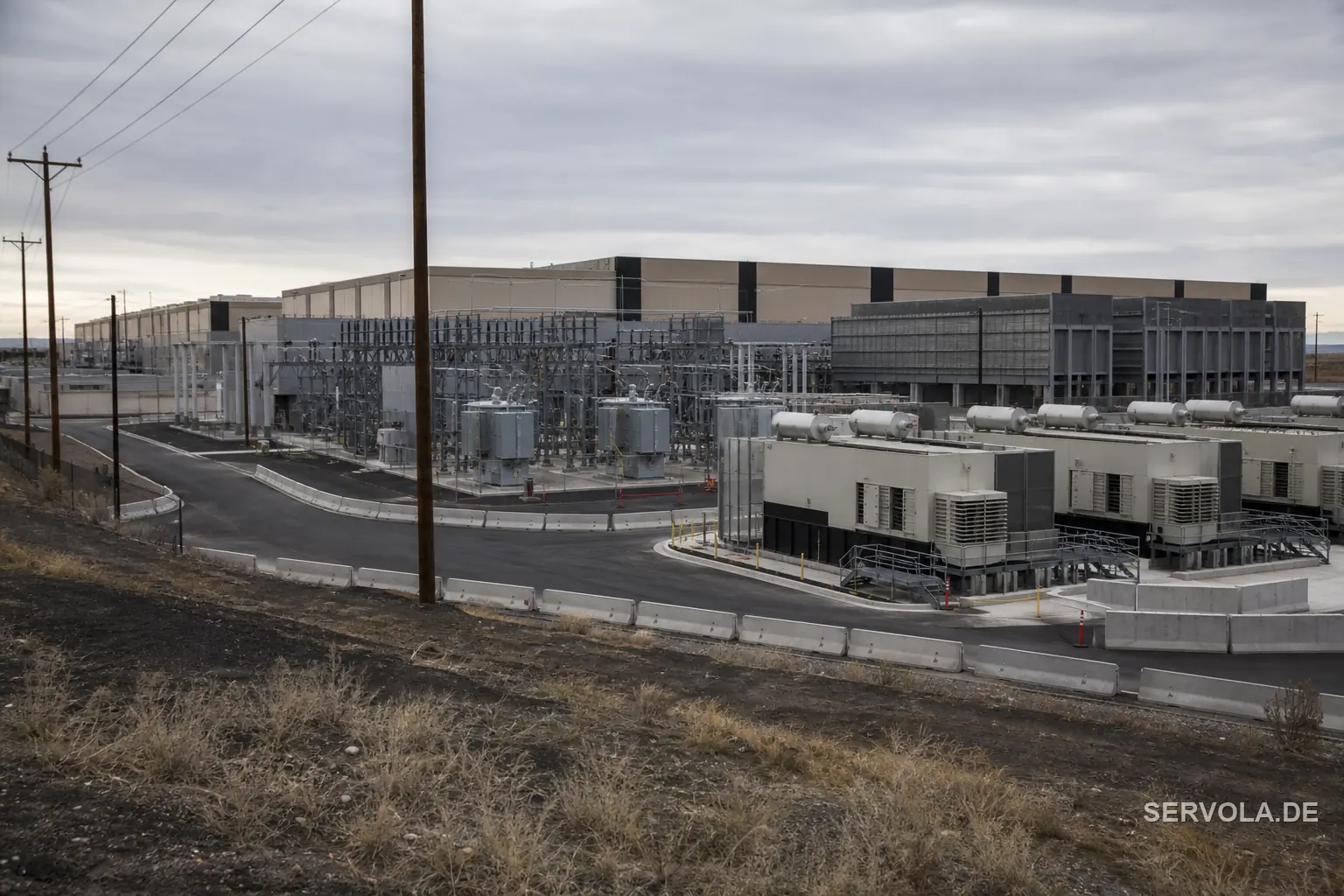
The European Commission proposed on September 21, 2026 that every data center in the EU with an installed IT power demand of 500 kilowatts or above will receive an automatic public energy grade, A through G, generated from data operators already report under the existing Energy Efficiency Directive database. The grade folds in five measures: power usage effectiveness (PUE), water usage effectiveness (WUE), the energy reuse factor for waste heat recovery, a renewable energy factor for clean power procurement and how much the facility contributes to grid flexibility.
Operators submit their key performance indicators once a year, by May 15, to a European database that already exists for monitoring purposes under the Energy Efficiency Directive. The label itself is not a new filing. The Commission's own description stresses that it is generated automatically from data already owed, specifically so the scheme avoids a double administrative burden. The first electronic labels are due on August 15, 2027, with annual updates after that, and the proposal is now in a two-month scrutiny window before the European Parliament and Council.
The Grade Almost Nothing Clears Yet
Grade A, the top mark, requires a PUE of 1.15 or lower and a WUE of 0.1 or lower. Grade G, the bottom, covers anything above a PUE of 1.9 and a WUE above 1.0. Independent industry tracking puts the real starting point well below Grade A. Uptime Institute's own long-running benchmark has shown the global PUE average stuck in a 1.55-to-1.59 band since 2020, and even data centers built in just the past five years average only around 1.45. That newer-build number is the industry's best case, and it still misses Grade A's 1.15 ceiling by a wide margin.
That gap matters because the grade is public and automatic. A facility does not choose whether to be labeled once it crosses 500 kilowatts, and it cannot quietly sit out a bad first grade the way it might delay an optional certification. The label appears whether or not the operator is ready for the public comparison it invites against every other data center in its own member state.
| Category | PUE | WUE |
|---|---|---|
| EU Grade A (top) | 1.15 or below | 0.1 or below |
| Global industry average (2020-2026) | 1.55 to 1.59 | not graded |
| Data centers built in the last 5 years | about 1.45 | not graded |
| EU Grade G (bottom) | above 1.9 | above 1.0 |
Why The Optional Label Will Not Stay Optional
The Commission is running a parallel, separate process: a 12-week public consultation on Minimum Energy Performance Standards for data centers, open until December 14, 2026, with a legislative proposal for legally binding minimum standards expected in the second quarter of 2027. It draws on the identical KPI database the voluntary label uses. The practical result is that operators are not reporting once for a label and again later for a rule. The same annual submission that produces this year's public grade becomes the working data set regulators use to decide next year's binding floor.
A facility posting a G today is not just publishing a bad grade. It is handing the same regulator that will soon write a mandatory minimum a live data point showing exactly how far its own operation sits below whatever floor gets chosen. The Commission has scheduled a review of the system's effectiveness for the end of 2028, by which point both the voluntary grade and the mandatory standard are meant to be running side by side.
The Capacity Math Brussels Has Not Reconciled
The same Commission pushing this efficiency grade is separately committed, under the Cloud and AI Development Act adopted earlier in 2026, to at least tripling the EU's own data center capacity within five to seven years, as part of its wider AI Continent Action Plan. Tripling capacity while introducing the EU's first public efficiency scorecard is not automatically a contradiction, but nobody in either announcement has said how the two are meant to land together. A wave of newly built EU sovereign-cloud facilities, built fast enough to hit a capacity target, is arriving into a grading system where even five-year-old best-in-class builds cluster three-tenths of a point above the top grade.
For a European operator planning a new facility now, or expanding an existing one past the 500-kilowatt line, the practical reading is that efficiency specification is no longer a private engineering choice weighed only against the electricity bill. It is about to become a public number attached to the business, read against a scale that most of the industry, including its newest facilities, does not yet clear at the top.
Read next: One Alliance Promises 100 Gigawatts Without Building a Single Plant | Amazon Took a Stake in the Company That Keeps Its Servers Running