The Hall Samsung Left, and the Company That Filled It
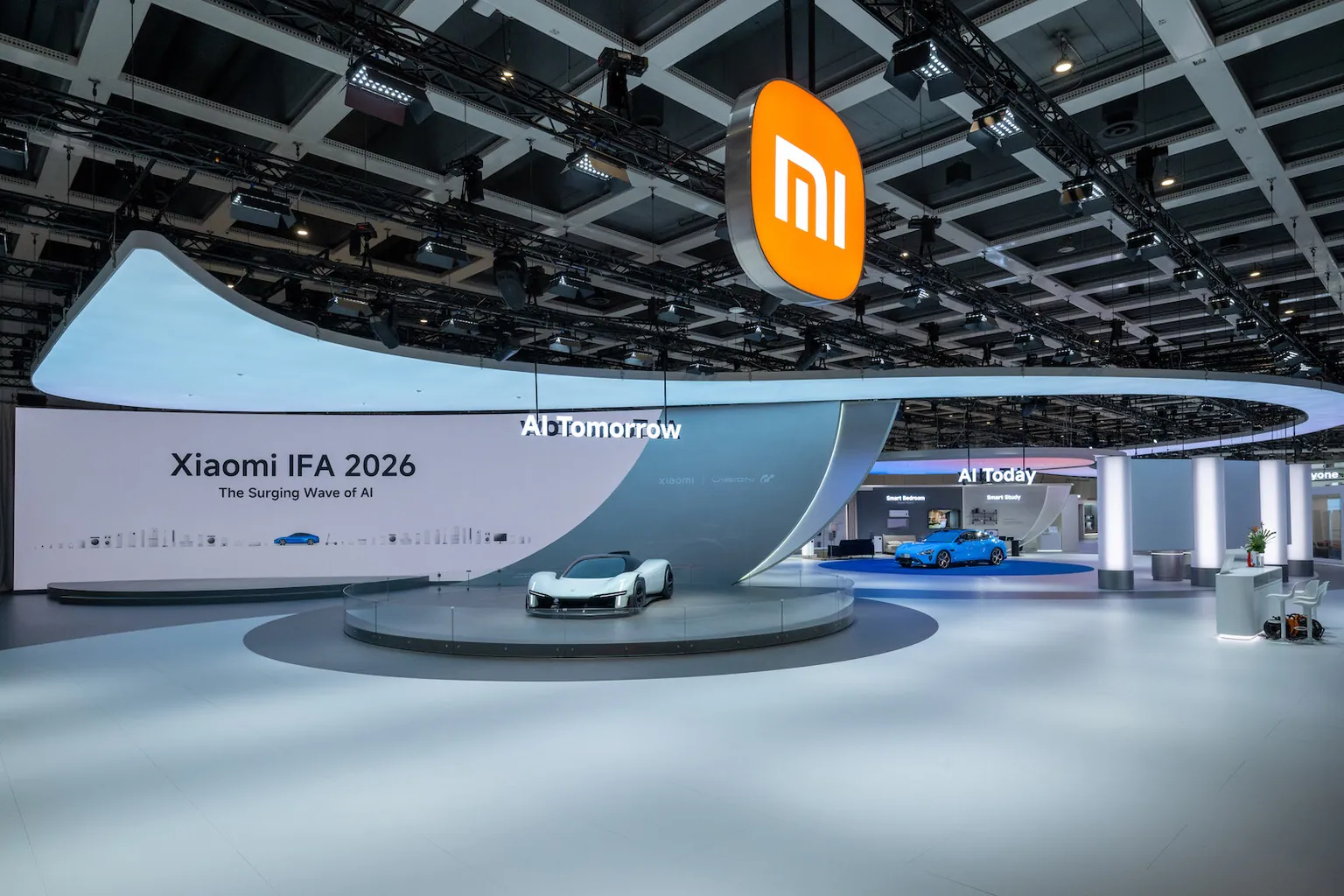
Samsung showed on IFA Berlin's main exhibition floor every year since 1991, then in 2026 it moved its entire presence roughly eight kilometers away to Humboldt Carre, hosting its own separate briefings and retail meetings instead of renting show-floor space. Xiaomi filled the resulting prominence with its largest overseas booth ever, 3,300 square meters in Hall 6.2, its first full appearance as an IFA exhibitor in the show's 102-year history. Under a Human times Car times Home pitch, Xiaomi showed more than 380 products spanning phones, including the Xiaomi 18 Fold with its in-house XRing O3 chip, electric vehicles including the SU7 Max, SU7 Ultra, and the Vision Gran Turismo concept, and the CyberOne humanoid robot.
| Metric | Figure |
|---|---|
| IFA booth size | 3,300 sqm (Hall 6.2) |
| Products shown | 380+ |
| Mijia SKUs in Europe | 2,000+ across 130+ categories |
| AI R&D committed (2026-2028) | EUR 7.4 billion |
| Total R&D committed (2026-2030) | EUR 24 billion+ |
| Vehicles delivered (mainland China) | 700,000+ |
Why a Smaller Booth Can Mean a Stronger Position
A shrinking trade-show footprint is not automatically a retreat, and Samsung's move illustrates the point: the company applied the identical logic at CES 2026, choosing curated off-site briefings for press, retailers, and enterprise buyers over a marquee floor booth, on the reasoning that its retail relationships and media access no longer depend on square meters of exhibition space. For a challenger like Xiaomi that still needs to build that level of retail credibility and channel access in Europe, the same floor remains the fastest available way to buy it, which is why Xiaomi committed its largest-ever overseas booth to the exact hall Samsung vacated. Xu Fei, Xiaomi's chief marketing officer, called the show a significant milestone in the company's global journey, and Zeng Hua, its PR director for Western Europe, framed the region as one Xiaomi intends to learn from rather than simply visit.
The Decision Rule for Reading a Vendor's Booth
European retailers, distributors, and enterprise buyers evaluating whether a consumer electronics vendor is genuinely committed to the European market should stop reading booth size as a proportional signal of market position, because 2026's clearest example runs the opposite way: the incumbent with 35 years of European retail relationships needed the least floor space to prove it, while the challenger spending its way into legitimacy needed the most. Capital already committed and already shipping is the sturdier signal: Xiaomi's 2,000-plus Mijia SKUs already live in Europe and its 24 billion euro multi-year R&D plan say more about durable market intent than any single hall's square meterage, and the same test is worth applying to every vendor's trade-show presence from here on.
Read next: iPhone Duo Ships Without Its EU Repair Grade | Dyson CameraJet Costs 480 Euros, 3x a Plain Brush