The announcement, and who independently confirmed it
Gravis Robotics, a Swiss company spun out of ETH Zurich, announced on August 17, 2026 that it had closed a $200 million Series A round led by SoftBank at a valuation of roughly $1 billion, according to the company's own announcement on its website. The round ranks among the largest-ever Series A financings specifically inside construction robotics, a category where checks of this size remain rare.
Bloomberg corroborated the deal independently the same day, publishing a report centered on SoftBank's $200 million investment in the company, and SiliconANGLE and Construction Dive each filed their own reports confirming the round and the roughly $1 billion valuation. That three-way independent corroboration, on top of the company's own disclosure, is what turns a startup's self-reported number into a verified data point for anyone tracking where large investors are putting money inside robotics.
A retrofit for excavators you already own, not a new machine to buy
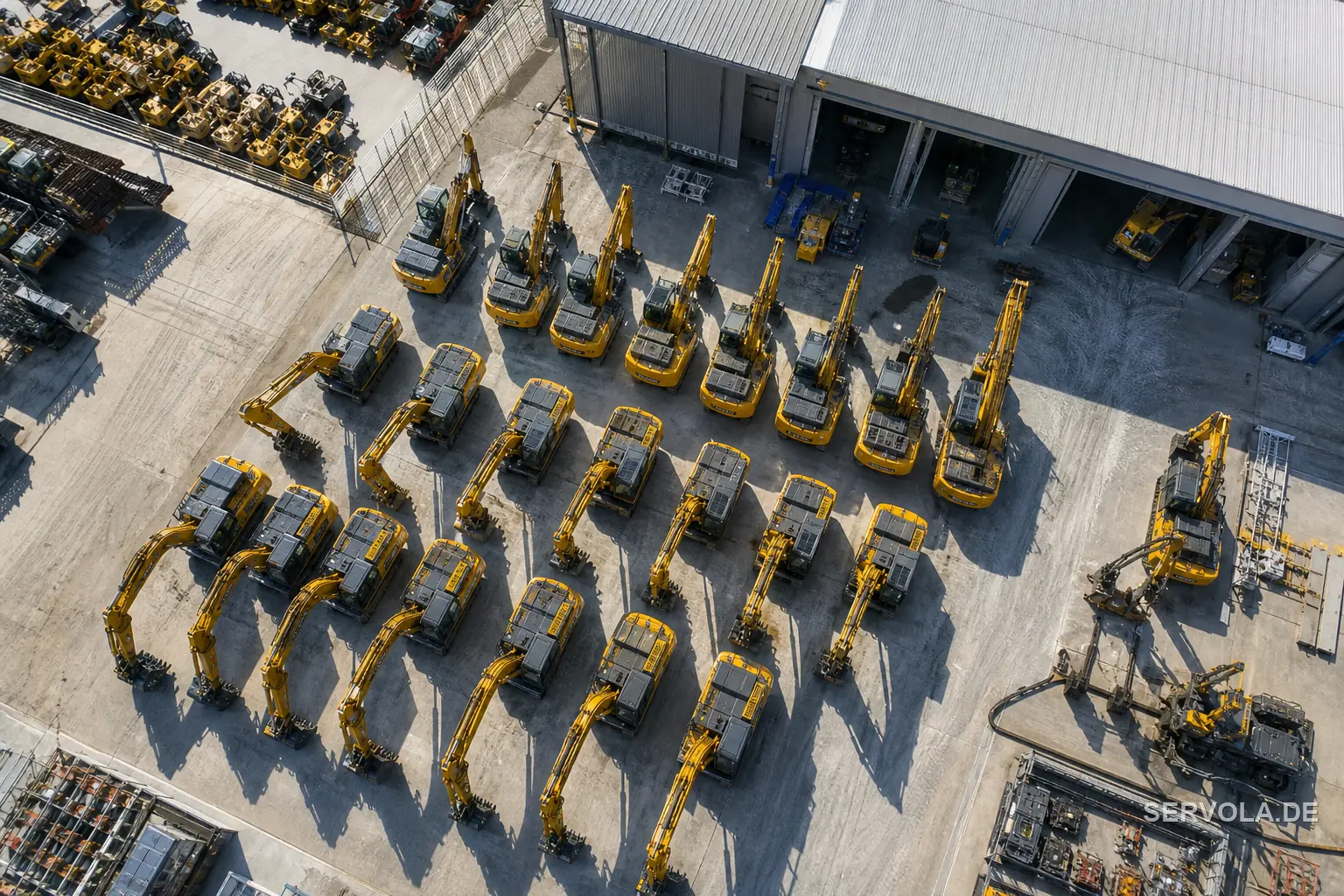
The detail that matters most in Gravis's pitch is what the company is not asking construction firms to buy: a new, purpose-built autonomous excavator. Instead, Gravis sells software that retrofits the excavator fleets construction firms already operate, including machines from Caterpillar, Volvo, and JCB, adding autonomy to hardware that was designed and purchased years before any of it had a self-driving feature.
That single design choice changes the economics of adoption. A construction firm weighing a purpose-built autonomous machine, or a general-purpose humanoid robot pitched as the future of physical automation, has to plan around writing off or replacing capital equipment it may still be depreciating. A firm weighing Gravis's retrofit software instead pays to upgrade equipment it already owns and already knows how to maintain, a fundamentally shorter path from purchase order to a working machine on site.
What a $200 million check says next to SoftBank's bigger robotics bets
SoftBank's $200 million check into Gravis is small next to the firm's other recent moves in robotics, and that gap is itself informative. SoftBank has separately been reported pursuing a robotics-unit deal with ABB valued at roughly $5.4 billion, and has separately held talks with Agile Robots, both far larger and broader bets than the sum it put into a Swiss excavator-retrofit startup.
Reading the three moves together: a large industrial robotics-unit acquisition, talks with a general robotics platform, and now a comparatively small, narrow, fast-to-deploy check on retrofit software for equipment construction firms already own. Size is doing real work here; the smallest and narrowest of the three checks is usually where near-term commercial ROI, rather than long-run platform ambition, is the actual thesis.
The lesson for UK fleet operators: find this one variable in every automation pitch
For a UK construction, logistics, or agricultural fleet operator evaluating any automation vendor's pitch, the single most useful question is whether the proposal requires buying new purpose-built machines or works with the excavators, trucks, or tractors already sitting in the yard; that distinction, more than any feature in the demo, decides how fast the purchase actually pays for itself.
Gravis's roughly $1 billion valuation converts to about 780 million pounds, a figure a UK fleet operator can use as a real reference point when judging how investors are pricing capex-light automation against the capex-heavy alternative of purpose-built autonomous vehicles or general-purpose humanoid robots, and it lines up with how EU industrial-automation funding has generally rewarded efficiency retrofits inside existing plant and equipment over wholesale replacement.
Read next: SoftBank Alone Funded a Billion-Euro Robot Bet | Banks Trust SoftBank's OpenAI Bet. Its Stock Doesn't.