The Ramp Tesla Announced
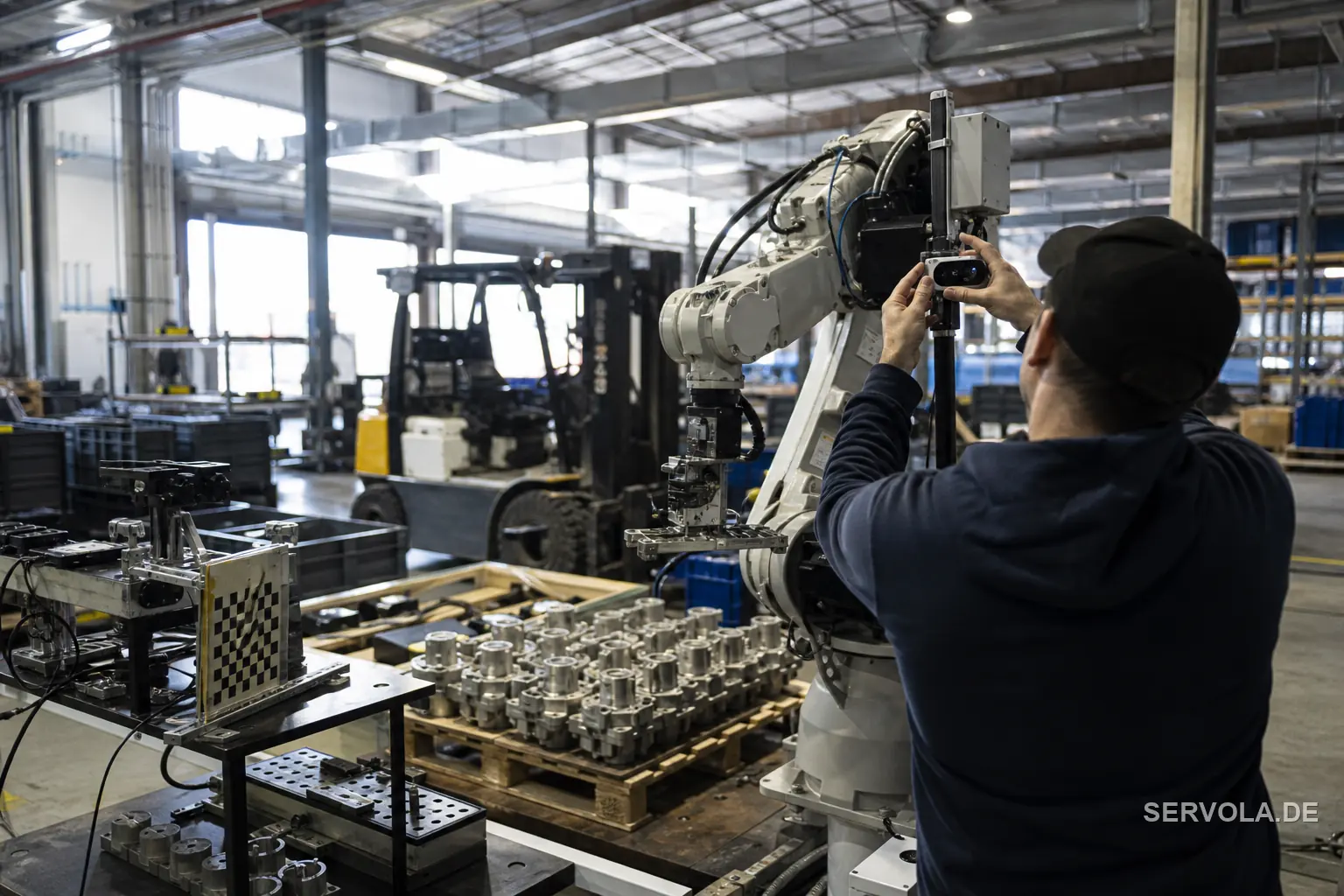
Tesla's Optimus production climbed from a few dozen units a week during small-batch testing in the second quarter of 2026 to several hundred a week by August, according to a report from The Information corroborated by Electrek and Tradingpedia. Managers are now aiming for more than 1,000 robots a week by the end of 2026, with later production lines designed to eventually push output toward 10,000 to 20,000 units a week.
| Period | Weekly output | Status |
|---|---|---|
| Q2 2026 | A few dozen a week | Small-batch testing |
| August 2026 | Several hundred a week | Early volume assembly |
| End of 2026 (target) | 1,000-plus a week | Not yet reached |
| Future lines (goal) | 10,000 to 20,000 a week | Design stage only |
Read as a single number, that curve looks like the clearest sign yet that Optimus is becoming a real product. Read next to what Tesla's own engineers are telling reporters about the hands, it looks like something else: a company ramping the part of the process that was already working, while the part that was not stays roughly where it was.
The One Part That Did Not Scale
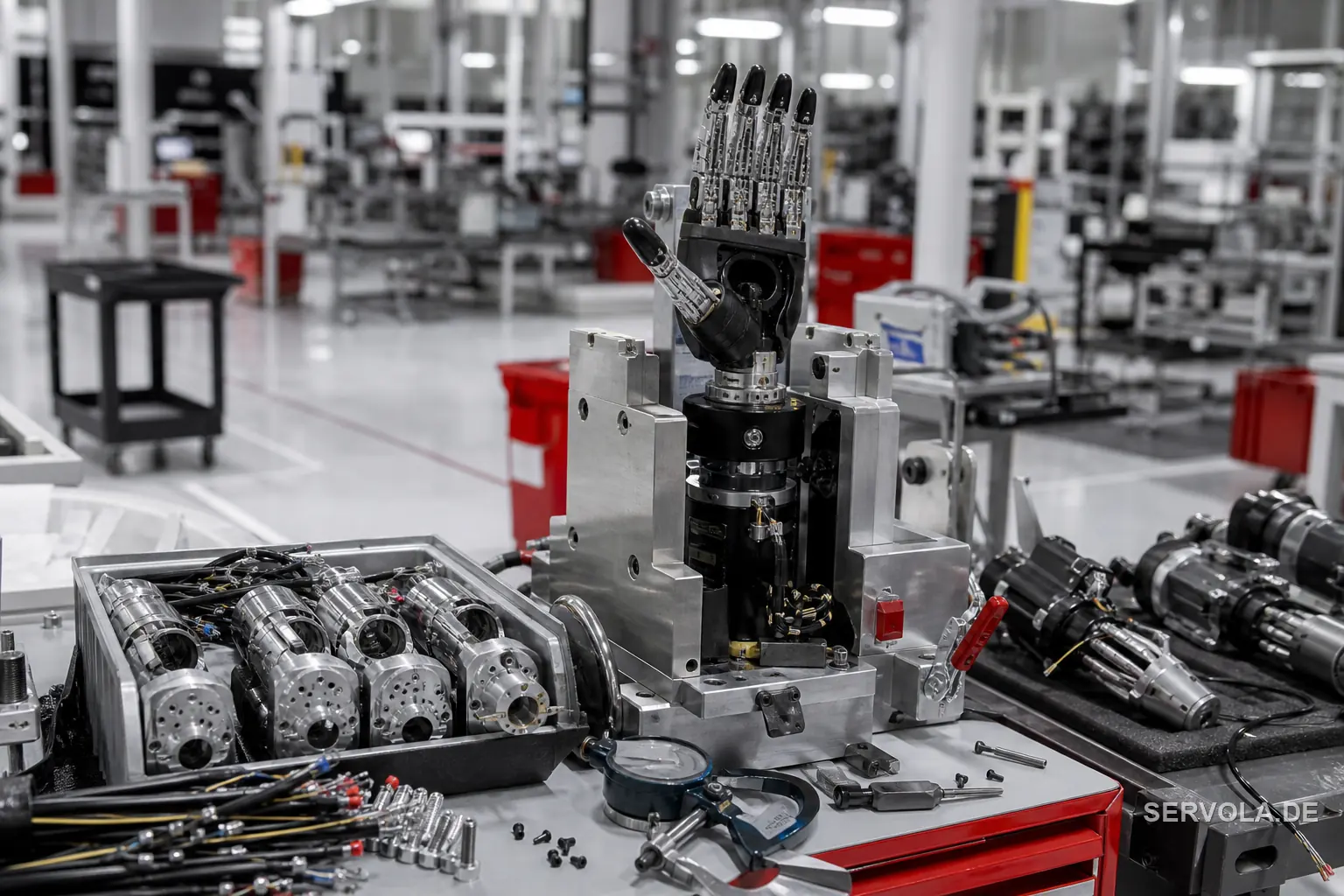
The hand and forearm assembly contains more than 100 screws and small components that still require manual work, and the fixtures on Tesla's line were built for parts far smaller and tighter in tolerance than anything on a car, which is producing significant rework. The touch sensors inside the hand also have reliability problems serious enough that Tesla is not trying to fix the hand itself next year, it is adding a replaceable sensing glove on top of it instead.
Tesla's supply chain adds a second constraint on the same part: motors and precision gears come largely from external suppliers, many in China, and some of them can produce good parts in prototype quantities but struggle to hold quality steady once volume rises. The hand is, in other words, the one part of Optimus that is simultaneously the hardest to build, the hardest to source at scale, and the one Tesla has already decided not to solve until next year.
The Second Bottleneck Nobody Can Skip Past
Even a perfect hand would not make Optimus a finished product. Tesla has more than 500,000 hours of training data for the robot's AI and plans to double that by the end of the year, using relocated self-driving data teams and new dedicated data collectors, and it still reportedly takes Optimus several days to learn even a basic task. Its behavior can be unpredictable the moment it meets a situation its training never covered.
Most of the robots Tesla is now producing several hundred of a week are not doing general work at all. They serve internal testing and training, confined to supervised areas performing specific, pre-programmed tasks, which is a very different thing from the general-purpose home or factory robot the production numbers imply on their own.
Why Scaling Around A Weak Subsystem Backfires
Ramping total output before the worst subsystem is ready does not dilute the defect rate, it multiplies the absolute number of units carrying that defect into the field. Every week Tesla adds to the production number, it adds more robots built around a hand design that Tesla itself is already planning to patch with an add-on part next year, which is a design decision still in motion, not a settled one.
It also commits capital in a direction that may have to be partly redone. Assembly fixtures and line tooling built around today's hand geometry are a sunk cost the moment that geometry changes, and the more units that have already gone through the line, the more expensive any redesign becomes to retrofit or absorb. A units-per-week chart moving up looks identical whether the thing underneath is converging on done or is being built around a problem the company has already chosen to defer.
The Lesson Beyond Robots
This is not a robotics-specific trap. Any team shipping a hardware or software rollout faces the same choice once one subsystem lags the rest: scale total volume on schedule and carry the unfinished part along for the ride, or hold the ramp until the weak link is actually ready. Optimus is a clean example only because the two metrics, units built and hand reliability, are being reported separately enough to compare.
The practical test travels well outside robotics: before reading a scale metric as progress, ask whether the thing it is scaling is the same thing that was broken last quarter. A rising units-per-week number and a still-unsolved hand are not in tension in Tesla's own reporting, they are two separate facts sitting next to each other, and treating the first as evidence about the second is exactly the read a decision-maker should not make.
Read next: No AI Safety Rule Binds Your Vendor Yet | Skild's Robot Assembles Blackwell From One Video