A reactor designed around a turbine that already exists
Nuclear Turbines came out of stealth in Manchester on 27 July with 15 million pounds and an unusual order of operations. The company was spun out of BAE Systems in partnership with the venture studio at Empirical Ventures and founded in 2025 by Jeremy Owston, a former principal engineer at BAE Systems who is now chief executive, and Professor Tim Abram, a nuclear engineer at the University of Manchester. Before the company existed the two published peer-reviewed research on coupling nuclear reactors directly to gas turbines, which is the idea the business is built on.
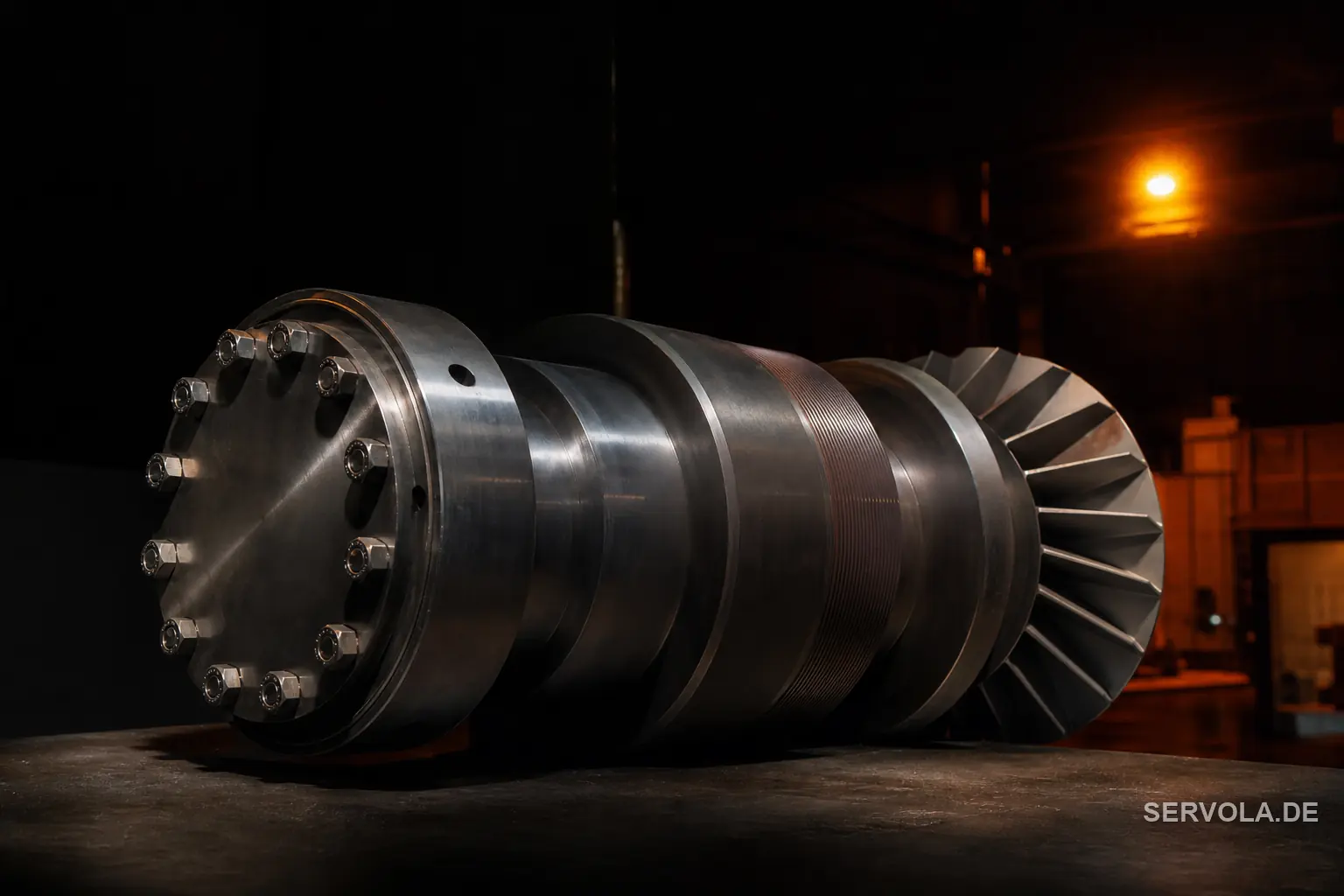
Conventional nuclear power heats water, raises steam and drives a steam turbine, and the steam island that makes this possible is a large share of the plant's mass, footprint and cost. Nuclear Turbines proposes to skip it. In its design an advanced modular reactor heats compressed air and returns it hot to a commercial gas turbine, the machine class already manufactured at volume for jet engines and gas-fired power stations. Removing the steam infrastructure is what makes the unit compact enough to be contemplated behind the meter on an industrial site. "We flipped this script: we started with the cheapest way to generate power and designed a reactor to fit", Owston said.
Why the order matters. Most small reactor ventures begin with a reactor and solve power conversion afterwards. Beginning with the cheapest available conversion machine and designing the heat source to suit it is a genuinely different approach, and it is the reason the cost argument is even arguable. It also means the design leans on a component that has never been certified for this duty in a nuclear application, which is a real engineering question rather than a rhetorical one.
What the fifteen million is actually scheduled to buy
The round was led by IQ Capital and joined by Rhapsody Venture Partners, Zero Carbon Capital and Empirical Ventures, with continued backing from BAE Systems. Lauren Dickerson, previously a strategy director at Centrica, has joined as chief commercial and strategy officer. The company states that the capital will advance and validate the reactor design, build large-scale test rigs and expand the team as it prepares to manufacture its first fuel elements.
Read that list again. Design validation, test rigs, first fuel elements. Every item on it sits before licensing. A power-producing reactor cannot be built and operated on a British industrial site until a regulator has assessed the design and the site itself has been licensed, and no design in which reactor heat is delivered to a commercial gas turbine has completed that assessment anywhere in the world. The company is not concealing this. It has simply not been the part anyone quoted.
That makes the honest timeline readable from the funding round itself, without needing a forecast from anybody. This raise buys the evidence required before the regulatory process can begin in earnest, not the process. For an operator sizing power for a factory or a data centre this decade, that places the technology outside the planning set, and it is considerably better to learn it from the company's own use of funds than to discover it in the third year of an evaluation.
The cost claim is a ratio, not a price
The figure being repeated is that this approach could generate electricity at one-fifth the cost of today's nuclear plants, with the company saying it targets prices below fossil fuels and industrial supply at a fraction of current electricity prices. These are company projections rather than measured outputs. That is entirely normal for a business at this stage, and it is worth saying plainly rather than treating the numbers as findings.
The denominator is doing most of the work. One-fifth of today's nuclear is a comparison against the most expensive method currently used to build firm generation, a method shaped by first-of-a-kind engineering, decade-long construction and financing costs that accumulate long before the first unit sells anything at all. A fifth of a very large number is not automatically a small number, and it is certainly not automatically below a grid tariff or a gas supply contract.
The claim that would settle the question is a delivered price per megawatt hour at a named site on a named date, and no honest developer at this stage can provide one. What can be assessed today is the direction of the engineering argument, and that part stands on its own: taking out the steam island removes genuine cost, mass and space. Whether the removal is worth a fifth or a third of the total is exactly what the test rigs are being built to find out.
The signal worth acting on is about the grid, not the reactor
The transferable content of this round is a revealed preference. Four specialist investors and a defence prime have concluded that enough industrial and data-centre operators will be unable to obtain grid power on an acceptable timetable that a new nuclear architecture is worth funding to serve them. That is a statement about connection queues before it is a statement about reactors, and unlike the reactor, the queue is something you can measure at your own site this week.
Across Europe the same pressure appears in different national forms, from congested transmission corridors to multi-year waits for a firm connection offer for a large load. The practical action is therefore not to follow this company. It is to obtain the current connection offer date for your own site in writing, compare it against the date your capacity plan assumes, and treat any gap as an exposure with a cost attached rather than as an administrative delay that will resolve itself.
If that gap turns out to be large, the options available now are the unglamorous ones: on-site generation using existing technology, demand flexibility that improves your position in the queue, storage, siting the next expansion where capacity already exists, or renegotiating a connection agreement to a lower peak in exchange for a firmer date. Behind-the-meter nuclear may eventually join that list. It is not on it this decade, and a plan that quietly assumes otherwise is a plan with a hole in it.
Read next: Your Spot Power Contract Just Met a 119 Percent Price Spike | Germany Gives Owners Until 2027 to Dodge New Grid Fees