The Machine With No Other Job
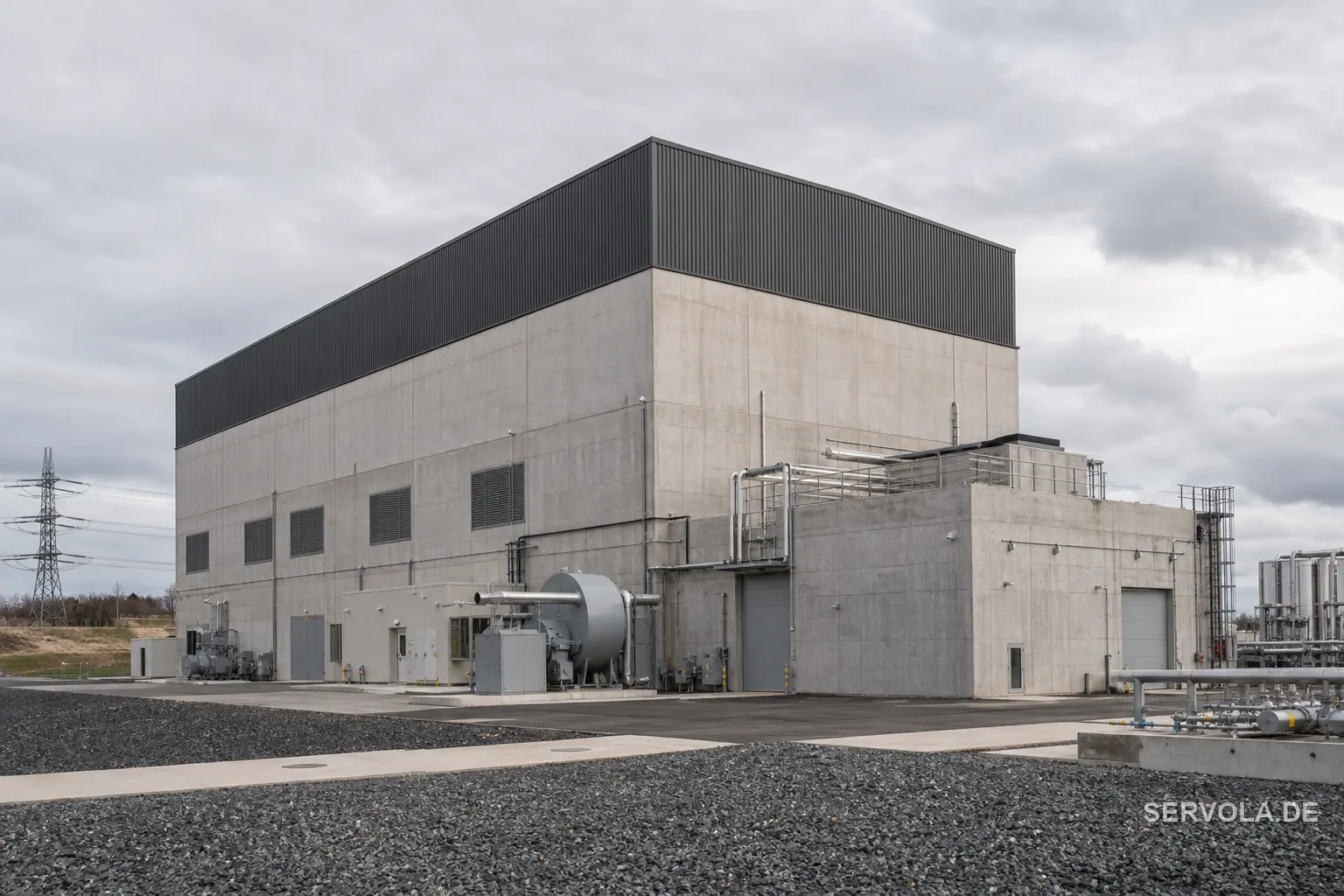
On 7 August 2026, Britain's National Energy System Operator (NESO) announced it had commissioned a new synchronous condenser at Pembroke power station in Wales, built and operated by RWE Generation. The unit is the first of 16 synchronous condensers planned under NESO's Stability Pathfinder programme, a build-out that will run for years and touch sites across the country.
A synchronous condenser is a large rotating machine, essentially a motor spun up with no other job, that provides what engineers call grid inertia: a physical stabilizing effect that keeps the electricity grid's frequency steady. The machine generates no electricity. Its entire function is to keep spinning.
Where Grid Inertia Used to Come From for Free
For most of the history of Britain's power system, grid inertia was not something anyone had to build or buy. It came as a free byproduct of coal and gas turbines physically spinning to generate power. The same mass that produced electricity also, incidentally, kept the grid's frequency stable when something went wrong.
As those coal and gas plants close and are replaced by wind and solar, that free stabilizing effect disappears with them. Wind turbines and solar panels have no comparable spinning mass connected to the grid. The inertia now has to be replaced with dedicated equipment, purpose-built and paid for specifically to provide it, since it no longer arrives bundled in for free with generation.
The Numbers Behind Stability Pathfinder
The assets commissioned so far under Stability Pathfinder, including the new Pembroke unit, currently contribute 17.2 GVA.s (gigavolt-ampere-seconds) of grid inertia. NESO expects the programme's next phase to add a further 26.9 GVA.s. Only one of the 16 planned synchronous condensers is commissioned so far, so most of the programme, and most of that inertia, is still ahead. Matt Magill, NESO's Director of Engineering, said: 'Projects like Pembroke will help reduce emissions, strengthen energy security, and save consumers up to GBP9bn as Britain moves towards a clean power system.'
The GBP 9 Billion Trade
NESO projects the Stability Pathfinder programme could save consumers up to GBP 9 billion in system costs over the years ahead. The saving comes mainly from what NESO no longer has to pay for: keeping old fossil-fuel plants running, inefficiently, for stability and frequency response alone, regardless of whether their power output is even needed. Nikolaus Valerius, CEO of RWE Generation SE, called the Pembroke milestone 'an important milestone for the project and for the wider electricity system.'
Servola has covered Britain's grid connection queue extensively, including fees running GBP 237,500 to 712,500 per megawatt and a queue that has tripled from 41GW to 125GW; that is a story about the cost of getting new generation capacity onto the grid. Stability Pathfinder is a different mechanism: paying directly for the physical stabilizing effect that capacity used to carry along for free, a line item that discussions built around generation figures usually miss entirely.
A New Line Item for Site Planners
For any owner or operator planning long-horizon UK site strategy or energy costs, the lesson from Pembroke is that grid stability, not just capacity, is now its own build-out programme with a specific timeline and a specific price tag. Sixteen units are planned. One is commissioned. The other fifteen, and the further 26.9 GVA.s they are expected to add, are still to come, and they are worth tracking as a distinct line item from the generation-capacity story most people already follow.
Read next: Five Data Centres Bought Their Way Past the UK's Grid Queue | NESO Faces a Whistleblower Probe as Risk Reports Lapse