Five Days After the Deal Closed, the Real Terms Arrived
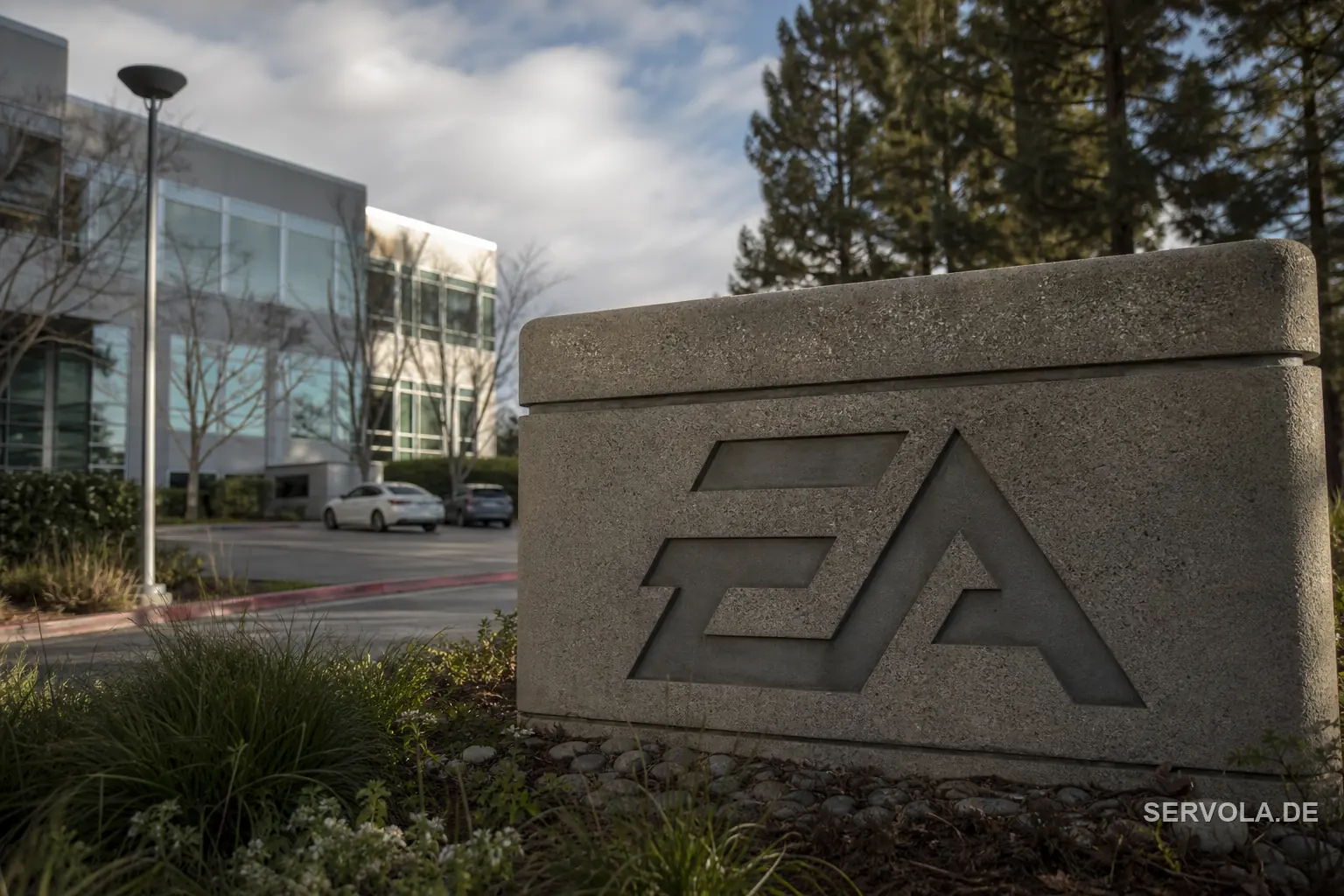
EA's $55 billion take-private buyout, led by Saudi Arabia's Public Investment Fund (a 93.4 percent stake) alongside Silver Lake and Affinity Partners, closed on 4 August 2026, the largest leveraged buyout ever completed. Five days later, Bloomberg reporter Jason Schreier disclosed what the new owners are actually asking for: EA has told the banks and investors financing the deal that it plans to cut about $700 million in annual costs, and that $170 million of that figure is filed under "organizational efficiencies," the standard label public companies attach to headcount reduction before it becomes a press release. Schreier's own reading of the phrase, posted the same day, was that it means mass layoffs are coming.
What makes the number notable is what it is not. EA's own annual EBITDA runs at roughly $1.5 billion, enough on its own to service the interest on the roughly $18 billion of debt the buyout consortium loaded onto the company. The $700 million target functions as a return the new owners have set on top of a company that can already pay its bills, not as a solvency measure keeping the lights on. That distinction matters for every European studio inside EA, because it means the coming cuts will be sized to what the owners want back, not to what the business needs to survive.
Who Bloomberg Named: One Studio at Risk, Three Franchises Protected
Schreier's reporting named BioWare, the Edmonton and Austin studio behind Mass Effect and Dragon Age, as the developer under the most direct scrutiny, a position sharpened by the fact that BioWare has not shipped a genuine commercial hit in over a decade; Dragon Age: The Veilguard underperformed on release, and the studio has already been through multiple rounds of layoffs and internal transfers since 2025. On the other side of the ledger, the reporting points to EA Sports FC, Madden NFL and Battlefield as the franchises the new owners intend to protect almost exclusively, the three lines that generate the bulk of EA's live-service and annual-release revenue.
That is a familiar pattern in leveraged-buyout playbooks: keep the assets with the most predictable cash flow and cut everything measured against them. What is less familiar, and less discussed outside the games press, is what "protected" actually buys a studio once the arithmetic changes hands to owners with a debt schedule to meet rather than a games business to grow.
Protected Franchise Is Not the Same Guarantee as Protected Studio
EA's European footprint sits directly inside this story. DICE in Stockholm, with more than 350 staff, is Battlefield's originating studio and, on paper, sits inside the protected perimeter. Codemasters, the Southam, UK developer EA bought for $1.2 billion in 2021, builds racing titles that fall outside all three protected franchises. Criterion Games, the UK studio with its own three-decade history and its own IP heritage in Burnout, offers the clearest preview of what happens in between: Criterion has already been converted into a studio that exists to provide exclusive support to Battlefield, developed and released by DICE, keeping its name and much of its staff while losing its own release slate.
That is the distinction Bloomberg's framing leaves out and that European studio leaders, works councils and investors should not: "protected" describes three franchises, not the studios around them. A studio can survive a cost programme like this one by losing the thing that made it a studio rather than a support unit, its own greenlight authority, its own original IP, its own creative mandate, while the franchise it now serves gets reported as safe. For a games-development base as concentrated in the UK and the Nordics as EA's is, the more precise risk to price in over the next 12 months is which studios quietly stop originating anything of their own.
The Governance Signal Beyond EA
EA is not the first major European employer to go private under a sovereign-wealth and private-equity consortium, but it is now one of the largest and most visible tests of what that ownership structure does to a workforce once the deal closes. The logic driving the $700 million target did not originate inside EA's studios or its games business; it originated with owners assembling a return case, applied to a company whose EBITDA already covers its debt service. That is a governance pattern worth watching well beyond gaming: EU works-council consultation rights, UK collective-redundancy rules and Swedish employment-protection law will all be tested against a capital structure built to extract more than the debt itself requires, from owners with no prior history operating a studio in any of those jurisdictions.
For anyone with commercial exposure to EA-owned or EA-adjacent studios in Europe, whether as a supplier, a co-development partner or a portfolio holder, the near-term signal is not whether BioWare closes. It is that the criteria determining a European studio's future just moved outside the country it operates in, and outside any measure of whether that studio's own games are working.
Read next: 13 Years Later, a Steam Server Leaked Two Rivals' Games | Makers Fund Hits $1.5bn AUM as Majors Consolidate