The Deal: $3.5 Billion, and Google Was in the Same Room
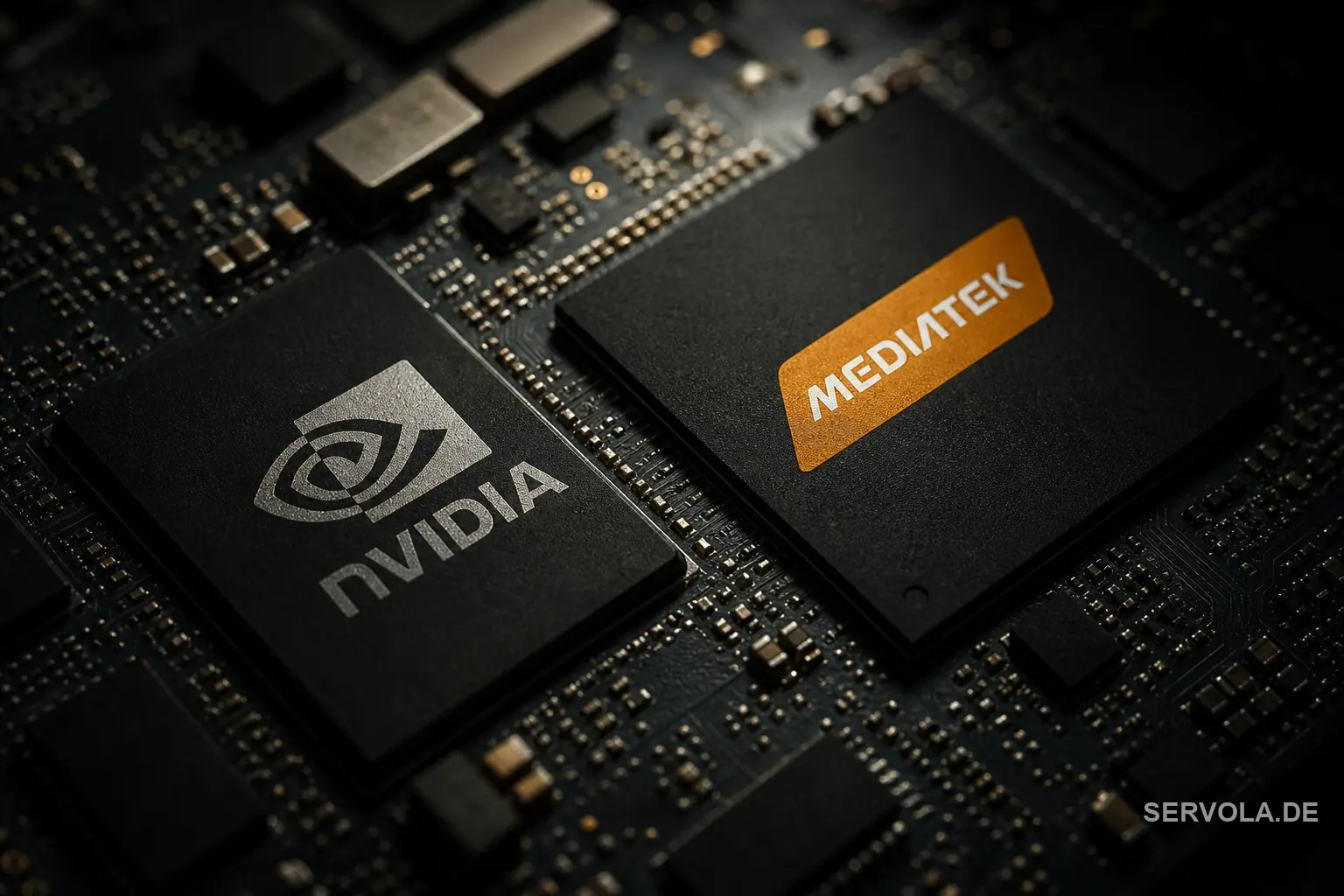
On August 31, 2026, Nvidia announced it is putting $3.5 billion into convertible bonds issued by MediaTek, part of a $3.9 billion offering by the Taiwanese chipmaker. Alphabet also bought into the same round, according to Bloomberg's reporting on the sale, though neither company disclosed the size of Alphabet's stake.
Nvidia CEO Jensen Huang framed the investment as ecosystem support, not favoritism: "AI is transforming every computing platform, from the world's largest AI factories to the PC and the car." MediaTek CEO Rick Tsai called it a deepening of "a collaboration that spans cloud AI infrastructure, local AI computing and automotive." Asked whether financing a partner this way raises circularity concerns, Huang pushed back: "This is not circular because obviously they do their own business and we do our own business."
What NVLink Fusion Actually Locks In
The bond proceeds are tied to a specific technical commitment: MediaTek adopting Nvidia's NVLink Fusion platform. NVLink Fusion gives chipmakers a prevalidated, prequalified path to build custom accelerator chips, known as XPUs, that plug directly into Nvidia's proprietary rack-scale AI systems, cutting the engineering time needed to get a custom chip working inside an Nvidia-built data center.
The collaboration also covers Nvidia's RTX Spark and DGX Spark chips for consumer and enterprise PCs, launched in June 2026, and MediaTek's Dimensity Auto line for AI-powered vehicles. Each of those product lines becomes another surface where MediaTek's hardware roadmap runs through Nvidia's connector, not an open one.
| Deal | Amount | Date | Status |
|---|---|---|---|
| OpenAI Ohio data-center lease guarantee | ~$105 billion | August 2026 | Active |
| AI Compute Partnership financing program | $36 billion in commitments | Launched July 2026 | Partly paused |
| MediaTek convertible bonds | $3.5 billion (of $3.9B offering) | August 31, 2026 | Announced |
The Standard Google Helped Build to Not Need This
In May 2024, Google was a founding board member of the UALink Consortium, alongside AMD, Broadcom, Cisco, Hewlett Packard Enterprise, Intel, Meta and Microsoft. UALink's entire purpose is an open, royalty-free alternative to NVLink, so that chipmakers and cloud buyers are not stuck depending on Nvidia's proprietary interconnect to link accelerators together inside a data center.
That context is what makes Alphabet's participation in MediaTek's bond sale an odd fit. The same company that helped found a standard designed to give the industry an exit from NVLink lock-in has now put money into a deal whose stated purpose is deepening a major chipmaker's adoption of NVLink Fusion. Neither company's public statements on the MediaTek deal mention UALink at all.
What This Means If You Buy Anything Built on MediaTek Silicon
This is the third time in six weeks that Nvidia has used its balance sheet to finance the ecosystem around its own chips: a roughly $105 billion guarantee behind OpenAI's Ohio data-center lease, a chip financing program that Nvidia itself disclosed at $36 billion in its most recent quarterly filing before pausing parts of it over internal antitrust concerns, and now $3.5 billion into MediaTek. Portfolio manager Joe Tigay described the MediaTek structure as "less circular than Nvidia financing a customer, but it is still Nvidia using its balance sheet to accelerate ecosystem growth."
For any European buyer specifying MediaTek-based silicon, whether Dimensity Auto in a vehicle platform, RTX Spark or DGX Spark in a workstation, or custom XPUs built on NVLink Fusion, the practical point is not the deal's size. It is that MediaTek's own chief financial backer for this round is the same company whose interconnect standard it just committed to deepen, while one of the two investors funding that commitment is on record building the alternative. Multi-sourcing plans that assume MediaTek stays interconnect-neutral now need to account for where its capital, not just its chips, actually comes from.
Read next: Waymo Built Its Own Chip to Stop Paying Nvidia | America's Data Centers Just Traded Flexibility for a Faster Grid Slot