What Was Published and When
Attackers published two malicious releases of Microsoft's Agent Framework for Python to PyPI on 17 November 2026. Wiz puts version 1.26.1 at 20:35 UTC and 1.26.2 at about 21:08 UTC, and both were gone from the index by 21:30 UTC. The last safe release is 1.26.0, published on 12 November.
The window was short, but the package has about 192,000 monthly downloads according to OX Security, and CI systems install the newest version without anyone watching. Wiz found the attacker most likely used a Microsoft ESRP client certificate: a first publish from an AWS address was blocked by IP filtering, and a second from Microsoft-owned address space went through. How the certificate was obtained is still unknown, and neither vendor quotes a Microsoft statement.
What the Code Went After
Both releases add a .pth file, which Python runs every time an interpreter starts, so the package never has to be imported. The payload is disguised as SDK telemetry and installs the genuine agent-framework-core 1.26.0 beside it, so the framework keeps working and nothing looks broken.
| Version | Published (UTC) | Entry file | Files read |
|---|---|---|---|
| 1.26.1 | 17 Nov, 20:35 | agent_framework_meta.pth | up to 60 |
| 1.26.2 | 17 Nov, about 21:08 | af_runtime_diag.pth | up to 80 |
| 1.26.0 | 12 Nov, 18:25 | none, last safe release | none |
The code reads environment variables with names such as TOKEN, SECRET, AZURE, AWS and GITHUB, secrets from up to 300 other processes, and config files like .npmrc, .git-credentials and the Azure CLI profile. It also asks Azure for managed-identity and pipeline tokens, and 1.26.2 adds GitHub Actions OIDC tokens. Everything leaves in one HTTPS post to a free webhook.site address. Wiz saw three successful exfiltrations of victim data.
What to Do Before the Week Ends
Search lockfiles, CI logs and container images for agent-framework 1.26.1 or 1.26.2 today, and check site-packages for agent_framework_meta.pth or af_runtime_diag.pth. If either exists, treat every secret on that host or runner as stolen and rotate it, including Azure DevOps and GitHub tokens, then review Azure sign-ins for managed-identity use. Tokens obtained through identity exchange can stay valid for up to 24 hours.
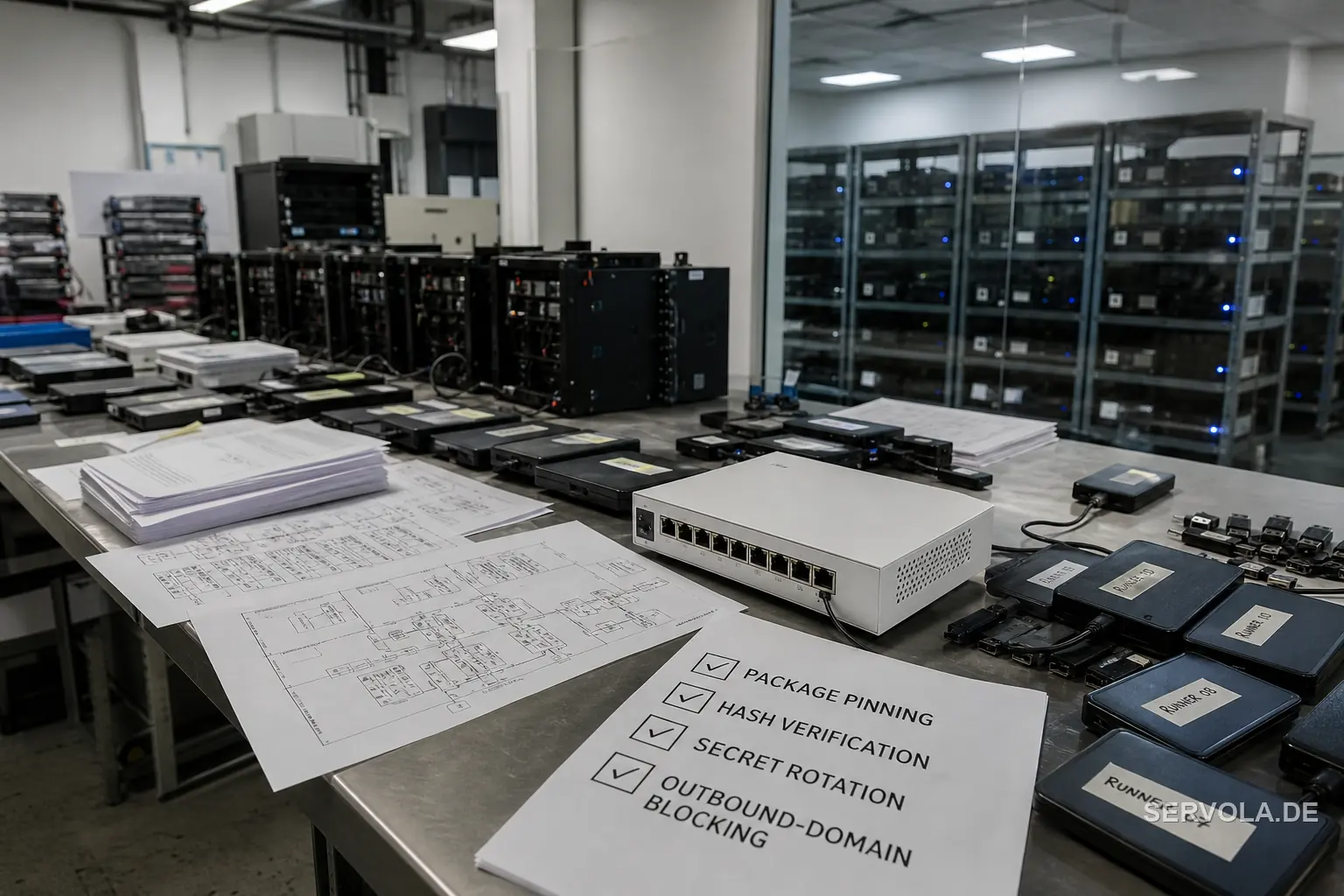
The lasting change is in how you install. Pin to 1.26.0 with hash-checked installs, block outbound traffic to webhook.site from build machines, and give GitHub workflows id-token: write only where a job truly needs it. A release from the vendor's own pipeline was what failed here, so a version number alone is not proof of safety.
Read next: Microsoft's First Azure Number Is Also a Smaller One | The LiteLLM Breach Sat Hidden for Five Months