The Round, In Concrete Numbers
Olix closed a $312 million Series B on August 3, 2026 at a $3.3 billion valuation, the company said in its own newsroom announcement.
The London company, founded in 2024 and known as Flux Computing until it renamed itself Olix in January 2026, priced this round at more than triple the $1 billion valuation it carried after a $220 million raise in February 2026, according to DataCenterDynamics' coverage of both rounds.
Fundomo led the round, with new participation from Arm, Hudson River Trading and the UK government's own Sovereign AI venture fund; existing backers increased their commitments, and Netflix co-founder Reed Hastings joined as an angel investor, the company disclosed.
What Olix Says It Is Building
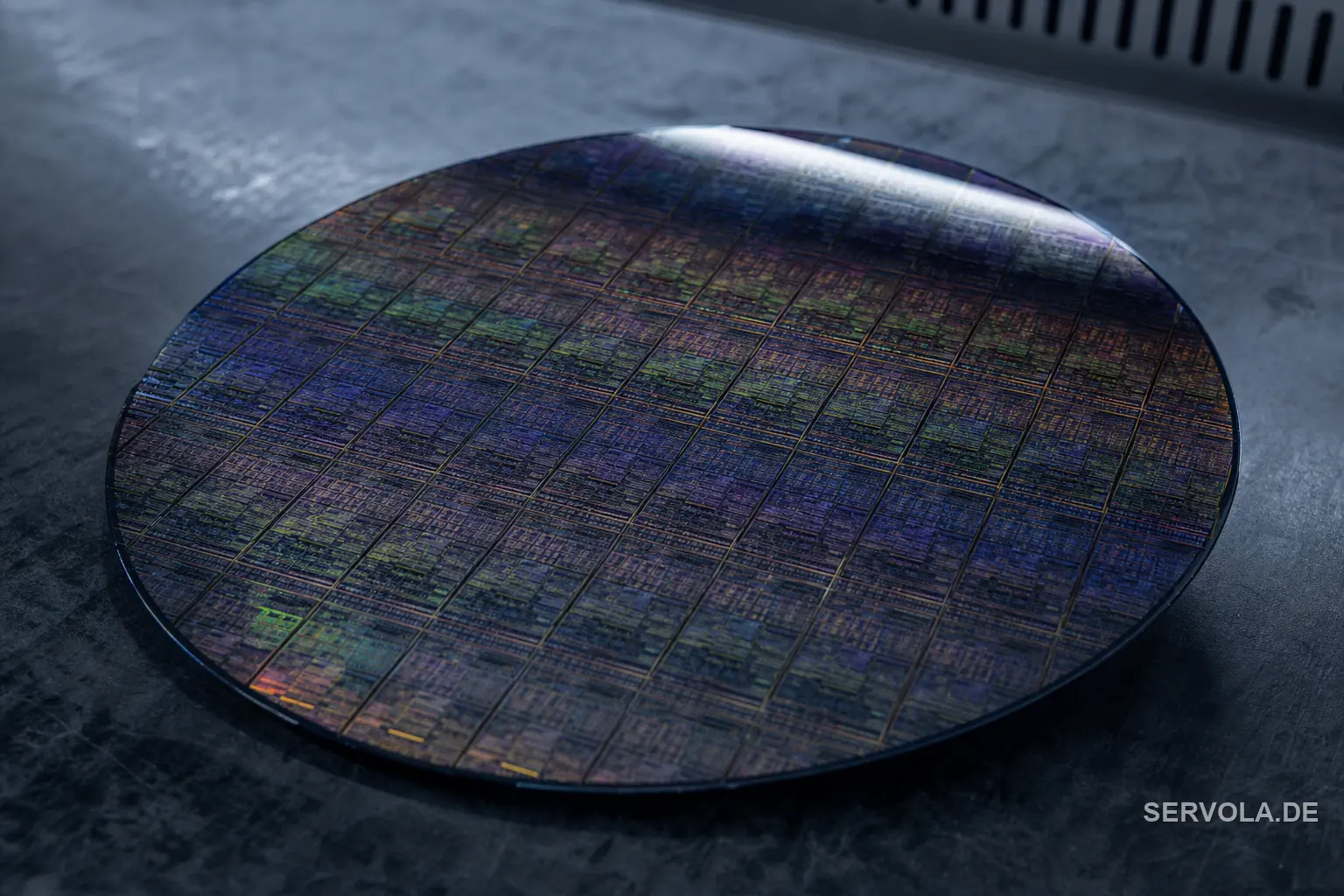
Olix builds photonic, or optical, chips meant to run finished AI models rather than train them, splitting the inference process across specialized silicon connected by optical links instead of copper wiring.
The company's X-1 platform assigns different stages of producing each output token to different chips, an approach Olix describes as trading a 'slow and wide' optical interconnect for the dense, power-hungry memory links that general-purpose AI chips rely on today.
Its DX-1 decode accelerator is designed to reach more than 10,000 tokens per second on 100 billion parameter models, but Olix itself states that the chip will not reach its first customers until the second half of 2027 - it has not shipped yet.
A Bet Placed Years Before It Can Be Checked
The UK government's own Sovereign AI venture fund put public money behind a chip that has not shipped a single unit, wagering taxpayer-linked capital on an efficiency claim Olix cannot yet demonstrate in a live customer deployment.
Private investors like Fundomo, Arm and Hudson River Trading are free to accept that risk in exchange for equity upside; a sovereign fund's mandate is different, and its presence in this round signals that the state itself is treating photonic inference as a strategic bet worth taking before the technology is proven at scale.
Strip away the headline valuation and the substance is this: public money is betting that the AI inference cost curve, dominated today by GPU pricing, will bend toward photonic economics within the next two to three years, and no independent customer has confirmed that bend before the DX-1 ships in the second half of 2027.
The Procurement Question This Raises For Owners
A business owner signing a three-year GPU inference contract today is locking in pricing built on a cost structure that a state-backed fund is openly betting will not survive to the contract's final year.
If Olix or a rival photonic vendor ships anywhere near the throughput Olix has described, the price-per-token economics that GPU vendors offer in 2026 could look expensive by 2028 or 2029, and a contract signed today has no mechanism to capture that shift.
The practical response is not to wait for photonic chips before buying compute, since Olix has not shipped and no comparable rival has either; it is to insist that any multi-year AI infrastructure contract include a re-negotiation window or an early-exit clause tied to a defined date, rather than locking in today's GPU economics for the full term.
Read next: A $100 Million Seed Bets Against Vendor Lock-In | A Quant Fund Bet $700M After Testing the Hardware