Fifty-Five Percent Of Sales Became Operating Profit
Samsung Electronics published its third-quarter 2026 earnings guidance on 8 October, and the profit line is the story.
| Quarter | Sales (trillion won) | Operating profit (trillion won) | Margin |
|---|---|---|---|
| Q3 2025 | 86.06 | 12.17 | 14 percent |
| Q2 2026 | about 171.5 | 89.49 | 52 percent |
| Q3 2026, guidance | about 195 | about 107.40 | 55 percent |
Operating profit rose about 20 percent from the second quarter and about 8.8 times from a year earlier. Bloomberg converted it to roughly 80.1 billion US dollars and noted it landed just under analyst expectations, so even a result this large was priced in.
Samsung's release gives no segment split, so memory's share is inferred from the price data below, not stated by the company.
What The Price Data Says Is Behind It
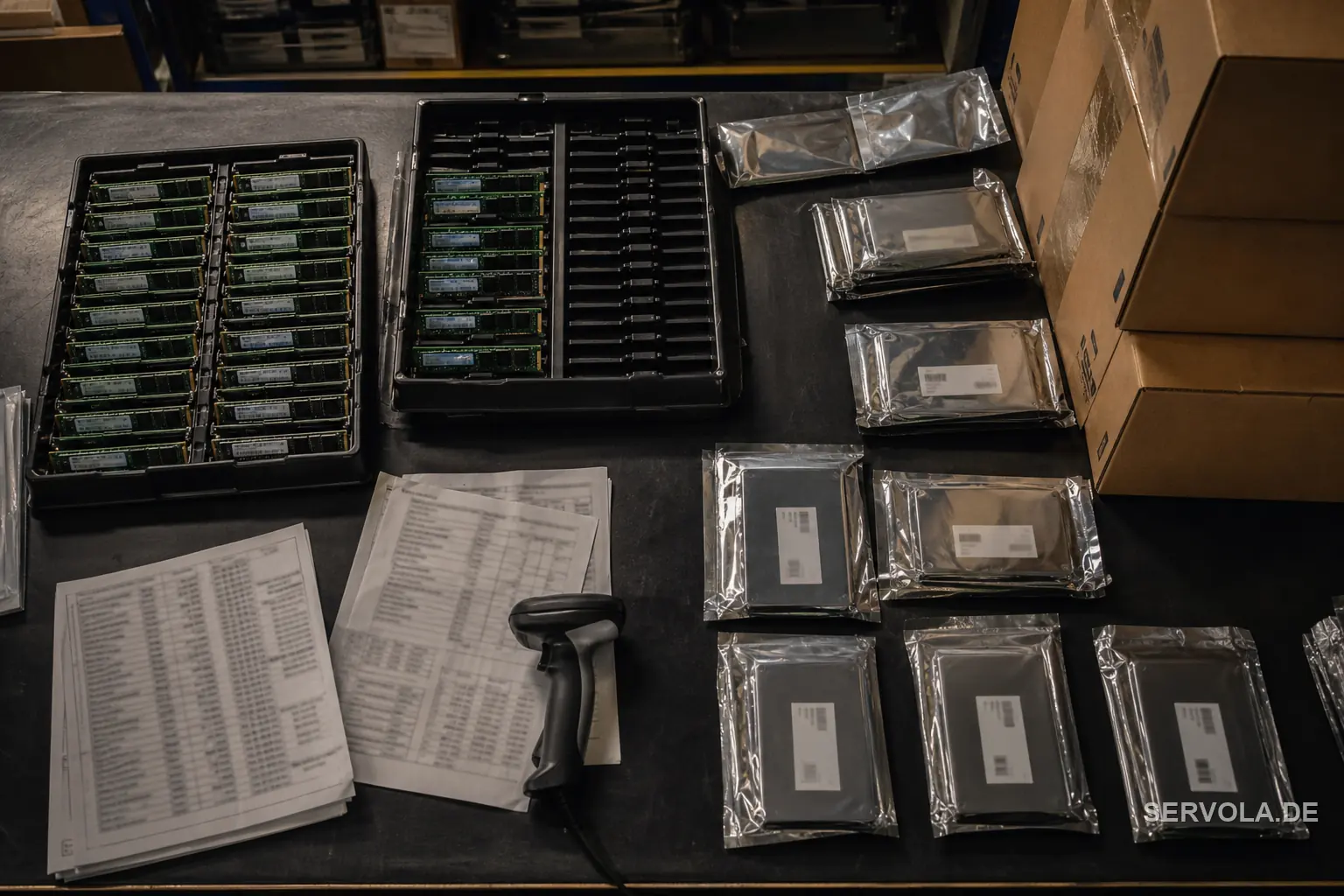
TrendForce's 30 September outlook says DRAM suppliers keep prioritising advanced-process capacity for high-performance server products, which leaves the overall market undersupplied. It expects conventional DRAM contract prices to rise 10 to 15 percent quarter on quarter in the fourth quarter and NAND flash contract prices 15 to 20 percent, with enterprise SSDs the only category where the pace of increase accelerates.
| Component | Street price versus November 2022 |
|---|---|
| Server DDR4 | 2 to 3 times |
| Server DDR5 | 9 to 13 times |
| 30 TB enterprise SSD | 6 to 7 times |
| 30 TB nearline disk | about 2.5 times |
| HBM, finished parts | about 1.6 times |
Those multiples come from The Register's 8 October analysis, built on Gartner market data and street prices. The odd one out is HBM, the memory stacked on AI accelerators: it is sold under contract to a few buyers and has risen least, while the ordinary DDR5 in a general-purpose server has risen most.
Why This Lands On Your Budget
Companies replacing five-to-seven-year-old servers now compete for the same DRAM and flash as hyperscalers building AI inference capacity. TrendForce says enterprise SSD bit demand will grow by more than 80 percent year on year in 2026 as cloud providers expand inference infrastructure.
PC buyers feel it too. TrendForce reports that notebook inventories increasingly reflect higher component costs, that PC brands are cutting SSD capacity in mainstream models to protect their bill of materials, and that PC DRAM supply could decline in 2027 as more capacity moves to servers.
The pattern is that the buyers who can sign long agreements set the price, and everyone else pays what is left. For an owner with a refresh planned, memory is now the largest uncertain line in the quote.
What To Do Before You Sign A Hardware Quote
Ask suppliers to itemise memory and storage separately from the chassis and processor, and ask how long each price stays valid. A quote that bundles them hides the line that is moving.
Measure real memory use before ordering. If your current servers peak at half of installed RAM, buying the same configuration again at several times the old price is a choice, not a default. Test whether extending existing hardware by six to twelve months costs less than buying into this quarter.
If you rent compute instead, check whether your cloud contract reprices memory-heavy instance types at renewal. Samsung's numbers show where the margin is going, and TrendForce expects the squeeze to last into 2027.
Servola Journal
We do this for everyone trying to keep up with what technology is doing to our lives. The people who build it, and the people it happens to. The Servola Journal exists so that what we learn belongs to all of them.
Nobody pays us for this. No ads, no paywall, free to everyone. We just believe that understanding what's happening to all of us shouldn't depend on who can afford to pay for it.
If it gave you something today, tell us to keep going. Follow us, leave a like, or write a positive comment. We read every one, and they are what keeps us going.
Read next: 38 Billion Dollars Buys Years of Pricier Memory Chips | Memory Got This Expensive For Two Separate Reasons