A Phone Maker Just Redrew the Map
Xiaomi released three new AI models on September 22, under the MiMo-V2.6 name, and the flagship one is not a phone feature. MiMo-V2.6 Pro is a trillion-parameter reasoning model, built with a sparse mixture-of-experts design that activates about 42 billion of those parameters for any given answer, and Xiaomi gave away the full weights and training code under an MIT license.
A smaller sibling, MiMo-V2.6 Flash, uses 309 billion total parameters and 15 billion active ones, aimed at high-volume, lower-cost use. Both read and write text, images, video and audio, and both were ranked by the independent evaluator Artificial Analysis: Pro scored 46 on its Intelligence Index, ahead of China's own Kimi K3 (44) and GLM-5.3 (45), with the leading closed models still ahead at roughly 53.
What 2.6 Million Dollars Bought
Xiaomi did not just publish the model, it livestreamed the training run. The company says MiMo-V2.6 Pro finished 30 reinforcement-learning steps in under six days across 750,000 task trajectories, using a method called Group Relative Policy Optimization, at a reported cost of about 2.6 million dollars; Flash cost roughly 850,000 dollars more, for a combined 3.5 million dollars across both models.
That figure is worth setting next to what the industry has said its own frontier models cost. The comparisons below use commonly cited industry estimates, not Xiaomi's own numbers, for every closed model.
| Model | Estimated training cost | Weights available |
|---|---|---|
| Xiaomi MiMo-V2.6 Pro | about 2.6 million dollars | Yes, MIT license |
| GPT-4 (OpenAI) | about 78 to 100 million dollars | No |
| Gemini Ultra 1.0 (Google) | about 192 million dollars | No |
| Llama 3.1 405B (Meta) | about 170 million dollars | Yes, community license |
The Sovereignty Math Just Changed
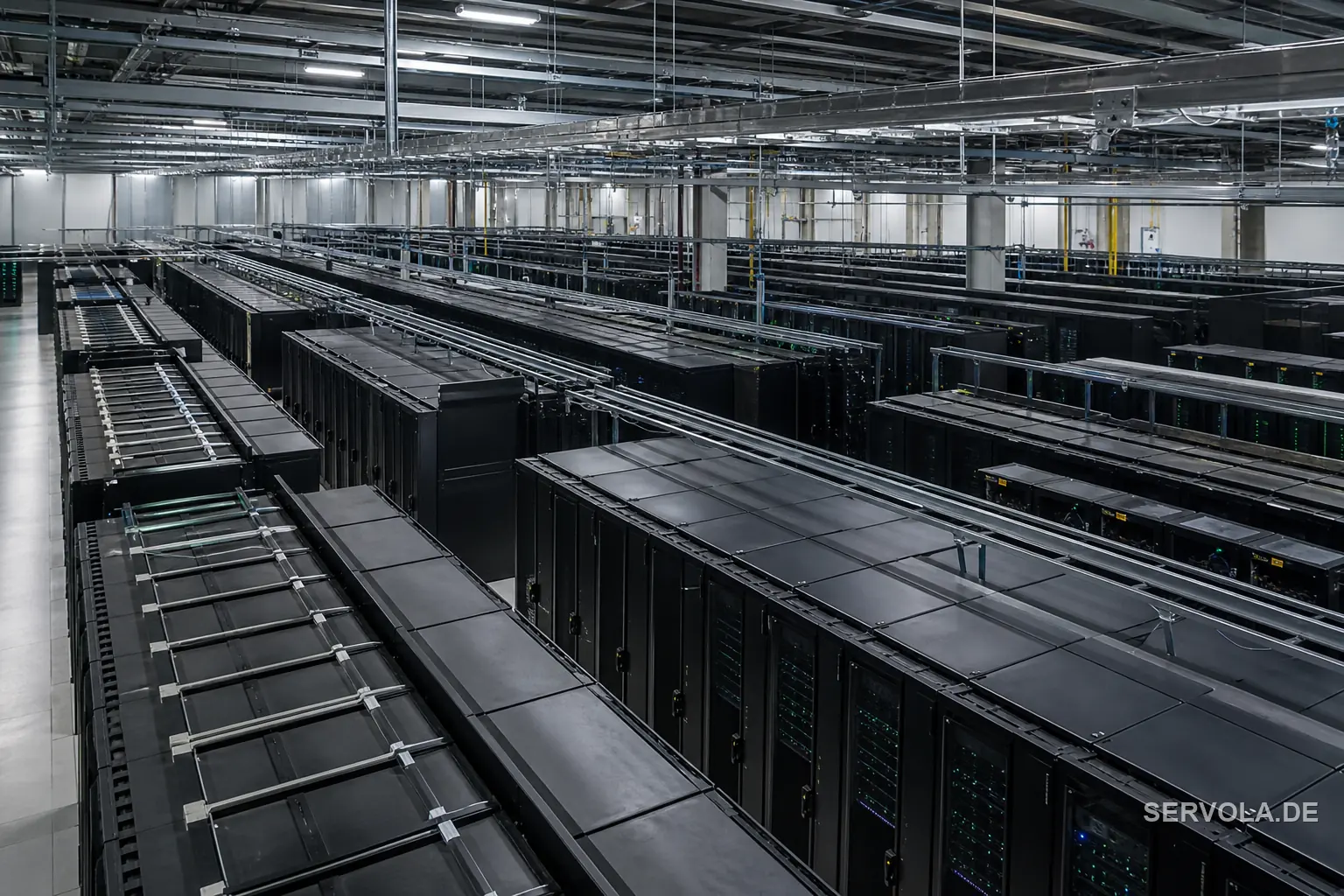
Europe's digital sovereignty debate has mostly been an infrastructure debate: build a sovereign cloud region, fund a chip fab, spend years and billions closing the gap with American and Chinese hyperscalers. MiMo-V2.6 points at a shorter route that needs none of that spending. A government agency or a large company can download the full weights today, run them on GPUs it already owns or rents inside the EU, and never send a single query to an American or Chinese API.
That route carries its own unresolved questions. Nobody outside Xiaomi has audited what data trained MiMo-V2.6, or whether it carries the content restrictions common to Chinese-made models, the same caveat that already follows other sovereign deployments built on Chinese weights. Self-hosting removes vendor dependency, not scrutiny; an organization that downloads the weights inherits the job of checking them that a paid API vendor would otherwise have done.
What This Means If You Run AI Infrastructure Yourself
A procurement or infrastructure team currently negotiating a multi-year sovereign-cloud contract now has a genuine third option to price against: buy the GPUs, download the weights, and operate the model entirely in-house, with a one-time hardware cost instead of an ongoing API bill. The trillion-parameter Pro model still needs a real GPU cluster to serve at usable speed, so this option realistically suits large enterprises, universities and public bodies before it suits a small business.
Before switching, budget for the work a vendor like OpenAI or Anthropic currently does invisibly: safety fine-tuning, content policy alignment, and an audit of what the model will and will not say to a customer. Xiaomi handed over the weights and the training code. It did not hand over an accountability structure, and building one is now the buyer's job, not the seller's.
Read next: When Email Security Becomes a Jurisdiction Question | Moonshot Seeks A Cut While Treasury Weighs A Ban