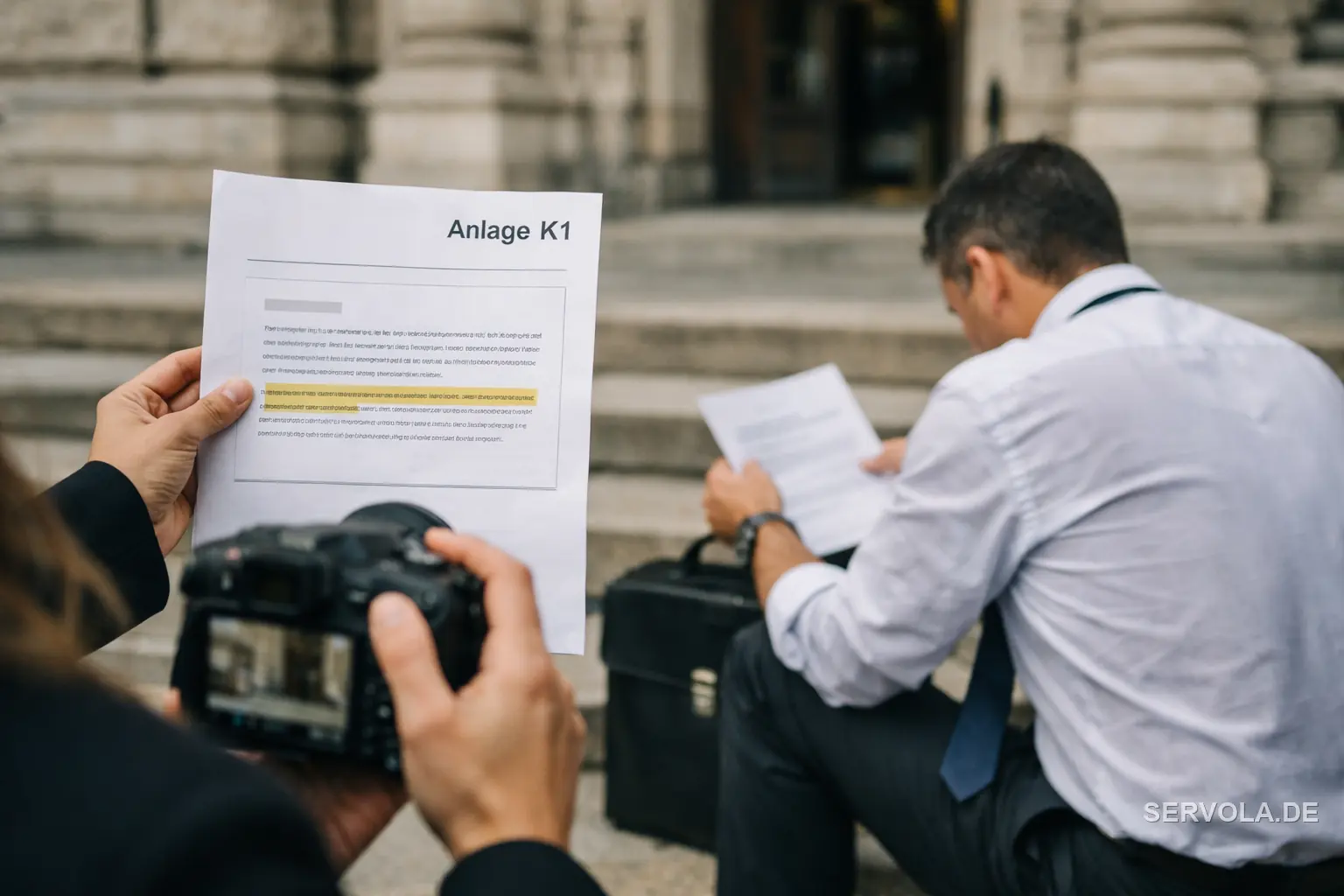
What the court actually decided
The Landgericht Muenchen I, in a decision dated 28 May 2026 (Az. 26 O 869/26), addressed AI-generated search summaries and reached a conclusion that should give any operator of a customer-facing AI feature pause. The court treated these summaries not as a neutral pass-through of what third-party sources said, but as the operator's own independent statements produced by its own systems. On that basis it held the operator directly responsible for defamatory false content, including statements that did not appear in the underlying sources at all.
The court also rejected a defence that many firms quietly rely on: the idea that a user can and should check the output for themselves. It reasoned that the mere possibility of a user disproving a statement through further research does not, as a rule, remove the operator's liability. The decision is reported to carry effect beyond German borders. It is worth stating plainly that this is a single first-instance ruling and is subject to appeal, so it is a serious signal of direction rather than final, settled law. This article is a report on that development and general considerations, not legal advice.
Why this reframes AI risk for owners
For years the working assumption has been that a generative feature merely surfaces or rephrases information, with the real content sitting elsewhere. This ruling challenges that assumption. If a summary your product generates is treated as your own words, then a confident fabrication, often called a hallucination, stops being a technical quirk and starts looking like a publishing and defamation exposure. That shift matters most for anything customer-facing: chat assistants, automated support replies, product descriptions, research digests, or any feature that composes text about people, companies, or products.
The timing sharpens the point. The revised Product Liability Directive must transpose into German law by 9 December 2026, and it modernises how liability applies to software and AI-enabled products. One court decision and one directive do not settle the field, and the appeal may narrow or unsettle parts of this reasoning. Taken together, though, they point the same way: the era of treating AI output as someone else's problem is closing, and owners are wise to plan as if their systems speak in the firm's own voice.
What a prudent operator considers now
The first sensible step is an inventory, not a panic. Identify every place where your systems generate text that a customer, partner, or member of the public reads, and note which of those can make factual claims about identifiable people or businesses. Those are the features that carry the sharpest exposure under reasoning like the court's. From there, sensible measures worth weighing include human review on higher-risk outputs, clear internal records of how a feature was built and tested, retrieval that grounds answers in verifiable sources, and honest labelling that does not overstate accuracy.
None of this is a substitute for advice tailored to your situation, and your own counsel should weigh how this decision, its appeal, and the incoming directive apply to you. The practical aim is modest and achievable: understand where your AI speaks on your behalf, decide which of those places you are comfortable standing behind, and put controls where the stakes are real. That is a governance question a leadership team can own, well before it becomes a courtroom one.
Read next: Carriers Are Writing Generative-AI Exclusions Into Your Cover | When Your AI Agent Errs, You Pay