The quarter was fine. The order book was the news.
On Wednesday morning in Veldhoven, ASML reported 9.3 billion euros of net sales and 2.9 billion euros of net income for the second quarter, with a gross margin of 54 percent. It shipped 86 new lithography systems and raised its full-year 2026 guidance to between 43 and 45 billion euros. Those are strong numbers, and they were not the point.
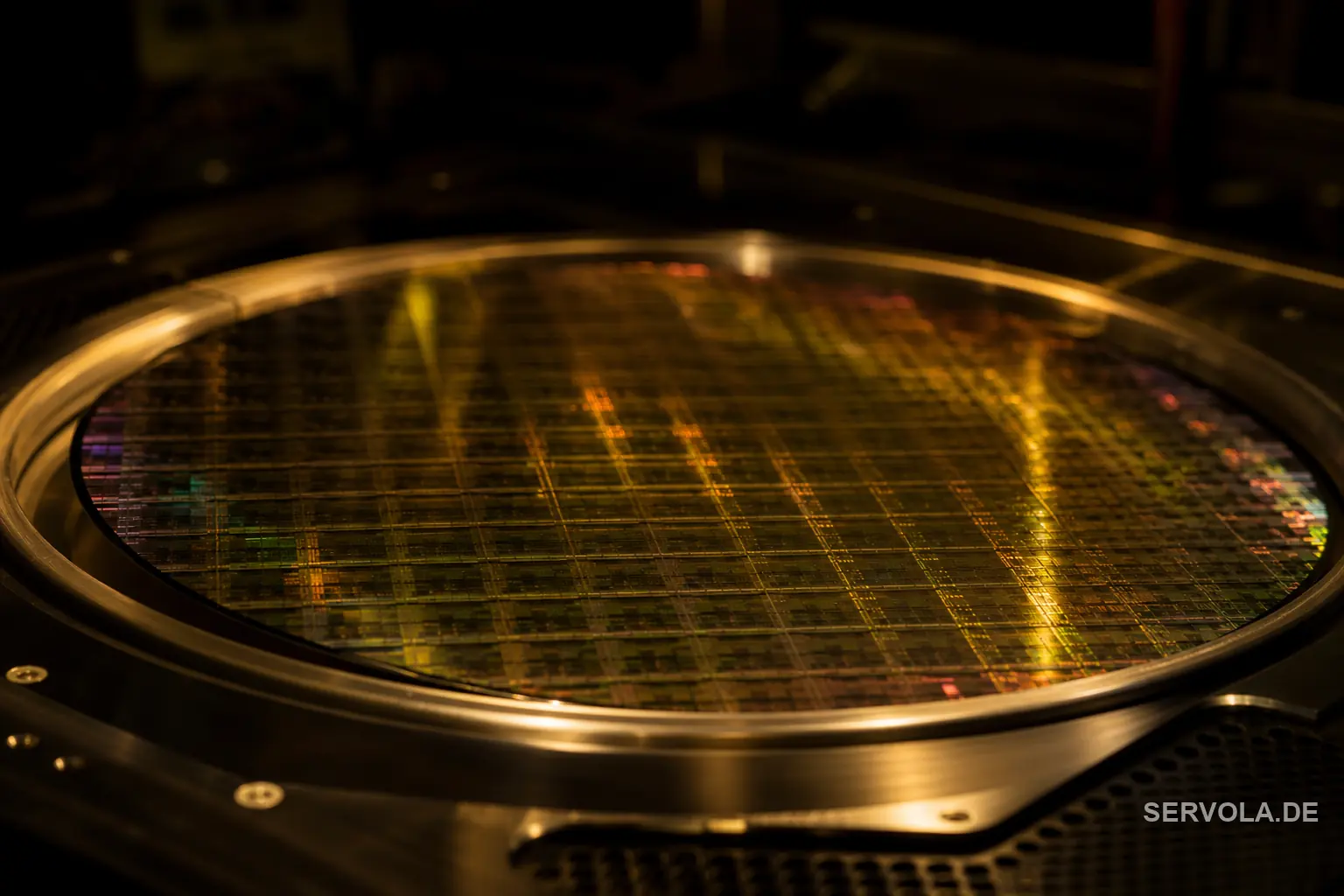
The point was forward demand. ASML makes the extreme ultraviolet lithography machines that print the smallest features on every advanced AI chip, and it is the only company on earth that makes them. So its order book is not just a company metric. It is the single best early reading on whether the money now pouring into AI data centres is backed by real, committed chip demand or by hope.
This quarter the reading was unambiguous. Order intake stayed, in the company's own words, extremely strong through the first half, and management is now planning capacity two years out.
Two straight years of building 30 percent more capacity
Chief executive Christophe Fouquet laid out the plan plainly. ASML will add about 30 percent to its 2026 low-NA EUV capacity of roughly 65 machines to serve 2027, and it is investigating another 30 percent increase for 2028. It is doing the same on the older DUV immersion line, adding 30 percent to a base of around 130 systems for 2027 with a further 30 percent under study for 2028.
You do not build two consecutive years of 30 percent capacity growth on optimism. You build it against orders. Fouquet said ASML is close to receiving all the orders it needs for 2027, and that a large number of EUV orders for 2028 are already in hand. The most advanced High-NA EUV tool has moved into production use at Intel. For the third quarter the company guided to 11 to 12 billion euros in sales, its highest ever.
Why this matters to anyone budgeting compute
The bottom line: the AI compute buildout is now locked in at its narrowest point, and that point sits in one Dutch town. Every layer above ASML depends on it. TSMC, Samsung, Intel and the memory makers cannot add wafer capacity faster than ASML ships the machines that etch them, and those machines are booked. When the equipment monopoly at the base of the stack is sold out two years ahead, the whole pyramid above it, foundries, then chipmakers, then cloud providers, then the compute you rent, is pre-committed.
For an owner planning AI spending, that carries a plain consequence. Do not budget for a compute glut and falling prices before 2028. The capacity is growing, at roughly 30 percent a year at the lithography layer, but it is already spoken for by the largest buyers who placed orders first. Scarcity does not break because a new fab is announced. It breaks when ASML can ship more machines, and its own schedule now says that relief is years, not quarters, away.
There is a second, quieter point. The most strategic chokepoint in the global technology economy is a single European company. That is a rare piece of leverage for the continent, and a rare concentration of risk for everyone who depends on it.
What to actually do with this
Treat ASML's order book as the honest calendar for your own compute plans. If you are sizing an AI project that needs guaranteed capacity, assume tight supply and firm pricing through 2028, and secure what you need on longer contracts rather than waiting for a price break that the equipment schedule says is not coming.
Watch the same signal the market watches. ASML reports every quarter, and its forward capacity language, not the headline sales figure, is the leading indicator. A quarter where ASML quietly stops adding capacity would tell you more about the real state of AI demand than any model launch. For now, it is doing the opposite, and it is doing it two years ahead.
Read next: Euclyd's EUR 200M Round Tests Europe's Silicon Bet | The Chip Fix Everyone Is Celebrating Ships In 2033