What did Athom just launch with the Homey Portal?
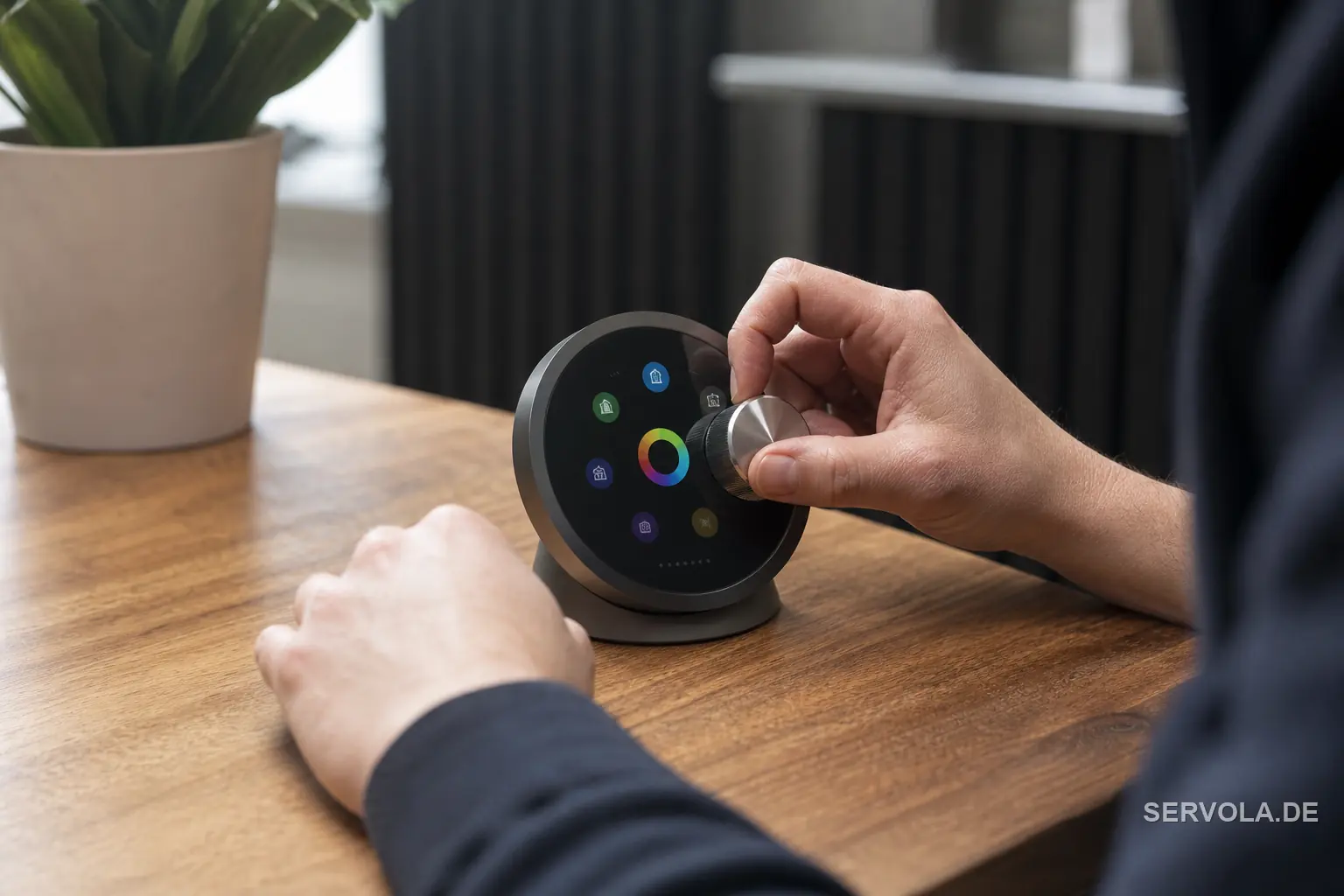
Athom, a Dutch smart-home company, has launched the Homey Portal, a round touchscreen controller built around a physical steel rotary dial for adjusting lights, heating, and other connected devices without opening an app. The device is available for pre-order at EUR 249, rising to a regular price of EUR 299 once the launch window closes, and Athom says the first units will ship before the end of 2026. Reporting from AndroidAuthority and Hackster.io both single out the dial as the Portal's defining feature: a tactile control on a desk or wall that answers a specific complaint about touchscreen-only smart-home panels, that turning a light down by feel is faster than tapping a slider.
Why does the Portal still need another Homey product behind it?
The Homey Portal is not a standalone hub, it is a controller that has to pair with a separate Homey backend to actually run automations and talk to devices. Athom lists four options on its own product page: a Homey Cloud subscription, a Homey Pro (2023 or later) box, the smaller Homey Pro Mini, or a self-hosted Homey server that the owner runs on their own hardware. That last option is worth pausing on, because most competing controllers, including Amazon's Echo hardware and Google's Nest and Home devices, do not offer a self-hosted path at all, only a cloud account tied to the manufacturer. Athom says the combined system, Portal plus whichever backend it is paired with, supports more than 70,000 devices across upwards of 2,000 brands, spanning the major protocols and ecosystems sold across Europe.
Does self-hosting the backend actually change who controls the system?
Self-hosting the backend changes the deployment, and that is a real difference, though it does not make the dependency on Athom disappear entirely. Running a self-hosted Homey server means the automation logic and device state live on hardware inside the owner's own home or premises rather than on a US company's servers, which matters if that company's contract terms, pricing, or continued interest in the EU market ever change. Self-hosted capable is a meaningful architectural choice. It reduces exposure to one company's cloud; it does not remove every dependency on Athom's own software and firmware, which the self-hosted server still runs and still needs updated.
Why should a business owner in Europe care about this at all?
Because most of the smart-home hardware sold into European homes and small offices today routes its control layer, and often its voice or command processing, through a cloud run by a US company, and that arrangement has already shifted more than once this decade as vendors changed pricing, retired hardware, or rolled out features to some markets well ahead of others. A device like the Homey Portal will not settle that question by itself: it is one controller from one Dutch vendor, competing in a market Amazon and Google still dominate. What it does do is put the self-hosted path on the same shelf as the cloud path, at the same EUR 249 starting price, rather than treating it as a hobbyist workaround that requires building a hub from scratch. For an owner who already thinks about where a supplier's servers sit for other parts of the business, that is the detail worth weighing, ahead of the rotary dial.
Read next: Meta Built a Camera-Free Exit From Its Privacy Mess | Samsung Quit the Floor Xiaomi Paid to Own