Two Records Sharing an Evening
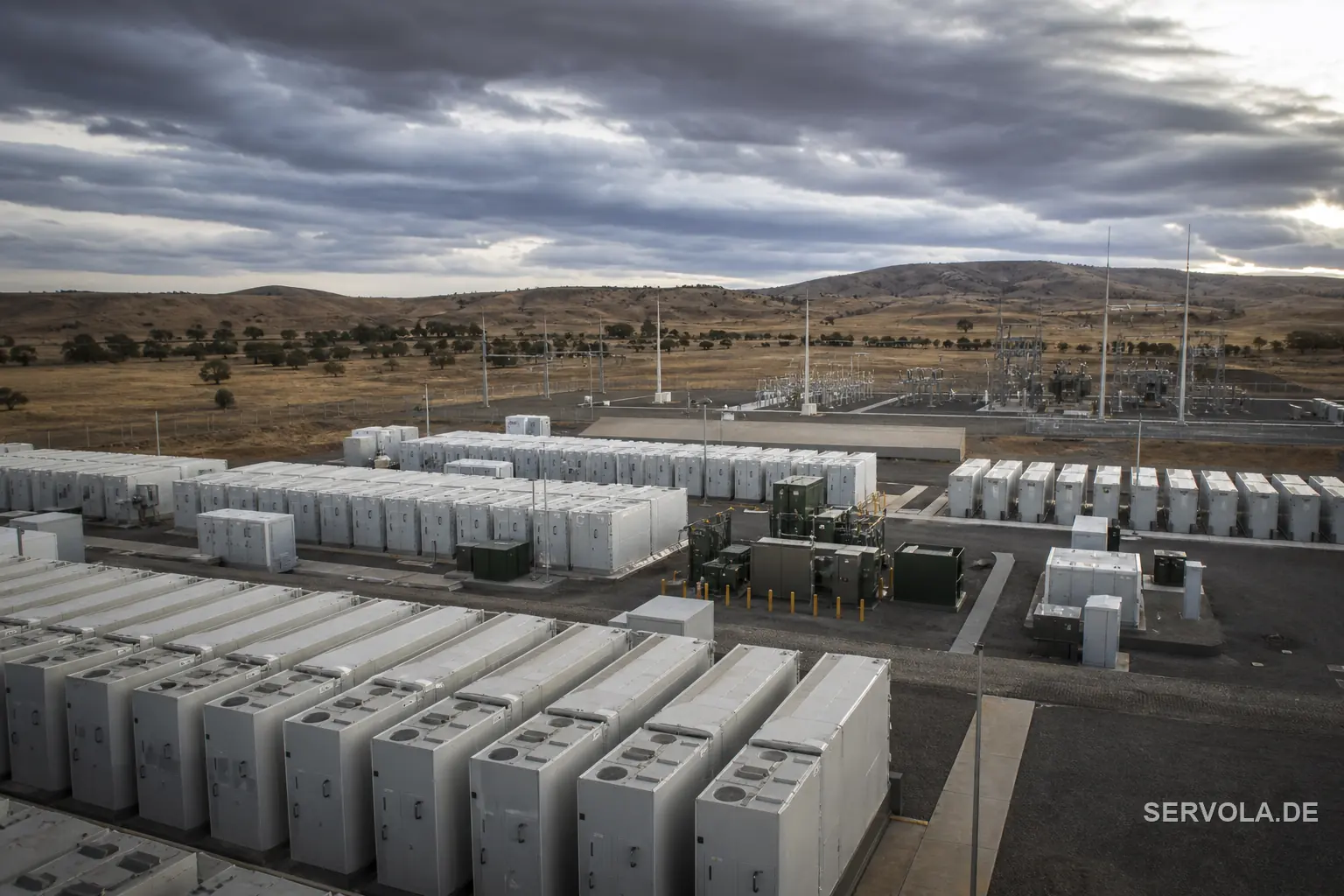
At 18:25 on August 11, 2026, batteries across Australia's National Electricity Market discharged 4,325 megawatts, beating the previous record of 4,131 megawatts set on July 31 and covering 14.42 percent of national demand at that instant, according to dispatch-interval analysis by energy consultant Geoff Eldridge of Global-Roam.
New South Wales alone discharged 1,776 megawatts at 18:00, a new state record covering 16.93 percent of load and up 212 percent on the same hour a year earlier, while Victoria's midday charging peaked at 1,383.6 megawatts, beating its own record from May. Around noon the same day, the national fleet was still absorbing nearly 4,000 megawatts of charging, about 11.3 percent of consumption, for an intraday swing of roughly 8.3 gigawatts between charging and discharging.
The Same Quarter, a Collapsing Price Signal
The Australian Energy Market Operator's own Quarterly Energy Dynamics report for the second quarter of 2026 shows grid-scale battery capacity passing 9,000 megawatts for the first time, with 951 megawatts and megawatt-hours commissioned in the quarter alone. Over the same three months, the price spread batteries live on fell 85 percent year over year, from AU$342 to AU$51 per megawatt-hour (roughly US$35), and the volume-weighted discharge price dropped from AU$427 to AU$101.
Net battery revenue across the fleet fell from AU$130.5 million to AU$57.5 million, and net arbitrage revenue was down 56 percent to AU$52.8 million, as gross energy revenue dropped AU$44.5 million while charging costs rose AU$23.6 million. Batteries now set the price in 46 percent of evening-peak dispatch intervals, meaning the fleet is large enough to be its own competitor.
Storage Is Cannibalizing Its Own Business Case
A battery earns money on the gap between what it pays to charge in the cheap, solar-rich middle of the day and what it earns discharging into the expensive evening peak. The more batteries that discharge into that same evening window, the more they compress the very price spike each one needs to capture, and Australia's Q2 2026 numbers are the first place that mechanism shows up as a measured revenue collapse rather than a forecast.
Industry commentary around the AEMO data is blunt about the consequence: developers now need revenue beyond arbitrage, from system-strength services, grid-forming inverters and longer-duration storage, because pure energy trading margins are shrinking faster than new capacity is being added.
Why Every Grid Adding Batteries Should Read This First
Australia's NEM has the highest battery penetration of any liquid wholesale electricity market in the world, and it got there first. Battery storage already makes up 52 percent of a 75.4-gigawatt national connection queue, meaning the projects still waiting to connect are underwritten on a spread that has already fallen 85 percent in a year for the projects already running.
Grids in the UK, Texas and Germany are adding storage behind the same AI and EV demand growth using the same arbitrage logic, without yet having a fleet large enough to flatten its own price signal the way Australia's has. The NEM numbers are not a local curiosity; they are the leading indicator of what those queues will look like once their own battery fleets reach a comparable share of the market.
Read next: Germany Gives Owners Until 2027 to Dodge New Grid Fees | PJM Opens a 10-Project Fast Lane Inside a 220GW Queue