What Nintendo actually announced
Nintendo has told European retailers that from mid-February 2027 it will stop supplying the Nintendo Switch, Switch Lite and Switch OLED, and that sales of all three on the official Nintendo store in Europe will end at the same time. In its statement the company put the timing plainly: from mid-February 2027, almost ten years after Nintendo Switch launched in March 2017, it will no longer sell to retailers hardware in the Nintendo Switch family of systems. The original Switch has sold 155.92 million units worldwide since 2017, which makes this one of the best-selling consumer devices ever to be walked off a single continent's shelves on purpose.
The carve-out is the part that reveals the cause. Nintendo was explicit that the withdrawal is European only, saying it plans to continue selling Nintendo Switch in regions outside of Nintendo of Europe. A company does not retire a product in one market and keep it everywhere else because demand vanished in that one place. It does so because a local rule made continued sale impossible, and the rule in question takes effect on a date that matches Nintendo's exit almost exactly.
The law behind the exit
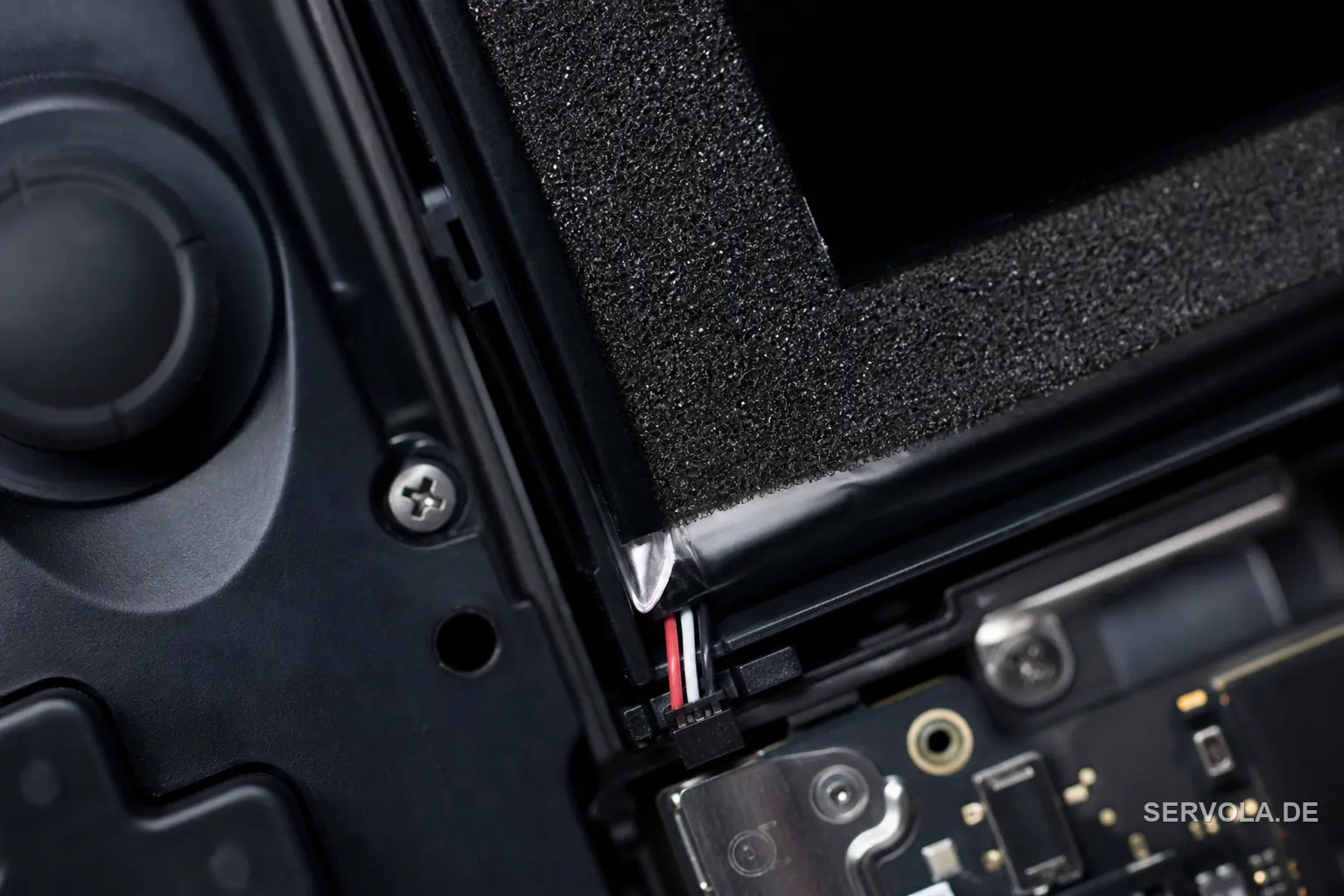
The rule is the EU Batteries Regulation, formally Regulation 2023/1542. From 18 February 2027 its Article 11 requires that portable batteries be removable and replaceable by the end user using commonly available tools, with no need for solvents, heat or proprietary kits, and it obliges makers to keep those batteries available as spare parts at a fair price for at least five years after the last unit is sold. A phone, a laptop, a set of earbuds or a games console placed on the EU market after that date has to let the owner swap the cell. The original Switch was designed in 2016 around a battery sealed behind the mainboard; bringing it into line would mean re-engineering the chassis of a product at the very end of its life.
Faced with that, Nintendo did the arithmetic and chose withdrawal over redesign. Rebuilding an eight-year-old console for a replaceable cell, then guaranteeing five years of spare batteries for it, costs more than the remaining European sales are worth, especially with the Switch 2 already carrying the line forward. Retiring the SKU in one region is the cheaper answer, and that calculation, not any loss of demand, is what is taking the Switch off European shelves.
The deadline every hardware seller now shares
Read past the console and this is a preview. Every business that puts a battery-powered product on the EU market now faces the same fork at the same date: redesign the device so an owner can replace the cell with ordinary tools, or pull the model before 18 February 2027. Flagships that have years of life ahead will be redesigned, because the market is too large to abandon. Products near end of life will be quietly withdrawn, exactly as the Switch has been, because the redesign and the five-year spares guarantee cost more than the tail of sales returns. The rule sorts a catalogue into keep and cut, and it does it on a fixed calendar rather than on demand.
The cost lands in two places an operator can plan for now. One is the bill of materials and the tooling, since a serviceable battery door, fasteners instead of adhesive and a documented swap procedure all add unit cost and design time. The other is the spare-parts supply chain, because the five-year availability obligation turns every compliant model into a long-term commitment to hold and ship cells. Owners who wait until 2027 to run these numbers will be deciding which products to kill under deadline pressure; the ones doing it now still get to choose which to save.
Read next: Your LG TV Records You Even When It Looks Off | All Three Console Makers Raised Prices In 2026