What was raised, and from whom
On 4 August Ore Energy announced a 43 million dollar Series A. Plural led the round, with HV Capital and Positron Ventures joining, and the company says the raise takes its total funding past 61 million dollars. Ore Energy was founded by Aytac Yilmaz as chief executive, Rutil Ozdemir as chief operating officer and Yaiza Gonzalez Garcia as chief science officer, and it operates from Amsterdam and Delft in the Netherlands.
The product is an iron-air battery. It stores energy by rusting iron in the presence of air and water and releases it by reversing that reaction, which means the cell contains no lithium and no cobalt. Ore Energy states that the system holds charge for up to 100 hours and that its cost per unit of energy capacity is roughly ten times lower than lithium-ion. It also says the supply chain can be built entirely within Europe, which is a sovereignty argument as much as an engineering one.
The number in the announcement that is not about the battery
Why it matters: the most useful figure Ore Energy published is not the size of the round. It is the claim that Europe discards 72 terawatt hours of renewable generation a year because the grid cannot move it, and that the figure is on track to reach 410 terawatt hours by 2040.
Curtailment is what happens when wind and solar produce power the network cannot carry to where it is needed. The generator is instructed to stop, and in most European markets it is compensated for stopping. That compensation is a real cost, recovered through network charges, and it lands on industrial and commercial bills rather than on the generator. Britain has spent around 6 billion pounds on curtailment since 2011, and the company cites projections of 8 billion pounds a year by 2030.
This is the reason a storage business can raise money on a waste statistic. Long-duration storage does not need new demand to be viable. It needs power that is already being produced, already being paid for, and currently being thrown away. The larger the curtailment bill grows, the smaller the subsidy a 100-hour battery needs to clear.
Duration is a different product, not a cheaper one
Yes, but: the ten-times cost claim is easy to misread. It is stated per unit of energy capacity, which is the cost of the tank rather than the cost of the pump. Lithium-ion is built to deliver a lot of power over minutes and hours, and it is very good at that. Iron-air is built to deliver modest power over days.
These are not substitutes competing on price. A grid needs both, and the honest comparison is against the alternatives for multi-day cover, which are gas peaking plants, interconnection and demand curtailment. Ore Energy's own commercial evidence points the same way: a 1 gigawatt-hour agreement with Budget Thuis, a Dutch energy and telecoms utility, and pilot work with the French utility EDF. Those are counterparties buying duration, not buying response speed.
What an operator should take from a 43 million dollar round
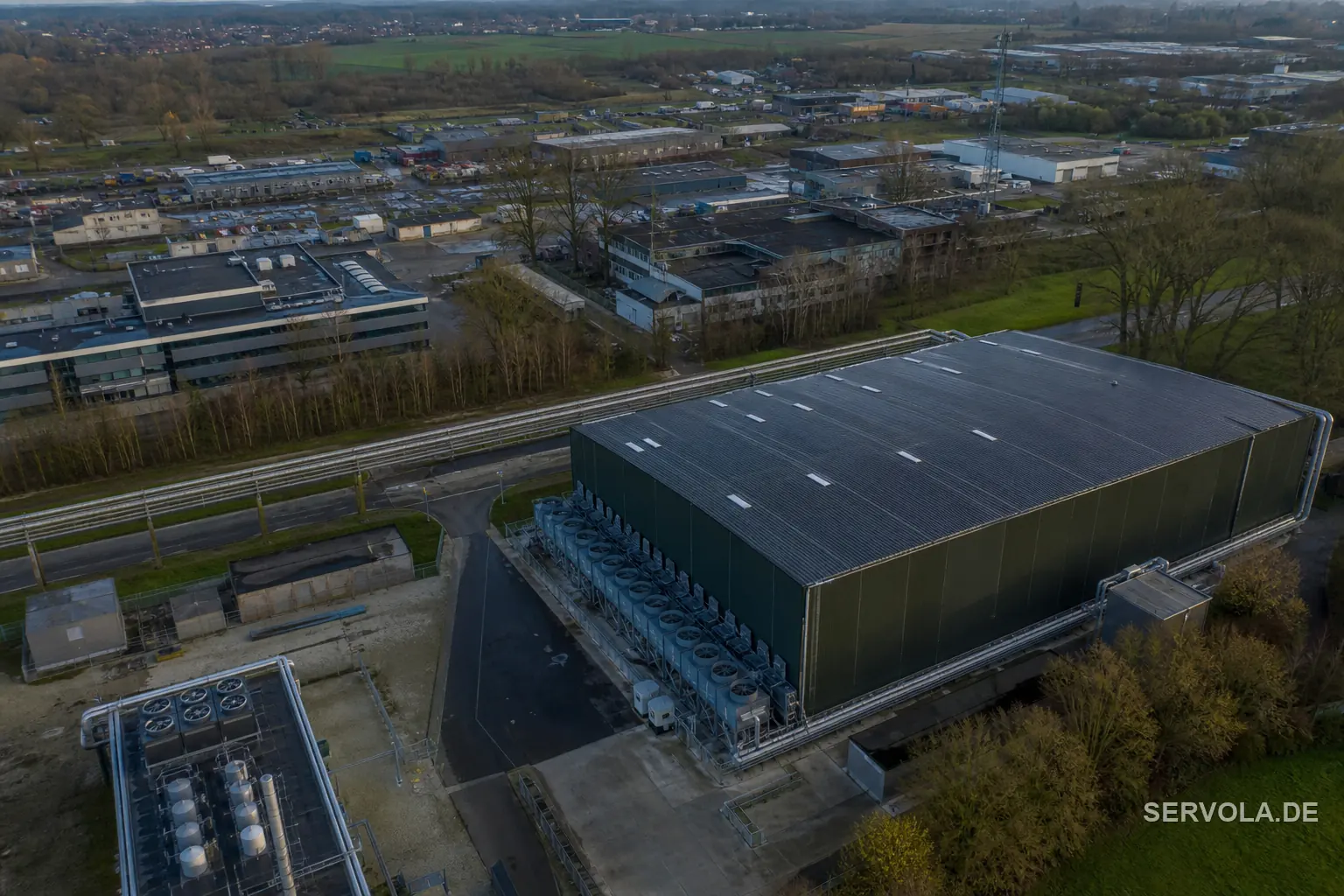
The bottom line: the round is small relative to the ambition. Ore Energy is establishing its first manufacturing facility and targets gigawatt-hour scale production by 2028, with a stated goal of making iron-air the standard for grid long-duration storage by 2035. Sixty-one million dollars in total funding does not build a gigafactory, so the next raise, not this one, is the one that tests the thesis.
For an operator, the practical consequence sits upstream of the technology. If your electricity costs are rising because of network charges rather than commodity prices, curtailment is part of the reason, and long-duration storage is the lever most likely to bend that line over the next decade. Ask your supplier how much of your delivered price is network and balancing cost. That number tells you whether announcements like this one will ever reach your invoice.
Read next: 1.7 Million PlayStation Owners Sue Sony Over Pricing | Automated Firings Just Cost Uber 825 Million Euros