Two Announcements Landed the Same Week
Meta used its Connect 2026 keynote on September 23 to launch four new hardware lines at once, and on the very same day, quietly changed what its existing camera glasses are allowed to do with your face.
The headline product is the Meta VR Glasses, a 100-gram headset priced at $1,299.99 and due in spring 2027, tethered by cable to a separate compute puck running a Snapdragon Reality Elite chip. Alongside it came three glasses lines: Ray-Ban Meta Audio at $349, a camera-free pair shipping October 13; Ray-Ban Meta Gen 3 at $449, the camera-equipped flagship, available immediately; and the Meta Adventurer at $249, an entry camera model arriving October 23.
Hours before the keynote, Meta confirmed a separate policy change: owners of its camera glasses can now opt out of having footage used to train its AI models or reviewed by outside contractors. The two announcements were not billed as connected. Read together, they describe the same decision from two directions.
The Opt-Out Camera Glasses Suddenly Needed
Meta's new policy lets any camera-glasses owner switch off two things at once: their footage being used to train Meta's AI, and that footage being shown to third-party contractors abroad who label and review it.
The change follows a controversy earlier in 2026, when contractors in Kenya reviewing glasses footage for AI training reportedly encountered people undressing, using the bathroom and other private moments never meant for a stranger's screen. Meta's own explanation of the new opt-out draws the line precisely: if you ask your glasses to translate a menu, the visual data answers that one question and is then, in the company's words, gone. It is not used for training and nobody reviews it for product improvement.
One thing the opt-out does not cover is audio. Voice interactions with Meta AI stay eligible for training and contractor review regardless of the visual-data setting; the only control offered is manual deletion after the fact, not an automatic opt-out.
Why the Camera-Free Line Never Needed It
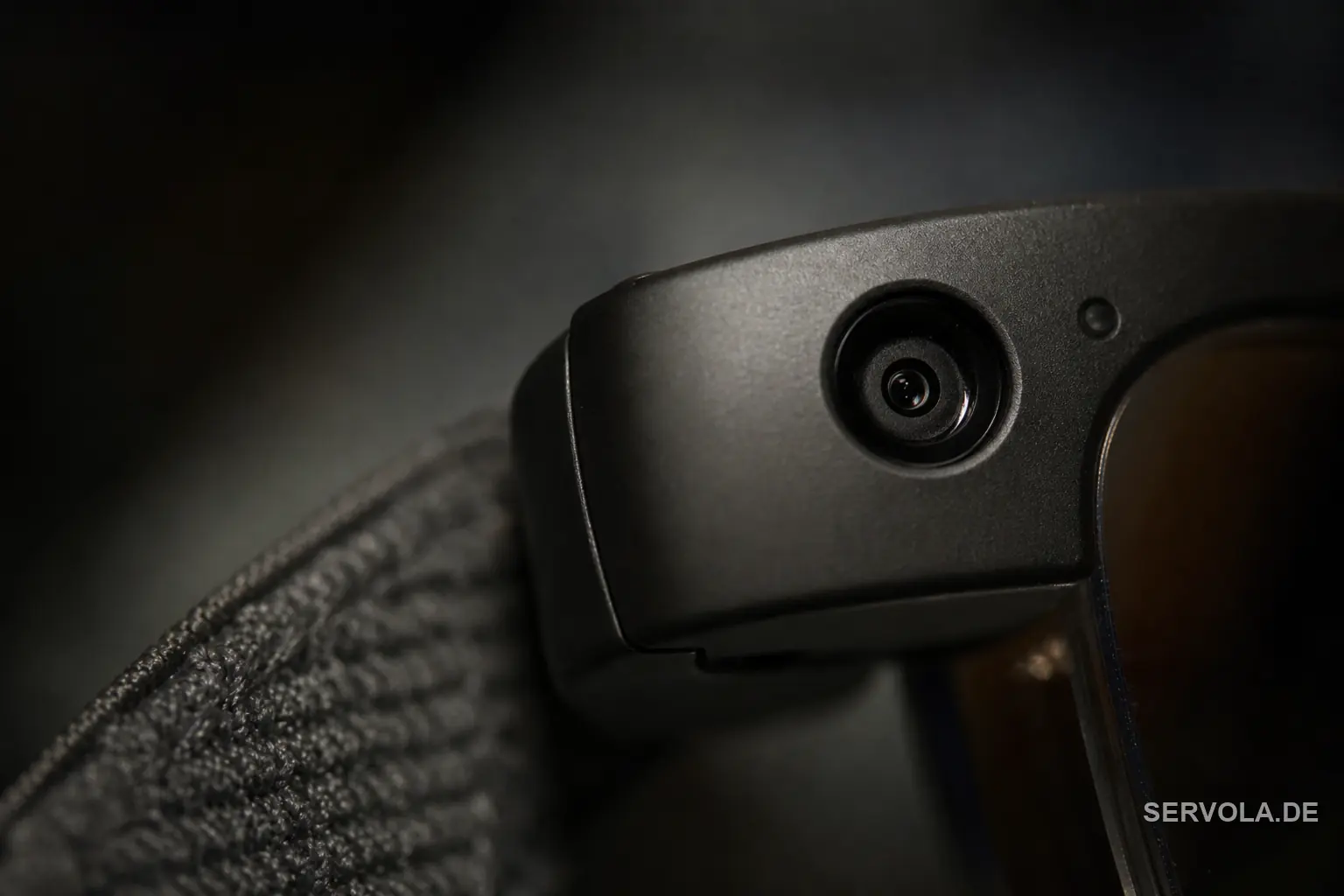
Ray-Ban Meta Audio ships with no camera, and that single design choice removes an entire category of decision that the camera line now has to manage.
An opt-out only matters where there is something to opt out of. Camera glasses generate a visual-data pipeline: footage that could be used for training, reviewed by a contractor, or requested under a data-protection complaint like the one Germany's regulators have already filed over Meta's existing Ray-Ban line. Audio-only glasses generate none of that, because there was never a camera capturing bystanders in the first place. Buying camera-free is not just avoiding a privacy problem Meta has partly fixed; it is skipping the governance question entirely, the consent screen, the contractor-review clause, the opt-out default, none of it ever applies.
The Meta VR Glasses take a third route to the same outcome. As an enclosed headset rather than open eyewear, it faces no bystander at all: whatever it records stays inside a device nobody else is wearing.
Four SKUs, One Price Ladder
Laid out together, the four lines make Meta's actual strategy visible: sell the camera version, sell the fix for the camera version, and sell the headset that was never exposed to the problem.
| Line | Price | Ships | Camera |
|---|---|---|---|
| Meta Adventurer | $249 | Oct 23, 2026 | Yes, entry model |
| Ray-Ban Meta Audio | $349 | Oct 13, 2026 | None |
| Ray-Ban Meta (Gen 3) | $449 | Available now | 12 MP, 3K video |
| Meta VR Glasses | $1,299.99 | Spring 2027 | Enclosed headset, no bystander view |
Every announced price is in US dollars; Meta has not set euro or sterling figures for any of the four lines at launch. Its most recent comparable launch, the Ray-Ban Meta Display, priced at $799 in the US and 749 pounds in the UK once it reached that market, a ratio worth keeping in mind rather than a promise of what these four will cost once they reach Europe.
What to Decide Before You Order Staff Glasses
Any employer weighing wearables for field, retail or warehouse staff now has a cleaner choice than a month ago, and it has nothing to do with which glasses look better.
Camera glasses, Gen 3 or the Adventurer, require an active data-governance decision before rollout: who sets the opt-out default, who tells staff it exists, and what happens to audio recordings that the opt-out never touches. Camera-free glasses require none of that, because there is no visual-data question to govern. For an EU employer already answering to GDPR on staff-worn devices, that difference is not cosmetic, it is the entire compliance conversation before a single unit ships.
Germany's data-protection regulators have already opened one complaint over Meta's existing camera line. Whether Ray-Ban Meta Audio reaches European shelves without one is now a genuinely open question, and one worth watching rather than assuming answered by the words camera-free.
Read next: Second LED Patch, Same Unanswered CNIL Objection | Even Realities Hit a Billion Without a Camera