What Bloomberg and DataCenterDynamics reported
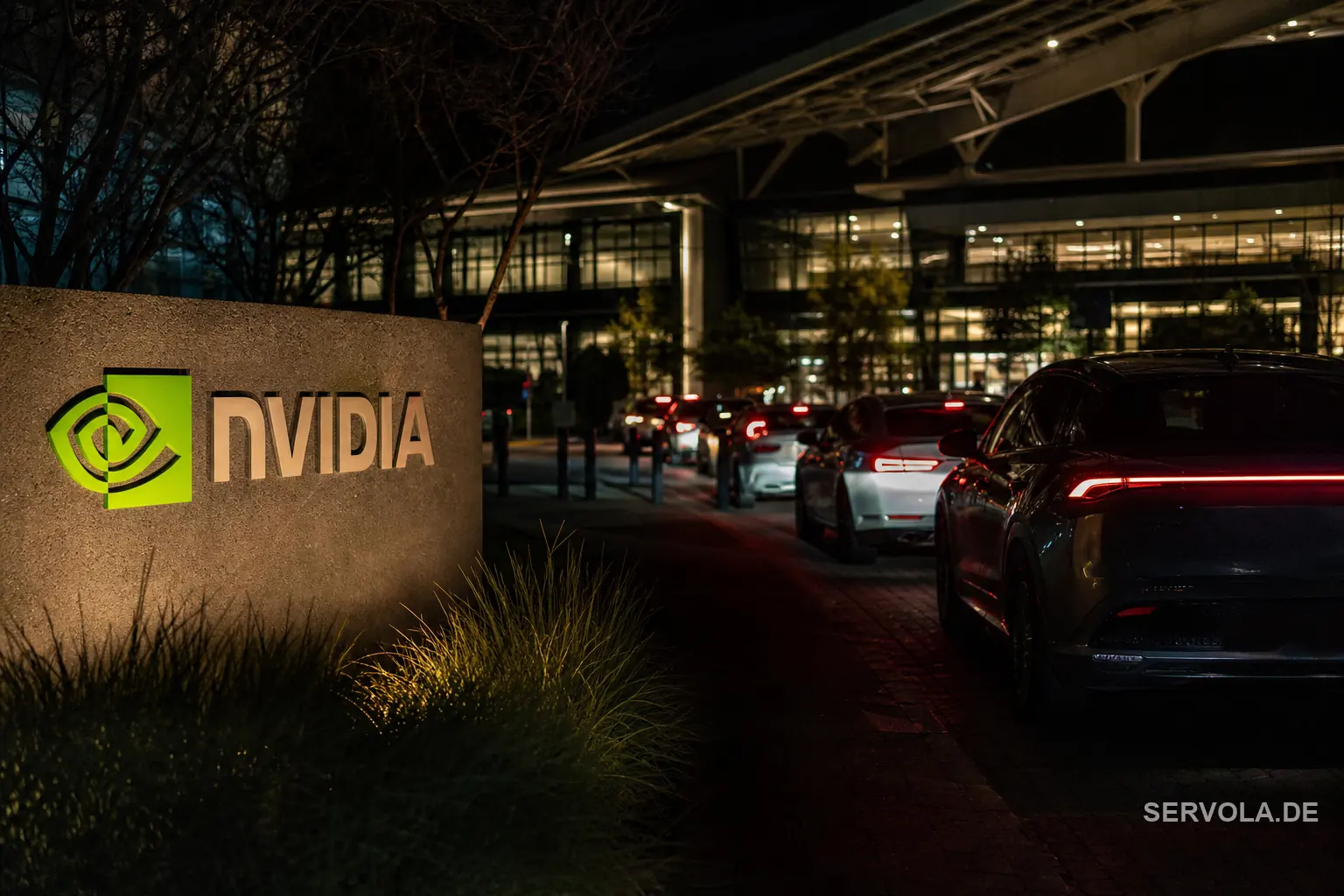
Nvidia is in early talks with Rebellions, a South Korean AI-chip startup, about a potential deal that could include an investment, a technical partnership, or even an acquisition, Bloomberg reported on August 21, 2026, citing people familiar with the matter. Nvidia chief executive Jensen Huang met Rebellions co-founder and chief executive Sunghyun Park at Nvidia's Santa Clara headquarters earlier in the week, according to the report, though the sources asked not to be identified because the discussions are not public.
DataCenterDynamics separately reported that Nvidia and Rebellions are discussing a potential collaboration, corroborating the broad shape of the talks even as neither company confirmed a deal structure. A Rebellions representative declined to comment when Bloomberg asked, and Nvidia has not issued a public statement either; that silence, combined with sourcing that stays anonymous, is the clearest sign the talks are still exploratory rather than close to signature.
Who Rebellions is and what it has already raised
Rebellions was founded in 2020 in Seoul and designs neural processing units built specifically for AI inference, the phase where a trained model actually answers a query, rather than the training runs Nvidia's GPUs dominate. The company has raised roughly 850 million dollars across its funding history from backers that include SK Hynix, Samsung Ventures, and Arm Holdings, with a March 2026 round adding 400 million dollars at a valuation of about 2.3 billion dollars, and chief executive Sunghyun Park has told CNBC that Rebellions is targeting a South Korea listing as early as next year.
The company's flagship chip, Rebel100, uses Samsung's 4-nanometer process across a four-chiplet design linked by a UCIe interconnect, paired with 144 gigabytes of HBM3E memory. Rebellions detailed the design at the ISSCC 2026 conference, claiming it matches Nvidia's H200 on raw throughput at a lower power draw and beats Nvidia's older H100 by roughly 3.2 times on inference throughput per watt, a vendor claim that has not been independently benchmarked.
| Metric | Rebellions Rebel100 | Nvidia H200 |
|---|---|---|
| Process and packaging | Samsung 4nm, four-chiplet, UCIe interconnect | TSMC 4nm, monolithic die |
| Peak FP8 compute | about 2 PFLOPS | about 2 PFLOPS, vendor-claimed parity |
| Peak power draw | 600W | 700W |
Why an inference-chip rival makes sense for Nvidia
Nvidia's GPUs still dominate the market for training the largest AI models, but inference, the day-to-day job of running a trained model to answer real queries, is the segment where power-efficient rivals like Rebellions are gaining the most traction, because inference workloads reward chips built narrowly for that one task rather than general-purpose GPUs. Rebellions' own pitch, as co-founder Sunghyun Park has put it, is that the AI industry needs to move past a silicon-only mindset and solve the friction between hardware and software integration, a framing aimed squarely at the gap Nvidia's CUDA ecosystem currently fills.
A Rebellions tie-up would also put Nvidia closer to the two Korean memory makers, SK Hynix and Samsung, that already supply the high-bandwidth memory inside Nvidia's own chips, at a moment when HBM capacity, not GPU design, is the binding constraint on how much AI infrastructure the industry can actually ship. Arm's presence on Rebellions' cap table adds a third overlapping relationship, since Arm licenses the processor architecture much of the AI data center already runs on, making Rebellions a company Nvidia already touches through its supply chain even before any deal is signed.
The Servola read: a hedge, not a retreat
For a UK operator building an AI roadmap around a single vendor's GPUs, the real signal is that Nvidia itself now treats inference-chip diversification as worth exploring first-hand with a competitor (its own market position remains dominant, this is not a sign of weakness). Rebellions' 2.3 billion dollar valuation converts to roughly 1.8 billion pounds, a scale a UK cloud operator sizing its own next GPU cluster can use as a real reference point when it weighs a second inference-silicon supplier. Procurement teams sizing multi-year GPU commitments have a concrete reason to keep at least one non-Nvidia inference path evaluated, since the company that sets the industry benchmark is running the same hedge inside its own roadmap.
The Korea angle sharpens that case further: Rebellions sits inside a supply chain, SK Hynix memory, Samsung fabrication, Arm architecture, that is largely insulated from the export-control disputes shaping US-China chip trade, giving European and UK buyers an inference-silicon option with different geopolitical exposure than a China-adjacent alternative would carry. Rebellions' ecosystem and software stack remain far smaller than Nvidia's today, but the diversification case for inference workloads now has Nvidia's own conduct as supporting evidence, not just competitor marketing.
Read next: Google Just Helped Fund the Lock-In UALink Was Built to Beat | Huawei's Nvidia-Rival Chip Arrives Nine Months Early