What exactly are Qualcomm and Tenstorrent doing?
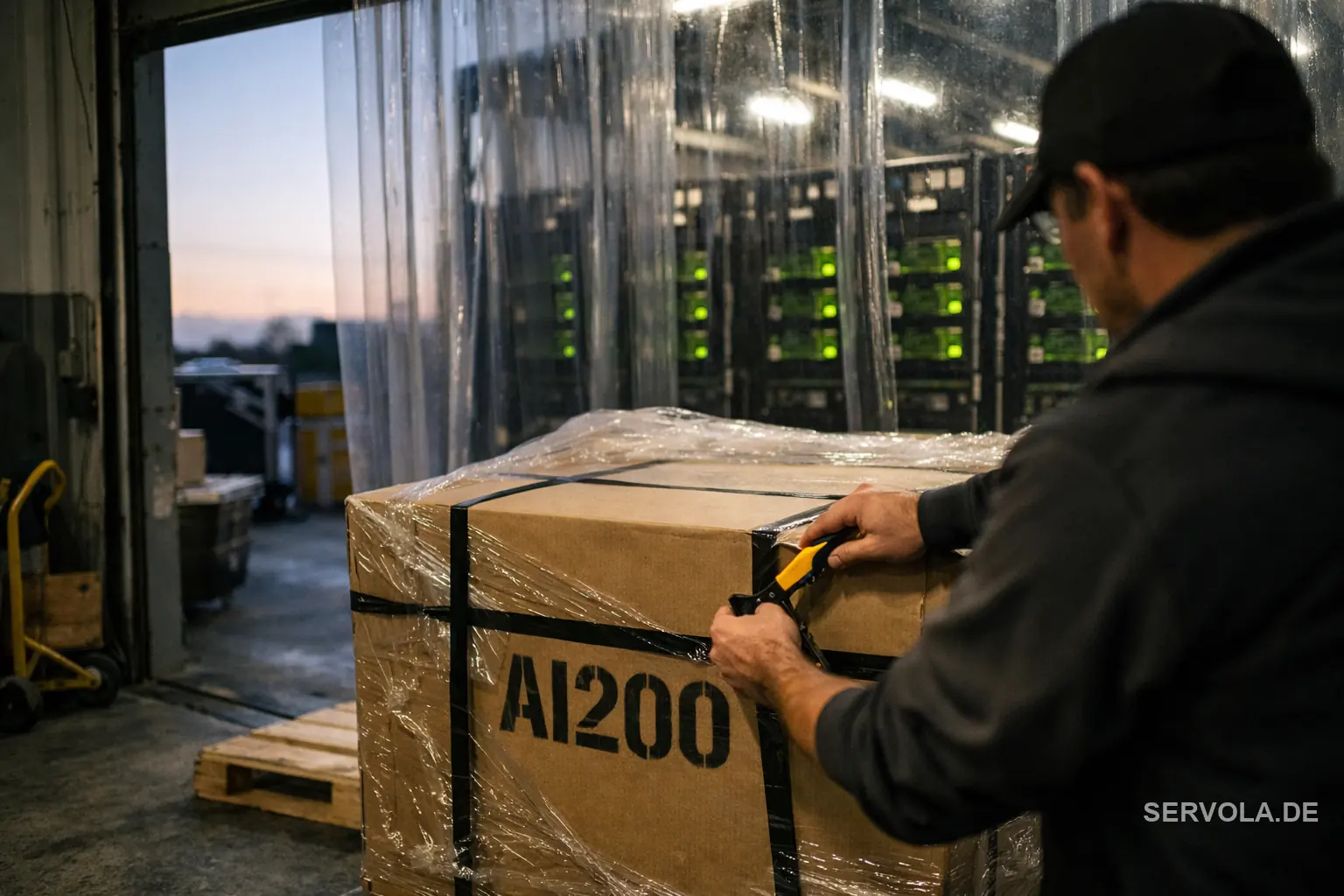
They are attacking inference, the part of AI that runs every time a model answers a query, rather than training, the part Nvidia dominates most. On 28 October 2025 Qualcomm launched two data center accelerators, the AI200 and the AI250, built on its own neural processing unit technology and aimed squarely at inference cost and power efficiency, with the AI200 set for commercial availability in 2026 and the AI250 in 2027. Separately, in June 2026 The Information reported, with follow-on coverage from Reuters, The Register and Tom's Hardware, that Qualcomm is in talks to buy Jim Keller's startup Tenstorrent at a valuation of roughly 8 to 10 billion dollars. Keller previously led architecture work at Apple, AMD and Tesla. Together the two moves point at the same target from two directions.
Why is this a more serious threat than past Nvidia challengers?
Because it aims at the one place Nvidia is measurably weaker, not at the place it is strongest. Nvidia still holds around 80 percent of the AI accelerator market by revenue, and its grip on training is reportedly above 90 percent. But in inference its share is lower, reported in the 60 to 75 percent range, and inference is the part of AI spending that is growing fastest, projected to reach roughly two thirds of all AI compute spend by 2026. Inference is also more price-sensitive and less dependent on Nvidia's CUDA software, which is the real moat. A challenger that wins on cost per query in a market shifting toward inference is a different animal from one promising a faster training chip.
What does the Tenstorrent angle add that a chip alone does not?
Ownership. Tenstorrent builds on RISC-V, an open instruction set architecture that customers can license and design around rather than rent under one vendor's terms. Tenstorrent was reported to be in talks to raise around 800 million dollars led by Fidelity at about a 3.2 billion dollar valuation in late 2025, after closing more than 693 million in a Series D led by Samsung Securities and AFW Partners at the end of 2024. If Qualcomm acquires it near the reported 10 billion dollar figure, the strategic logic is not just another accelerator. It is a path for hyperscalers and large enterprises to own more of their compute stack instead of leasing it. For an industry waking up to how much of its cost base sits inside one supplier, that is the part worth watching.
What should an owner or family office take from this?
Treat supplier concentration in your AI infrastructure as a balance sheet question, not an engineering footnote. The headline is a stock-market rivalry. The substance is that the cost of running AI is moving from a one-time training expense toward a permanent inference line item, and that line item is currently routed almost entirely through one vendor. Servola advises on infrastructure and vendor strategy for owners and family offices, and the recurring finding is the same: portfolio companies rarely know what share of their AI cost is locked to a single architecture, or what an alternative would cost to qualify. The Qualcomm and Tenstorrent moves are early proof that credible alternatives are arriving. The work is knowing your exposure before the bill compounds.
Read next: Nvidia Buys the Hub Your Open AI Stack Runs On | Nvidia's Land Grab Signals the Real AI Bottleneck