A permit for 33 million tons, filed to power one campus
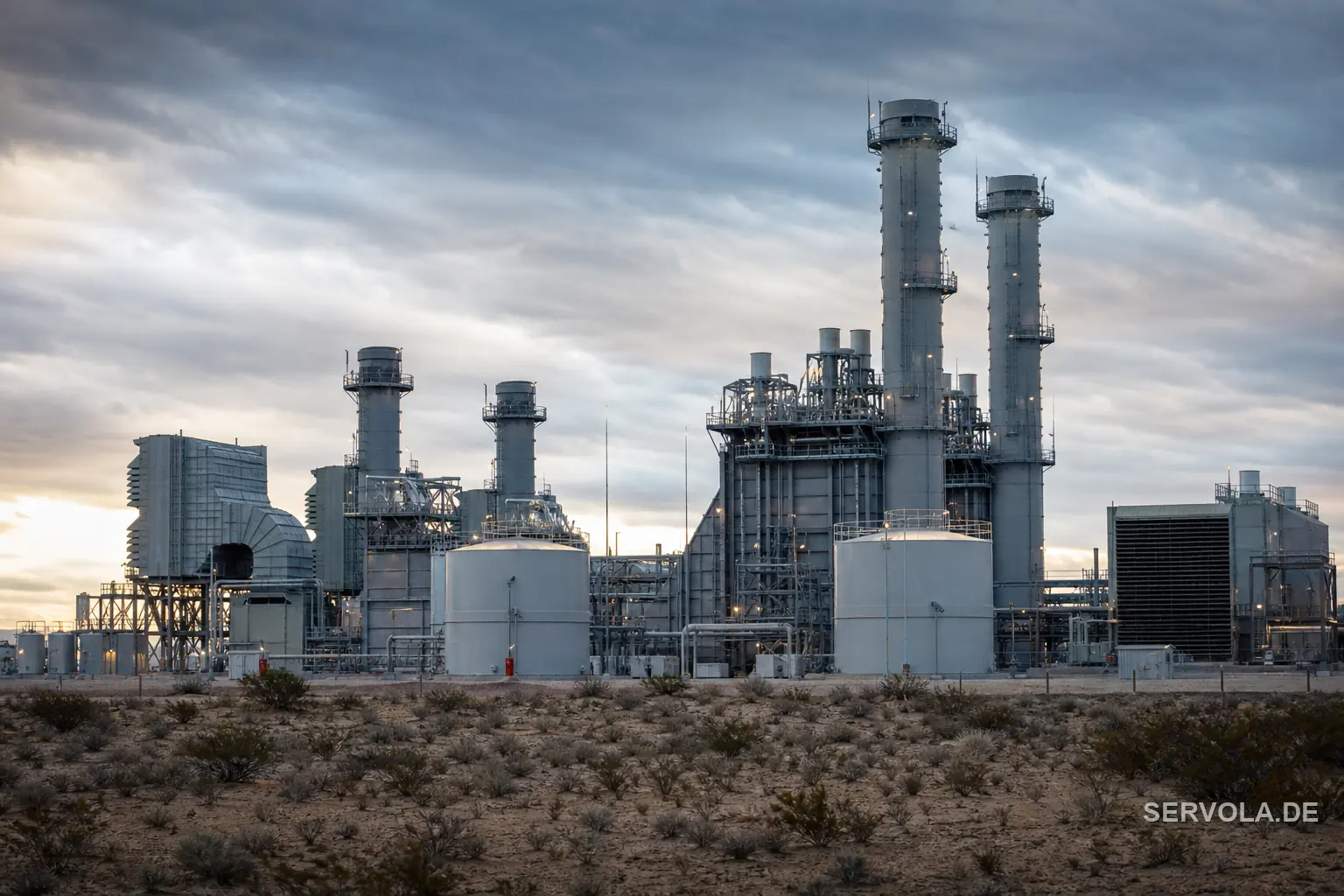
On 26 January 2026 the Texas Commission on Environmental Quality issued an air permit to Pacifico Energy for a 7.65-gigawatt natural gas plant on a site called GW Ranch in Pecos County, roughly thirty miles from a Chevron-backed Microsoft project already under construction nearby. The permit authorizes up to 33 million tons of carbon dioxide a year from 35 gas turbines, and by multiple independent counts it is the largest air permit ever issued in the United States.
The link to Amazon surfaced only in early August, when the research firm Cleanview matched three data centre construction permits Amazon had filed against satellite imagery showing land already cleared at the same coordinates as the gas plant. Amazon confirmed the connection directly rather than let the reporting stand alone: spokesperson Margaret Callahan said the company "believes in paying the full costs of powering our operations" and that the Pecos County campus is "powered by new on-site generation that won't raise electricity costs for Texas families."
The site also adds 1.8 gigawatts of battery storage and 750 megawatts of solar capacity, and draws cooling water from non-potable brackish groundwater rather than a municipal supply, addressing two objections that usually surface first. What that design does not change is the plant's status: permitted, not hypothetical, and sized well beyond what one data centre campus needs on its own.
Behind the meter, ahead of the queue
A behind-the-meter plant generates and consumes power on the same private site, so it never has to wait in line for a grid connection. ERCOT, the Texas grid operator, is separately working through a backlog measured in the hundreds of gigawatts of pending data centre connection requests. GW Ranch skips that queue entirely by not asking the public grid for power in the first place.
Amazon's own statement is explicit about the ordering: the plant is "designed to transition to grid-connected service as interconnection timelines allow." That phrasing means Amazon is building its own power plant first and will ask ERCOT for a grid connection later, once the queue clears, rather than waiting on the grid before building anything at all.
That is only an option for a company that can finance a data centre campus and a merchant power plant at the same time. Cleanview counts roughly 59 similar behind-the-meter gas proposals filed across the US since early 2025, totalling close to 90 gigawatts, and Amazon now joins Microsoft, whose Chevron-backed project sits thirty miles away, plus Google and Meta, as the fourth hyperscaler running a dedicated off-grid plant of its own.
The single-site number nobody else has to disclose
The reference point for the 33-million-ton ceiling is the James H. Miller Jr. coal plant in Alabama, currently the largest single emitter of greenhouse gases among US power plants at roughly 16 million tons a year. GW Ranch's permitted maximum is close to double that, though a permit is a ceiling, not a forecast: most facilities run below their maximum allowed output.
The business consequence is what changes for companies downstream of this capacity. A blended grid-average emissions figure, which is what most cloud customers have historically cited in their own climate disclosures, no longer applies once a hyperscaler builds a captive plant sized to one campus. That campus becomes a discrete, attributable emissions number that auditors, insurers and reporting regimes such as the EU's Corporate Sustainability Reporting Directive can trace back to a specific supplier and a specific site.
It is also a fully lawful number. TCEQ issued the permit; this is not the pattern of unpermitted generation running ahead of a pending court case that this journal has covered elsewhere in Texas. The compliance question here is not whether Amazon's partner broke a rule, it is that the rule, as written in Texas, allows a single private facility to be authorized for more annual emissions than any power plant currently operating in the country.
What this previews for European and UK grid queues, and for AWS customers
The fact that America's best-capitalized cloud company would rather build a 7.65-gigawatt power plant than wait for a grid slot is itself a measurement of how binding the interconnection queue has become as the actual constraint on AI capacity, ahead of chip supply.
The UK's own queue shows the same pressure building. National Energy System Operator data shows demand connection applications rising from 41 gigawatts to 125 gigawatts in under a year, with roughly 140 data centres accounting for close to 50 gigawatts of that demand and typical connection waits running five to ten years, some into the 2030s. Ofgem's consultation on a dedicated data centre connection fee and queue milestones stays open until 16 September 2026, precisely because the UK does not yet have an answer to the question Texas just answered with a permit.
That gap matters for procurement, not just policy. Any EU or UK enterprise whose AI roadmap runs through AWS capacity commitments should ask, before signing, which physical facility that capacity sits behind. A commitment backed by grid-connected capacity and one backed by a captive gas plant carry different cost, permitting and ESG-disclosure exposure, and under the EU's Industrial Emissions Directive only one of those two structures can currently be replicated on this side of the Atlantic.
Read next: Grid, Water, Labor Now Strain Under One Amazon Cluster | UK Grid Slots Now Cost Up to 712,500 GBP Per Megawatt