An airline with eight members
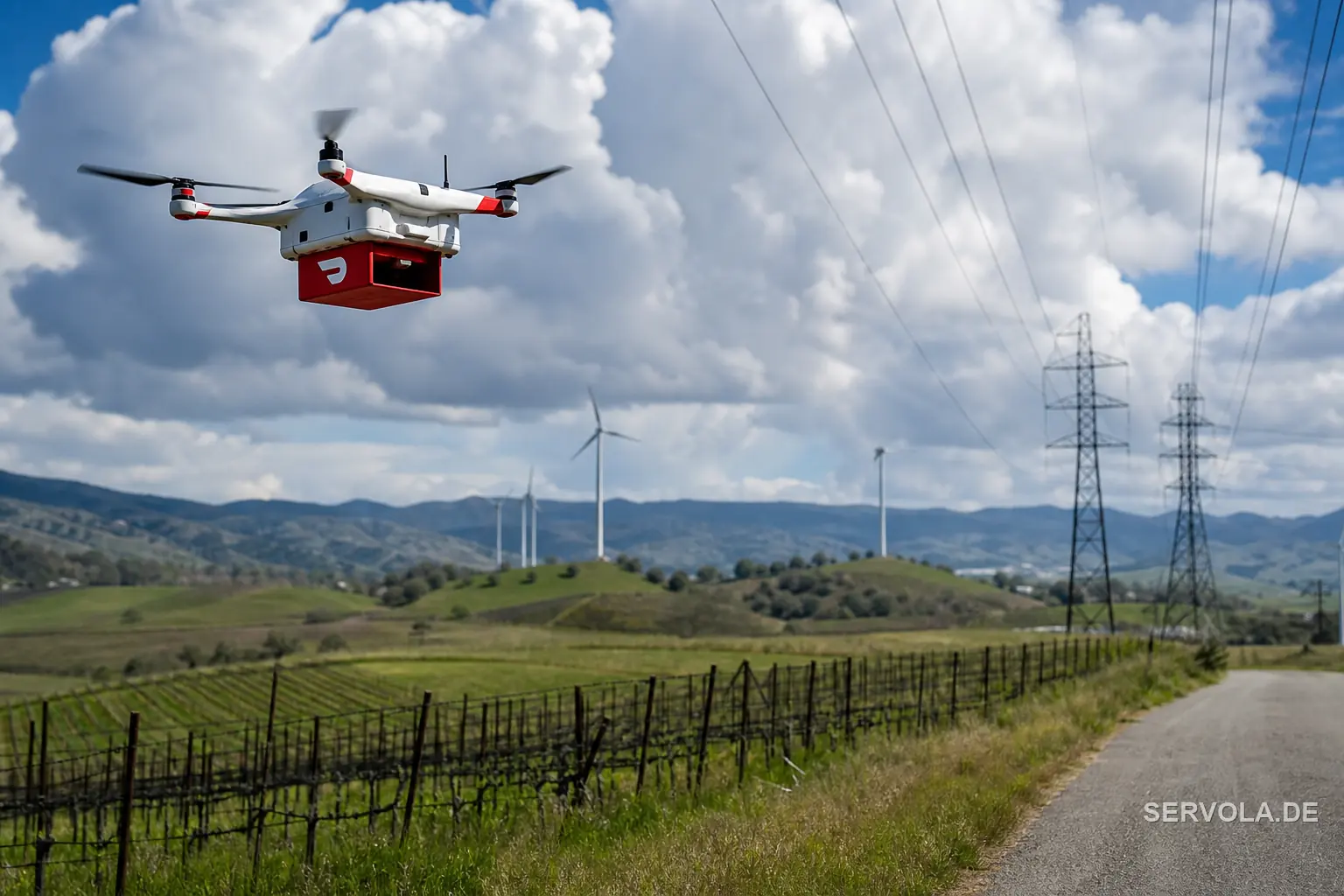
Harrison Shih, who runs the new unit, put the ambition plainly: DoorDash wants drone delivery to work for any merchant, anywhere. On 29 July the company said it had earned a Part 135 air carrier certificate from the Federal Aviation Administration and was launching DoorDash Air, with its own commercial flights planned for the autumn and the markets not yet named.
The certificate is a serious document. It makes DoorDash an air carrier in the FAA's eyes, with its own aircraft, its own operations manual, its own maintenance programme and its own liability for every flight. Getting one means passing a staged evaluation of airworthiness, maintenance and safety procedures, and only eight operators have done it, a list that includes Wing, Amazon's Prime Air and Flytrex. The aircraft themselves came from DoorDash Labs, the robotics team behind the company's Dot ground robot, designed in the United States with most components made there.
The certificate is the chassis, not the permission
Here is the part the announcement coverage mostly skipped. A Part 135 certificate does not authorise a single package delivery. The FAA's own package-delivery framework is explicit that operators must also obtain an exemption or waiver to fly beyond visual line of sight, because a delivery drone that stays within sight of its operator is not a delivery business.
More constraining still is the geography. A Part 135 certificate holder cannot operate in an area unless its operations specifications name that area, and the FAA describes the issuance or amendment of those operations specifications to include package delivery in a specific operating area as the approval that ultimately enables the flights. There is no national switch to throw.
So the honest reading of 29 July is that DoorDash acquired a legal chassis and a queue. Every city it wants to serve is a separate filing, and each one is a negotiation about safe separation from other aircraft and from things on the ground. The autumn deliveries the company is promising will happen somewhere specific, in a place whose paperwork is already moving.
It did not switch suppliers, it became one
The strategic move underneath the aviation news is a change in what DoorDash buys. Until now it bought drone delivery as a service from Wing and Flytrex. It is keeping both of those relationships, and it has now also taken the certificate itself, which means routing an order across a human driver, a drone or the Dot robot becomes an internal decision on its own platform rather than a handoff to a supplier.
For anyone whose products move through a platform like this, the consequence is a change in the shape of the constraint. When a partner ran the flying, your coverage was a commercial question and you asked what it cost. When the platform holds the certificate, your coverage map becomes its operations specifications map, and the answer to where can you deliver stops being a matter of negotiation and starts being a matter of filings. Ask a logistics partner which areas are named on its authorisations before you ask what it charges.
There is a second-order point for merchants. A platform that owns the aircraft, the routing software and the ground robot has every incentive to steer volume toward whichever mode is cheapest for it that day, and the merchant sees only the delivery promise. Worth knowing which lever your service level is actually attached to.
Europe is running a different queue
None of this transfers. In the European Union a delivery flight beyond visual line of sight sits in the specific category, which requires a SORA risk assessment and an operational authorisation granted by the national aviation authority rather than by a single continental regulator. Alongside it the EU's U-space regulation, in force since January 2023 and being brought into service across member states, sets the common framework for unmanned traffic management, network remote identification, geo-awareness and keeping aircraft apart in designated airspace.
The United Kingdom is outside that framework and authorises through the Civil Aviation Authority on its own terms. The practical effect for a European operator is that an American certificate milestone tells you what is technically ready, not what is legally available where you trade. If a supplier cites the DoorDash announcement as evidence that drone delivery has arrived, the question to ask is which national authority has authorised which operation over which area, and to ask for the authorisation reference rather than the press release.
Read next: Uber Pays $2.3 Billion To Own The Catering Order | PCs Fell 20 Percent, Phones Hit a 14-Year Low in Q3