A letter to investors, published before the market opened
IBM does not normally pre-announce. On 14 July it published selected preliminary second-quarter figures alongside a letter from chief executive Arvind Krishna, who called the quarter disappointing. The market did the rest: the shares fell roughly a quarter in a single session, the steepest one-day drop in the company's modern history.
The numbers themselves are not a collapse. Revenue was 17.2 billion dollars, up 1 percent, against a consensus close to 17.9 billion. Operating earnings came in at 2.93 dollars per share, up 5 percent, where analysts had modelled about 3.01. On a reported basis, earnings were 2.27 dollars per share, down 2 percent. Full results and guidance follow on 22 July.
Why it matters: a company of this size does not lose a quarter of its value over 700 million dollars of revenue. It loses it because investors suspect the explanation is worse than the number. The explanation IBM actually gave is the part worth reading, and it is not about IBM.
The market heard a demand story. The letter describes a supply squeeze
Look at the segments before accepting the panic. Software grew 5 percent, with Red Hat accelerating to 11 percent. Consulting was flat, up 1 percent at constant currency. Infrastructure fell 7 percent. Distributed Infrastructure rose 37 percent with a backlog around 500 million dollars, and the z17 mainframe programme is tracking at 130 percent of the comparable prior cycle. These are not the readings of a firm whose customers have stopped buying.
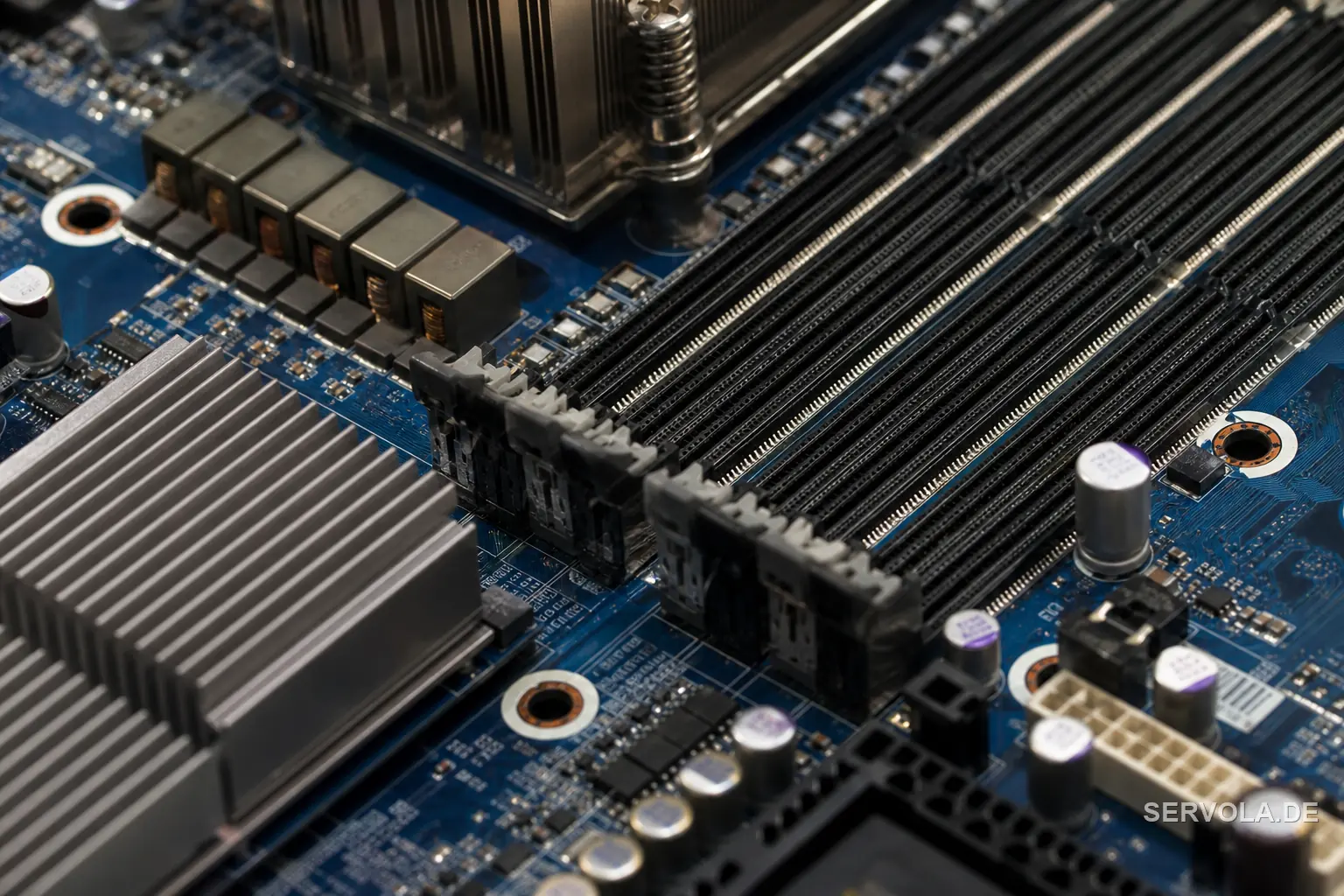
Krishna's own account names two causes. In the closing weeks of June, clients chose to shift their quarterly capex spend toward servers, storage, and memory purchases to secure supply-constrained infrastructure ahead of expected price increases, and IBM did not anticipate the scale of that reprioritisation. Separately, in his words, numerous large deals failed to close on the timelines we expected, driving the majority of the shortfall.
Yes, but: those two causes are not equally comforting. A deal that slips closes later. A budget that has already been spent on memory does not come back. One is a timing problem for IBM and the other is a structural problem for everyone who buys IT.
What a pre-buy does to everybody else's quarter
Follow the money through a customer's budget rather than IBM's. A finance director hears that memory and storage prices are rising and that supply is constrained. The rational move is to bring the hardware purchase forward and secure the allocation. But the quarterly envelope does not grow to accommodate the decision, so something else waits: the software renewal, the consulting engagement, the migration that was pencilled in for this quarter.
That is the mechanism IBM just described from the receiving end, and it is the first time the memory shortage has shown up this plainly in a large vendor's revenue line rather than in a component price index. The squeeze does not stay inside the hardware category. It rations every other line item next to it.
The number to keep: infrastructure down 7 percent while software grew 5 percent, in the same quarter, at the same customers. Buyers are not spending less. They are spending it on the thing they are afraid will get more expensive.
Read this as a buyer, not as a shareholder
If you have a server, storage or memory refresh scheduled for 2027, get quoted and get price protection in writing now. The customers who moved IBM's quarter were doing exactly that, and they were the informed ones. A purchase order with a fixed price is worth more than a forecast that assumes today's price list survives.
Then use the other side of the same trade. Software and consulting vendors have deals sitting in a pipeline that did not close on schedule, and they will be carrying that gap into their next quarter. A buyer with a signed budget and a short decision cycle has more leverage in the next two quarters than in the last two years. That applies to European buyers negotiating in euros or pounds exactly as it applies in dollars, because the pressure sits on the vendor's quarter, not on your currency.
Finally, stress-test the assumption itself. Take your 2027 hardware line and re-run it with a double-digit price increase. If the plan only works at today's prices, it is not a plan, and IBM has just paid to publish the evidence.
The test arrives on 22 July
Krishna's explanation is falsifiable, which is more than most earnings warnings offer. If the large deals really did slip rather than die, they close in the third quarter and the revenue reappears. If they do not reappear, the timing story was a demand story wearing a better suit.
Full results and full-year guidance come on 22 July. Watch two things: whether the slipped deals are described as closed, and whether the company guides infrastructure back up once the pre-buy wave passes. Those are the two claims the market refused to take on trust.
The bottom line: the share price is IBM's problem. The budget behaviour it revealed is yours, and it will show up in your own vendors' quarters long before it shows up in a price index you read.
Read next: Palantir's Sovereignty Pitch Is 19 Percent Foreign | Nvidia Turns Hugging Face Into a Chokepoint