What Micron Told Wall Street on August 10
At the KeyBanc Capital Markets Technology Leadership Forum in Deer Valley, Utah, on August 10, 2026, Micron executive vice president Sumit Sadana gave analysts an unusually direct answer to the question of when the AI-driven memory shortage ends: not soon, and not in the direction most buyers are hoping for. 'The growth in demand that is taking shape is faster than the growth in supply for calendar 2027 on an industry basis,' he said, adding that Micron has 'no line of sight as to when the supply is going to be able to meet demand, because demand continues to escalate at a very rapid pace.'
The company's entire 2026 high-bandwidth memory capacity is already sold out under fixed-price contracts. Micron's next-generation HBM4 output is committed exclusively to Nvidia's upcoming Vera Rubin accelerator platform, which means any buyer without an existing long-term agreement is negotiating for capacity that, by Micron's own account, will be scarcer in 2027 than it is today.
Why More Capex Does Not Mean More Supply Soon
The reason Micron cannot simply build its way out of the shortage in the near term is physical, not financial. Every wafer the company allocates to HBM3E production sacrifices three wafers of conventional DDR output - the standard memory that goes into laptops, phones and non-AI servers - because the layered, bonded construction of high-bandwidth memory consumes far more silicon and process capacity per finished chip. With the next generation, HBM4E, that sacrifice ratio climbs to four wafers of conventional memory for every wafer of HBM. The more capacity Micron redirects to satisfy AI accelerator demand, the smaller the conventional memory pool gets, which is a structural reason prices are rising across both categories at once, not just the AI-specific one.
Building new fabs takes years regardless of how much capital is committed. Micron's earliest new capacity, a first Idaho fab, is not scheduled to come online until mid-2027 - the same year Sadana says will already be tighter than 2026 - with a second Idaho facility not arriving until late 2028. New capacity does not relieve a shortage the moment it is announced or funded; it relieves it years later, once construction, tooling and yield ramp are complete, which is why an increased capex commitment and a worsening near-term shortage are both true at the same time.
The 100 Billion Dollar Fab That's Now in Court
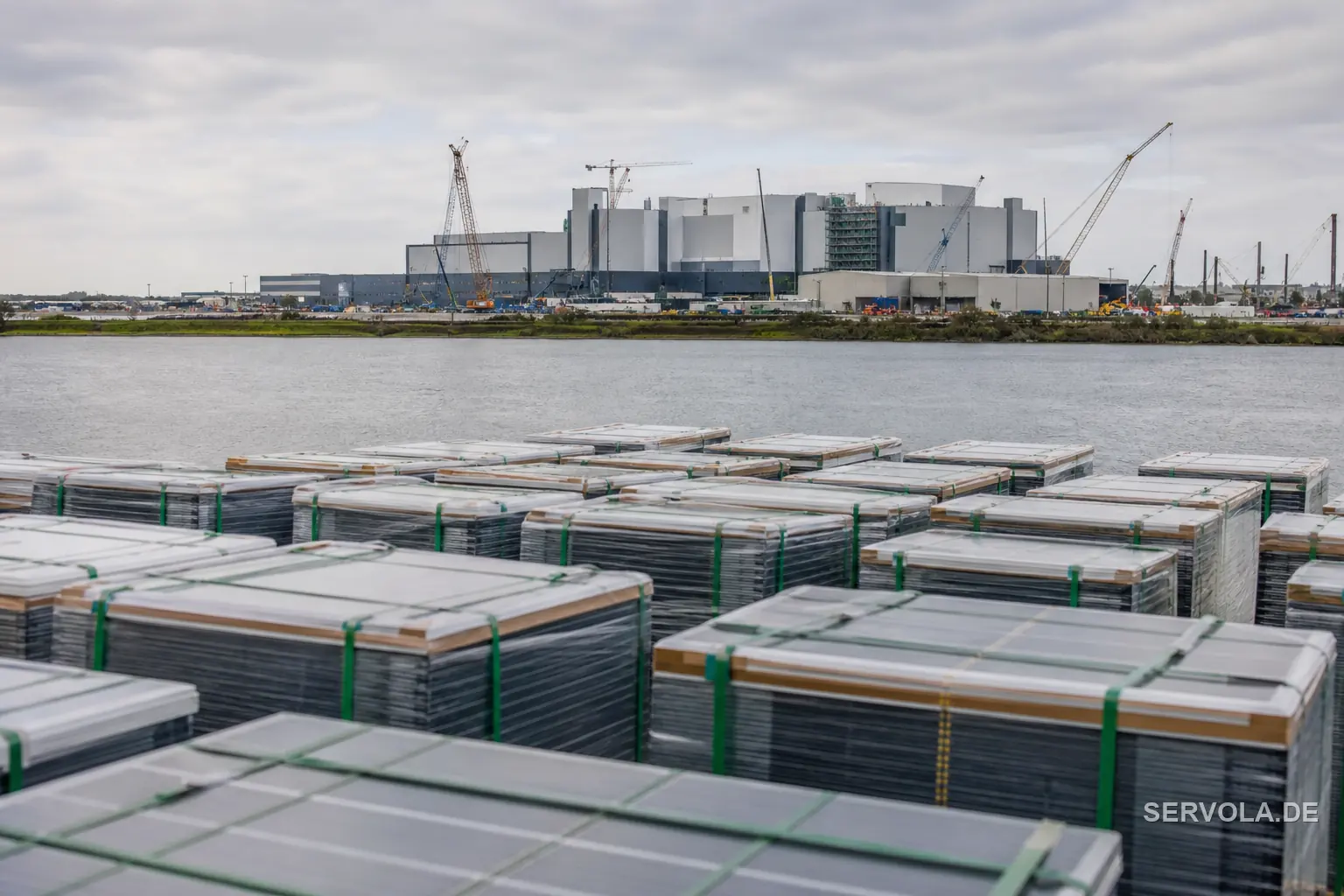
On July 9, 2026, Micron announced it was raising its planned US manufacturing investment from 200 billion to more than 250 billion dollars through 2035, anchored by a flagship megafab campus in Clay, New York, planned for up to four fabs over more than 20 years at a cost of up to 100 billion dollars, and projected to support roughly 90,000 direct and indirect jobs across the US semiconductor supply chain. Construction began in January 2026, with the first concrete poured in July 2026.
That timeline now has a legal complication. On July 31, 2026, the groups Neighbors for a Better Micron and Jobs to Move America filed an Article 78 petition in Albany County Supreme Court challenging two permits central to the project: a Title V air permit issued March 31 for the first two fabs, and an April 10 wastewater permit covering an expansion of the Oak Orchard Wastewater Treatment Plant, a project costing more than 1 billion dollars on its own that would raise permitted discharge from 10 million to 30.8 million gallons a day. The petition alleges the permits could allow PFAS, so-called forever chemicals, to reach the Oneida River without enforceable limits, and separately notes that state regulators had already acknowledged the facility's greenhouse gas emissions would conflict with New York's own statutory climate targets before approving the permits on national-security grounds.
What This Means for European Buyers Without a Contract
Roughly half of Micron's expected revenue through 2030 is already locked in under take-or-pay agreements, backed by 22 billion dollars in signed commitments and 18 billion dollars in cash already received. Those contracts overwhelmingly belong to the hyperscalers and chip designers who moved early - Nvidia among them - which leaves buyers negotiating from outside that circle, including many European cloud operators, systems integrators and device makers, competing for whatever capacity is left over from a pool Micron itself says will shrink relative to demand in 2027, not grow.
For procurement and infrastructure planning purposes, the practical read is that this is not a 2026 pricing spike that eases once new fabs open. The earliest meaningful new capacity lands mid-2027 at best, the flagship New York expansion that could eventually change the picture is now tied up in environmental litigation with an uncertain resolution timeline, and Micron's own leadership says it cannot see the point at which supply and demand converge. European buyers without an existing long-term agreement should plan server, laptop and storage budgets for continued scarcity pricing through at least 2027 and 2028, not for relief.
Read next: Micron Bets $10B Beyond the Chips It Already Sold Out | Nvidia Sits on Three Sides of Anthropic's $35B Deal