A $250 million round with an unusual investor list
Moove closed a $250 million Series C at a $2.1 billion valuation (roughly 195 million and 1.65 billion pounds at current exchange rates), a round the company dates to July 31, 2026 and announced on August 5. Abu Dhabi's Mubadala Investment Company led the round, with Toyota's growth fund Woven Capital and Ion Pacific co-leading. BlueCrest Capital Management, Sona Capital, BlackRock, MUFG, Franklin Templeton and Uber all put money in too, alongside investors from Moove's earlier rounds. The company has now raised roughly $694 million across 17 funding rounds since it launched out of Lagos, Nigeria, co-founded by Ladi Delano and Jide Odunsi.
"Every major technology revolution becomes an infrastructure race," Delano said in the announcement. "The internet required data centres. AI required compute. Autonomy requires fleets, charging, maintenance, data systems and 24/7 operations in every city." The framing is deliberate. Moove pitches itself as the operator that keeps other companies' robots running, and the investor list - a sovereign wealth fund, an automaker's venture arm and the largest ride-hailing platform on the planet - reads like a bet that this back-end layer will matter more than which self-driving software wins.
The business behind the buzzword: financing cars, not chauffeuring robots
Before autonomy entered the picture, Moove built its business renting and financing electric vehicles to drivers, mostly for Uber, which calls Moove its biggest global fleet partner. That core business is still the bulk of the company: roughly 42,000 vehicles across 29 cities in 13 countries, and about $420 million in annual recurring revenue. Moove has folded in acquisitions in Brazil and Japan along the way, and its global headcount sits at around 3,300 people.
The autonomous piece is smaller, but it is where the new money is aimed. Moove operates other companies' autonomous vehicles rather than building them, and already runs Waymo's fleets in Phoenix and Miami. The Series C funds Nest, its robotics-first depot network for charging, servicing, maintaining and dispatching autonomous fleets, planned for new sites across the US, Europe and Asia, alongside a plan to grow its dedicated autonomy team from about 150 people to roughly 500.
London: the single point through which Waymo's UK debut runs
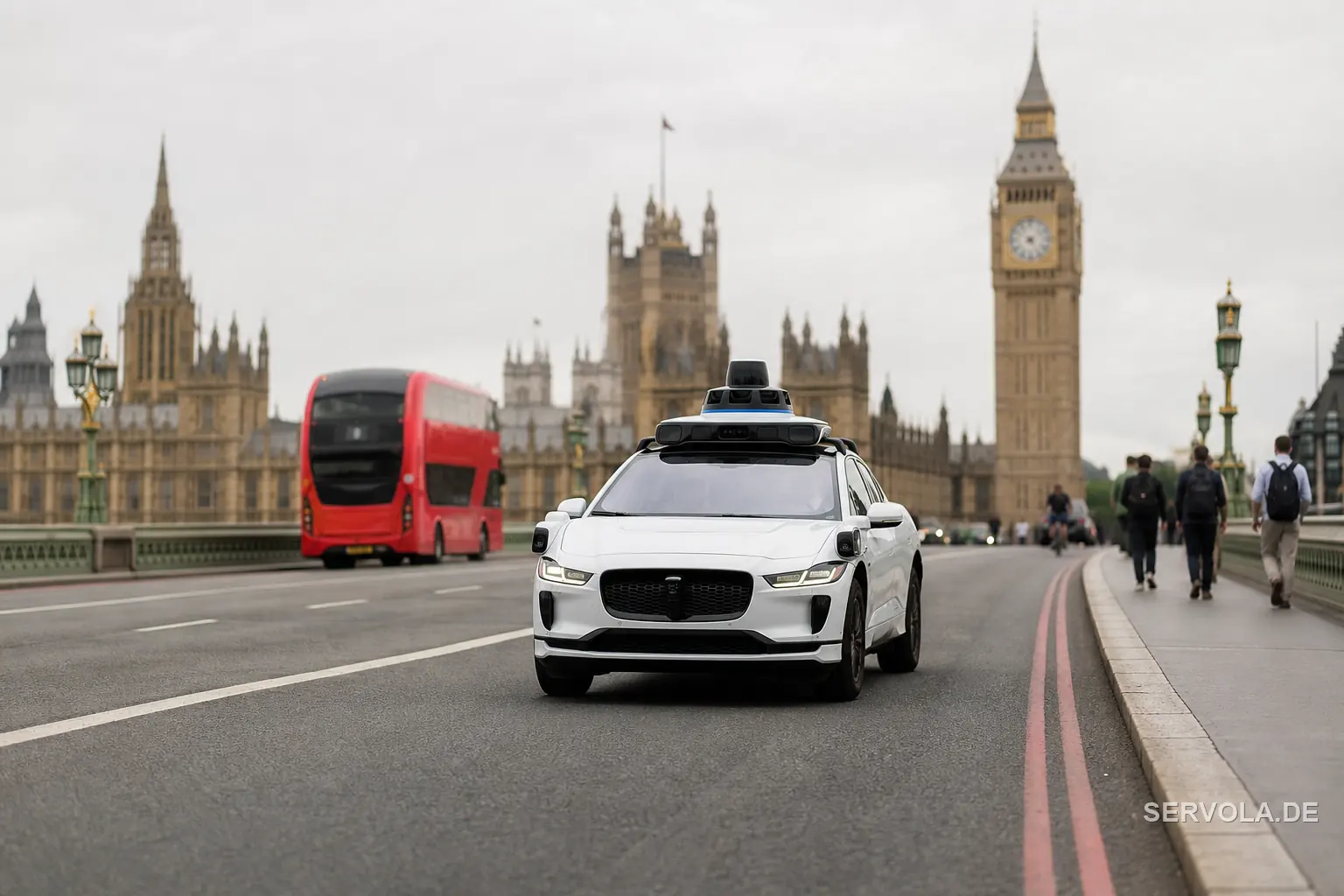
Waymo picked Moove months before this round closed to operate and maintain the all-electric Jaguar I-PACE fleet it plans to run in London, its first market outside the United States. Roughly two dozen of those vehicles have already spent months manually driving London's roads to learn the city before any rider gets in, and Waymo is targeting commercial service by the end of 2026, pending sign-off from UK safety regulators. Every part of that operation besides the self-driving software itself - the depot, the chargers, the maintenance bays, the people who dispatch the fleet each morning - runs through Moove.
That is the detail worth sitting with: London's first robotaxi service will run on a depot network owned by a private company that now counts Uber, Toyota's venture arm and an Abu Dhabi sovereign fund among its shareholders. If a second robotaxi operator wants into London next, or into any other major European capital after it, Moove - freshly capitalized and already proven at this exact job - is the most obvious partner to call, and quite possibly the only one with the depot scale to say yes quickly. That is a structural fact worth naming before it becomes invisible.
The owner-consequence: infrastructure monopolies do not need to build the cars
Cities weighing their own robotaxi programmes - Paris, Berlin, Madrid and others are watching London closely - inherit the same choice London has already made. Once one operator owns the depot network, the charging contracts, the maintenance staff and the dispatch software for a city's autonomous fleet, switching operators later means rebuilding physical infrastructure rather than renegotiating a software licence. That is a far higher switching cost than the vendor lock-in most municipalities are used to managing, and it is far cheaper to negotiate around before a depot gets built than after.
For automakers too, the stakes are concrete: Jaguar Land Rover is already tied into this deal through the I-PACE fleet Moove will operate in London. Betting on Moove now means betting that no rival builds an equivalent depot network before Moove's expansion reaches the next city on its list. The $250 million raised this week buys the unglamorous layer underneath the self-driving software - depots, chargers, maintenance bays, dispatch systems - and in doing so narrows how many credible operators the next city, and the next automaker, will actually have to choose from.
Read next: Waymo Built Its Own Chip to Stop Paying Nvidia | Europe's SpaceX Alternative Raises $450 Million