A Bigger Jump Than Anything AWS Has Announced
When AWS raises GPU reservation prices, it makes headlines because GPUs are the visible, scarce input everyone is watching. AWS's own combined increase across January and July 2026, roughly 38 percent on its P5 and P5e Capacity Blocks for ML, was treated as a signal that the AI compute market had entered a new pricing regime. OVHcloud's announcement on August 11, 2026 is larger in percentage terms on its top bare metal tier, 87 percent, and it is not about GPUs at all.
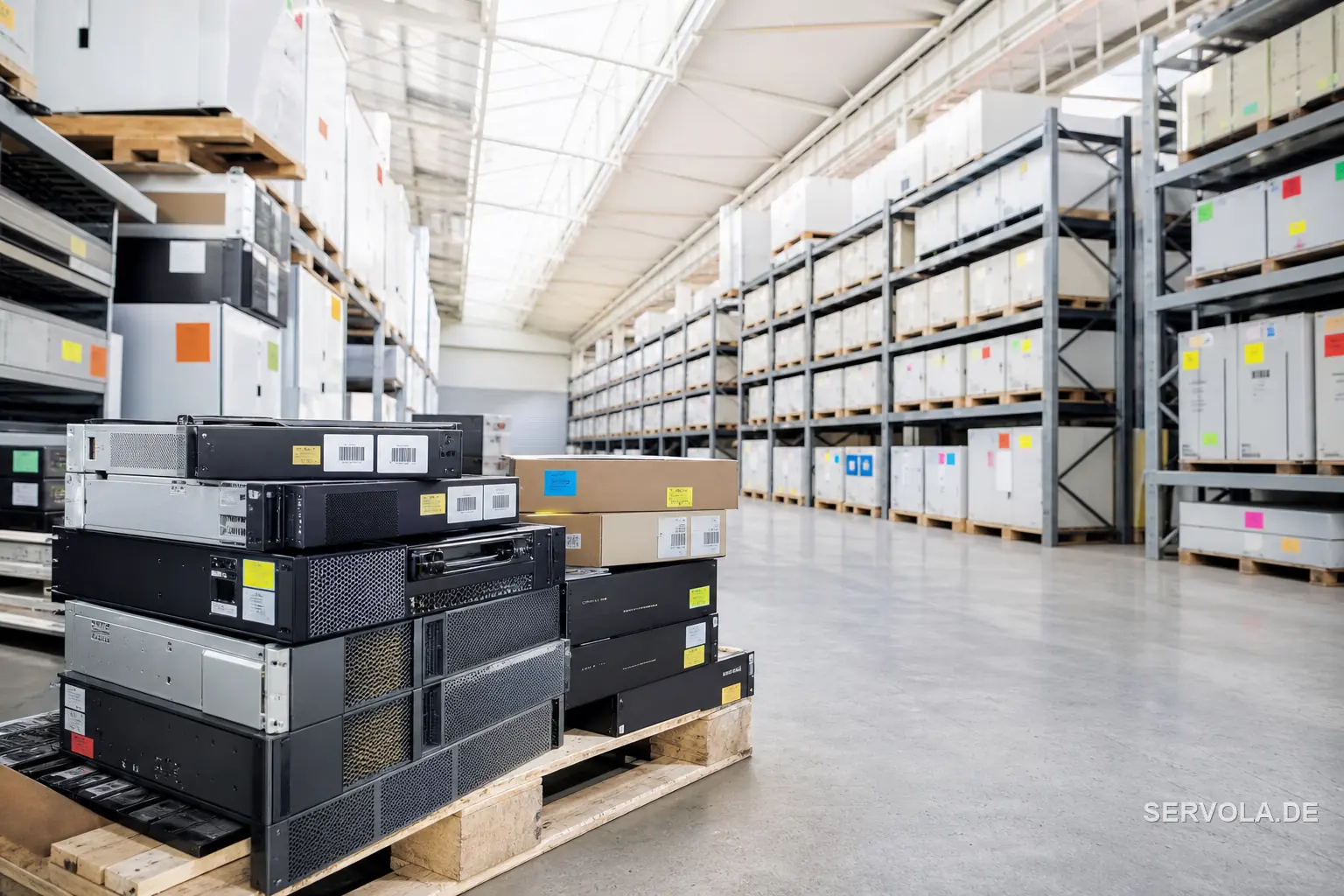
Klaba pointed to component costs that most cloud buyers never look at directly: system RAM and NVMe storage, both squeezed by the same AI data centre buildout pulling memory chip supply away from everything else. That is the less visible half of the AI hardware story. Everyone budgeted for GPUs getting more expensive. Few budgeted for the RAM inside a plain rental server following the same curve.
The Tier-by-Tier Breakdown
The increase is not flat. Newest-generation gaming servers rise 87 percent. High Grade servers built on AMD's Epyc 9005 line, with configurations up to two 96-core processors, rise 59 percent. Other 2026-generation tiers rise 40 to 49 percent, while the weighted average across the full 2026 lineup lands near 28 percent. Equivalent 2024-generation hardware rises 26 to 37 percent, a materially smaller jump. On the component side, optional RAM add-ons rose 127 percent and storage disks 89 percent as of July 1, 2026, ahead of the server price changes that follow in September and October.
Public Cloud instances, OVHcloud's on-demand virtual machine product rather than bare metal rental, see smaller headline increases of 1.4 to 21.9 percent effective October 1, but that date also brings a billing restructure: storage and IP address costs get unbundled from the base instance price, a change that raises the effective bill for many workloads even where the sticker price barely moves.
What the Sovereignty Score Does and Does Not Cover
OVHcloud's position atop the European Commission's Cloud Sovereignty Framework ranking, a score of 8.6 out of 10 against a sub-4.5 score for each of AWS, Azure and Google Cloud, rests on criteria like French incorporation, in-house server manufacturing, SecNumCloud certification and legal jurisdiction outside US reach under the CLOUD Act. None of those criteria measure exposure to global component pricing, because sovereignty frameworks were built to answer a legal and political question, not an industrial one.
That is not a flaw in the framework. It is a gap in how buyers have been reading it. A procurement team that chose OVHcloud specifically to escape US jurisdiction risk got exactly what it paid for. A procurement team that also assumed sovereignty would mean insulation from AI-driven hardware inflation did not read the framework closely enough, because nothing in an 8.6 score was ever a promise about RAM prices.
The Decision in Front of Buyers Now
Klaba's own framing, that OVHcloud's price advantage over hyperscalers narrows from roughly 3x to roughly 2x if competitors hold their own prices steady, is the number worth watching over the next two quarters. If AWS, Azure and Google Cloud pass through their own component cost increases at anywhere near OVHcloud's rate, the relative gap holds. If they do not, because their scale gives them better hardware pricing or because they choose to protect market share, OVHcloud's cost advantage keeps shrinking even as its sovereignty advantage stays fixed.
OVHcloud is offering existing customers a way to opt out of the near-term increase: paying in advance before October 1, 2026 locks current pricing for up to four years. That is a real hedge for anyone confident in their capacity plans, and also a signal from OVHcloud itself about where it expects component costs to go next, since a vendor does not usually offer a four-year price lock on a product it expects to get cheaper.
Read next: Europe's Pension Funds May Buy a Circular AI Bet | Five Billion In Defense Money Is Now Chasing GPUs