The sentence that was not in the coverage
A hardware buyer at a European logistics group spent the morning of 31 July reading the same headline everywhere: Samsung expects the memory shortage to worsen through 2027 and last until 2028. It is a true headline and it is not the one that changes a purchase order. The line that does was said further down the same earnings call, by Jaejune Kim, executive vice president and head of global sales and marketing for memory.
Samsung will place roughly two thirds of its memory capacity outside the open market. Kim said the company plans to allocate approximately 60 to 70 percent of its total capacity to long-term supply agreements while preserving flexibility for other customers. Read that as a structural statement rather than a commercial one. A shortage is a condition that passes. An allocation model is a decision about who is served first, and it outlives the condition that produced it.
Samsung also said who is signing. Frontier model developers are approaching the company directly, and in Kim's words these customers are sharing their mid to long-term demand forecasting and requesting multi-year supply agreements. The company put the duration plainly as well: supply constraints are expected to become even more severe in 2027 than 2026, reinforcing its view that the shortage will persist through 2028, with limited visibility beyond 2029.
What a contracted book does to a shortage
A market that is 60 to 70 percent contracted stops behaving like one market. Contracted volume does not clear at today's price. It clears at a price agreed months or years earlier, on terms that already assumed scarcity. What remains on the open market is the residual, and a residual absorbs the entire mismatch between demand and capacity because it is the only part of the supply that can move.
This matters for a specific and unglamorous reason: the published DRAM price stops being a description of the market and becomes a description of the leftovers. If you benchmark next year's hardware budget against spot memory prices, you are reading an index of the segment you are exposed to, not an index of what the industry pays. Two buyers can face the same component in the same quarter at prices that no longer converge, and neither number is wrong.
The corollary is harder. When the shortage does ease, it eases in the residual first, because that is where the flexible capacity sits. A buyer on an annual cycle therefore sees more of the downside now and less of the upside later, which is a worse position than the average of the two. Volatility is not distributed evenly across a market that has been split this way; it is concentrated in the part that did not sign.
The same reallocation, told in NAND
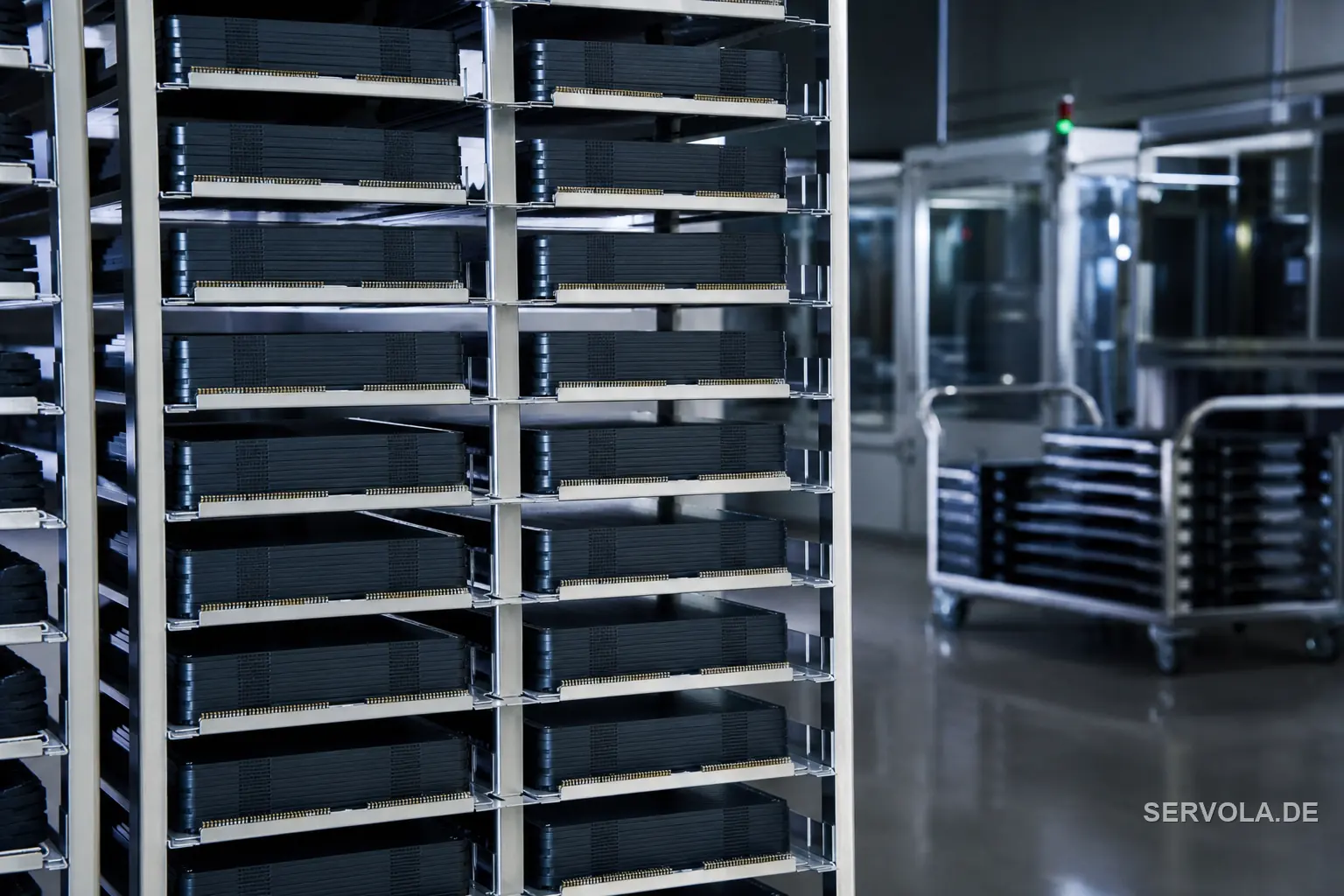
If the capacity split sounds abstract, the NAND mix makes it concrete. Samsung said server SSD is expected to exceed 60 percent of its NAND sales mix in 2026, up more than 20 percentage points year on year. A supplier's sales mix does not move by twenty points in a year because of pricing. It moves because the customer changed.
That is a substitution, not a cycle. A price cycle raises what everyone pays and then lowers it. A substitution reassigns the output to a different buyer and leaves the previous one to compete for what is behind. Samsung's own consumer businesses are the evidence: the company raised Galaxy phone and tablet prices and demand fell, while its semiconductor unit posted record sales in the same quarter. The group is absorbing on one side of the house what it earns on the other.
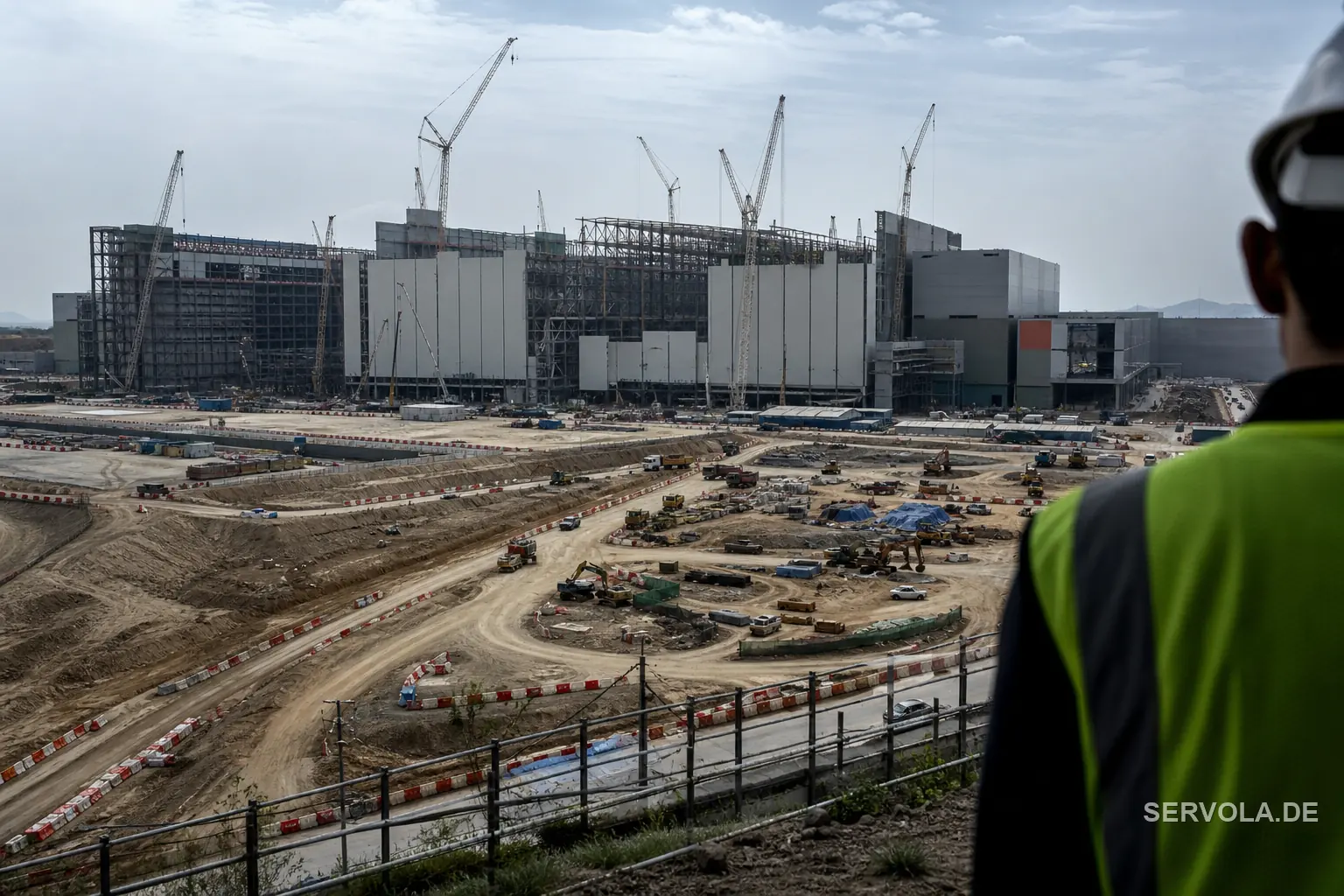
The capital line points the same way. Samsung reported second-quarter capital expenditure of 16.8 trillion Korean won, up 5.5 trillion sequentially, with 15.4 trillion of it going to Device Solutions. Capacity is being built. It is being built against forecasts that specific customers have already handed over, and equipment ordered in 2026 does not produce wafers in time to change a 2027 quote.
Forward visibility is a procurement instrument
The useful inversion is this: the scarce asset in Samsung's account is not memory. It is a credible multi-year demand number. The AI labs did not receive priority because they pay the most per bit. They received it because they were willing to state what they will need in 2028 and sign for it, which converts a supplier's capital risk into someone else's commitment.
Most mid-sized European buyers can produce that number and never do. A three-year committed refresh volume is not a harder forecast than the one already sitting in a depreciation schedule. It is the same number, stated to a different party, with a signature under it. Firms treat the annual tender as prudence, but in a contracted market an annual tender is a declaration that you will not commit, and it is priced accordingly.
There is a real cost to being wrong, and it should be named rather than waved past. A multi-year commitment on falling prices is a loss, and memory has fallen hard before. The judgement is not that committing is always right; it is that the choice is now between two priced positions rather than between a commitment and a neutral default. Staying on the spot market is a position, and after this call it is a more concentrated one than it was.
What a European buyer settles before 2027
Three questions belong in the next hardware review, and none of them is about price. First, ask your server or device supplier whether the memory in a 2027 quote is drawn from its contracted book or from the open market. Vendors know the answer and are rarely asked. It determines whether your quote is a forecast or a promise.
Second, ask for term rather than discount. In a market this tight a supplier can more easily give you 2028 certainty than a better 2027 number, because certainty costs it capacity it has already secured while a discount costs it margin it has not. The negotiation that is available is not the one procurement teams are trained to run.
Third, decide who inside your organisation owns a three-year volume commitment, because today the answer is usually nobody. Finance owns the budget, IT owns the refresh, and the forward number that would qualify you for a contract sits between them. In the United Kingdom the same question arrives with a currency exposure attached, since memory is dollar-priced and a sterling budget carries the swing on top of the shortage. Settle the ownership before the pricing conversation, not during it.
Read next: Samsung's Quarter Set to Beat Nvidia on Profit | HP, Asus, and Acer Are Quietly Using Chinese CXMT Memory in Some Laptops